
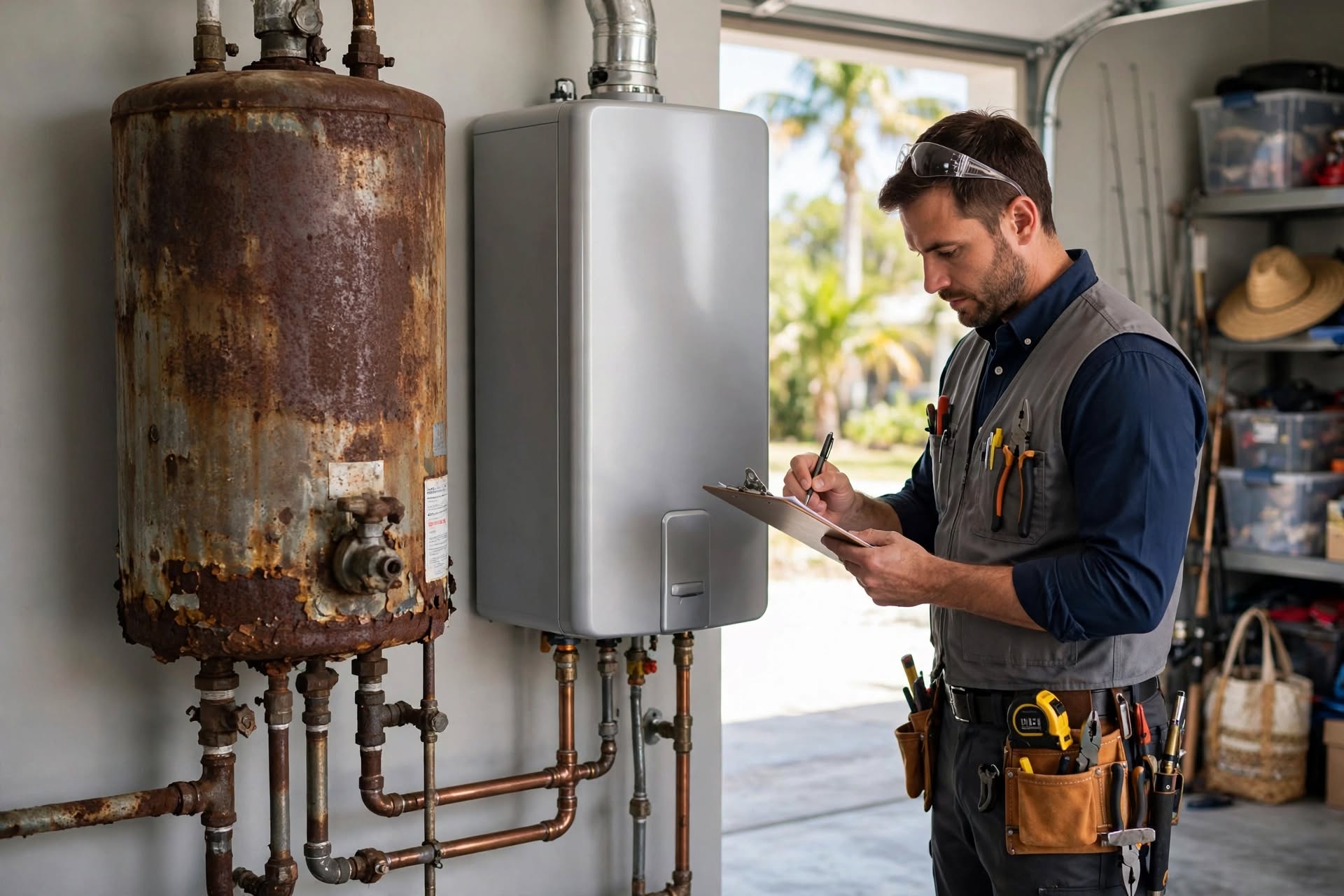
| Quick Answer Most gas tank water heaters last about 8 to 12 years and electric tanks about 10 to 15 years, while tankless water heaters often last around 20 years. Heat pump (hybrid) water heaters typically fall in the 10 to 15 year range. In South Florida, hard water, sediment buildup, and skipped maintenance can shorten those numbers. If your tank heater is over 10 years old and showing signs like rusty water, rumbling noises, leaks, or less hot water, it’s time to start planning a replacement. |
Water heaters rarely fail at a convenient time. Knowing how old yours is, and how long that type typically lasts, helps you replace it on your schedule instead of after a leak floods the garage.
Water Heater Lifespan by Type
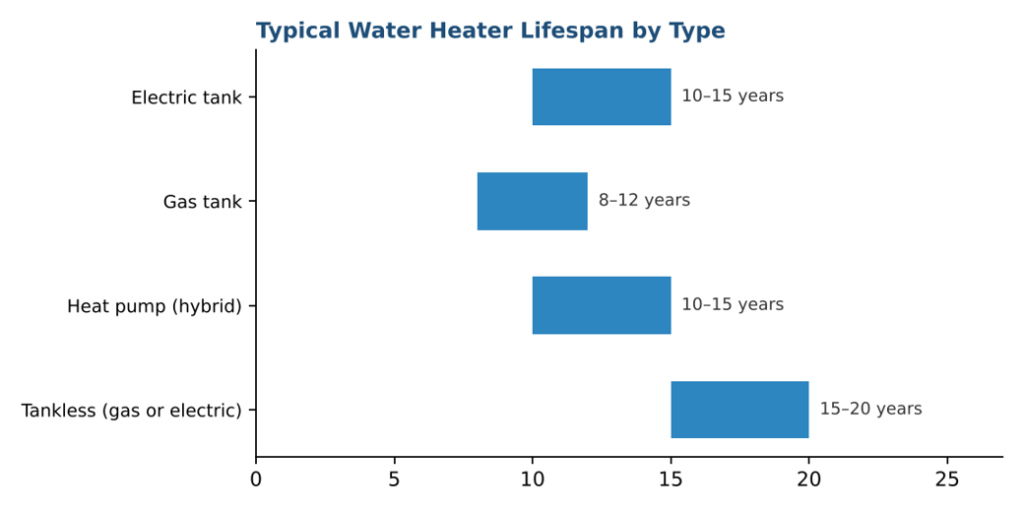
| Type | Typical Lifespan | Biggest Lifespan Factors |
| Gas tank | 8–12 years | Sediment, anode rod condition, burner wear |
| Electric tank | 10–15 years | Sediment, anode rod, heating element wear |
| Heat pump (hybrid) | 10–15 years | Filter cleaning, compressor, sediment |
| Tankless | Around 20 years | Annual descaling, water hardness |
These are general industry estimates. Actual life varies by brand, water quality, usage, and maintenance.
Why South Florida Water Heaters Can Wear Out Sooner
- Hard water. Much of the region draws from the limestone Biscayne Aquifer, and minerals settle in the tank as sediment.
- Sediment buildup. It insulates the tank bottom from the burner or element, causing overheating and stress on the steel.
- Garage and outdoor installs. Heat, humidity, and salty coastal air can corrode fittings, jackets, and gas controls.
- High water pressure. Pressure over 80 psi strains the tank and valves. See our guide to pressure reducing valves.
- No expansion tank. In closed systems, pressure spikes during each heating cycle. Learn about expansion tanks.
For a deeper look, read our post on why water heaters fail faster in South Florida on the plumbing blog.
How to Tell How Old Your Water Heater Is
Look at the rating label on the side of the tank. The manufacture date is usually coded into the serial number.
- Many brands use a letter for the month (A = January, B = February, and so on) followed by two digits for the year.
- Others start with the year and week, such as “1834” for the 34th week of 2018.
- If you’re not sure how to read your brand’s code, search the brand name plus “serial number age,” or ask your plumber.
Rule of thumb: If your tank heater is over 10 years old, start budgeting for replacement, even if it seems fine.
8 Signs Your Water Heater Is Going Out
| Sign | What It Usually Means | Urgency |
| Rusty or discolored hot water | Tank corrosion or failing anode rod | High |
| Water pooling around the base | Tank or fitting leak | High |
| Popping, rumbling, or banging | Heavy sediment buildup | Medium |
| Hot water runs out faster | Sediment taking up tank space, or failing element | Medium |
| Lukewarm water only | Failed element, thermostat, or burner issue | Medium |
| Metallic taste or smell | Corrosion inside the tank | Medium |
| Dripping T&P relief valve | High pressure or temperature | High |
| Age over 10–12 years (tank) | Near end of typical life | Plan ahead |
Rust on hot water only is a strong clue. Run cold water from a faucet. If it’s clear but hot water is rusty, the problem is likely inside the water heater, not your pipes.
If you have a leak, see water heater leaking from the bottom. If you have no hot water at all, try these 7 quick water heater checks.
How to Make Your Water Heater Last Longer
- Flush the tank once a year to remove sediment. See how to flush a water heater.
- Check the anode rod every 2 to 3 years and replace it when it’s worn down. This is the single biggest factor in tank life.
- Test the T&P valve once a year.
- Set the temperature around 120°F. Hotter settings speed up sediment and wear.
- Keep water pressure in a safe range and install an expansion tank if needed.
- Consider a water softener if your water is very hard.
- Descale tankless units once a year.
Repair or Replace?
| Situation | Recommendation |
| Under 6 years old, one part failed (element, thermostat, valve) | Repair |
| 6–10 years old, minor issue | Repair, then plan ahead |
| Over 10 years old with frequent problems | Replace |
| Tank is leaking | Replace |
| Repair cost is half or more of a new heater | Replace |
When it’s time, compare your options in our tankless vs. tank water heater guide.
Water Heater Service in South Florida
A to Z Statewide Plumbing repairs, maintains, and replaces tank and tankless water heaters across Broward and Miami-Dade, including Pembroke Pines, Hollywood, Miramar, Plantation, Weston, Fort Lauderdale, and Miami. We’ll check your heater’s age and condition and give you an honest repair-or-replace recommendation. Call (954) 981-2133 or contact us online.
| Key Takeaways ✔ Gas tanks typically last 8–12 years, electric tanks 10–15, tankless around 20. ✔ Hard water and sediment can shorten water heater life in South Florida. ✔ Find your heater’s age in the serial number on the rating label. ✔ Rusty hot water, leaks, rumbling, and less hot water are warning signs. ✔ Annual flushing and anode rod checks add years of life. |
Frequently Asked Questions
How long does a water heater last in Florida?
Gas tank water heaters usually last about 8 to 12 years, electric tanks about 10 to 15 years, and tankless units around 20 years. Hard water and sediment can shorten that if the heater isn’t maintained.
What are the signs your water heater is going out?
Common signs include rusty hot water, leaks around the base, popping or rumbling sounds, running out of hot water faster, lukewarm water, and a dripping relief valve.
Should I replace my water heater before it fails?
If a tank heater is over 10 to 12 years old, planned replacement is often smart. It avoids emergency costs and the risk of water damage from a sudden tank failure.
How do I find out how old my water heater is?
Check the serial number on the rating label. Most manufacturers code the month and year of manufacture into the first several characters.
Does a tankless water heater last longer than a tank?
Yes. Tankless units often last around 20 years with annual descaling, compared to about 8 to 15 years for most tank heaters.