
There are few things that start a day off worse than stepping into the shower and getting hit with cold water. When your water heater quits overnight, your whole morning routine grinds to a halt. Before you reach for the phone, though, it is worth running through a few quick checks. A good number of no-hot-water problems come down to something simple that you can spot yourself in a couple of minutes, and sometimes you can even fix it.
Here are seven checks to work through when you have no hot water in the morning, so you know what you are dealing with before you call a plumber in Palm Beach.
Check 1: Confirm the Power Is On
If you have an electric water heater, the first thing to check is the power. Head to your electrical panel and look for a tripped breaker. A breaker that has flipped off cuts the power to the heater, and the water goes cold. If you find a tripped breaker, flip it back on and give the heater time to reheat the water. If the breaker trips again right away, that points to an electrical problem that needs a professional, so stop there and make the call.
Check 2: Look at the Pilot Light on a Gas Heater
If you have a gas water heater, the equivalent check is the pilot light. The pilot is the small flame that lights the burner to heat the water. If the pilot has gone out, the burner cannot fire, and you get no hot water. Many gas heaters have instructions printed right on the unit for relighting the pilot safely. If you relight it and it stays lit, your problem may be solved. If it will not stay lit or keeps going out, that is a sign of a deeper issue that calls for a plumber.
Check 3: Check the Thermostat Setting
Sometimes the problem is as simple as a thermostat that got bumped or set too low. Water heaters have a thermostat that controls the water temperature, and if it has been turned down, your water will not get as hot as you expect. Check the setting and make sure it is where it should be, usually around one hundred twenty degrees. If someone turned it down or it drifted, adjusting it back up may be all you need.
Check 4: Make Sure You Are Not Just Out of Hot Water
If you have a traditional tank water heater, it holds a limited amount of hot water. If several people showered before you, or you ran the dishwasher and laundry, you may have simply used up the hot water in the tank. The fix here is patience, since the tank needs time to reheat. If your household regularly runs out of hot water, the tank may be too small for your needs, which is a conversation worth having with a plumber down the line.
Check 5: Look for Leaks Around the Tank
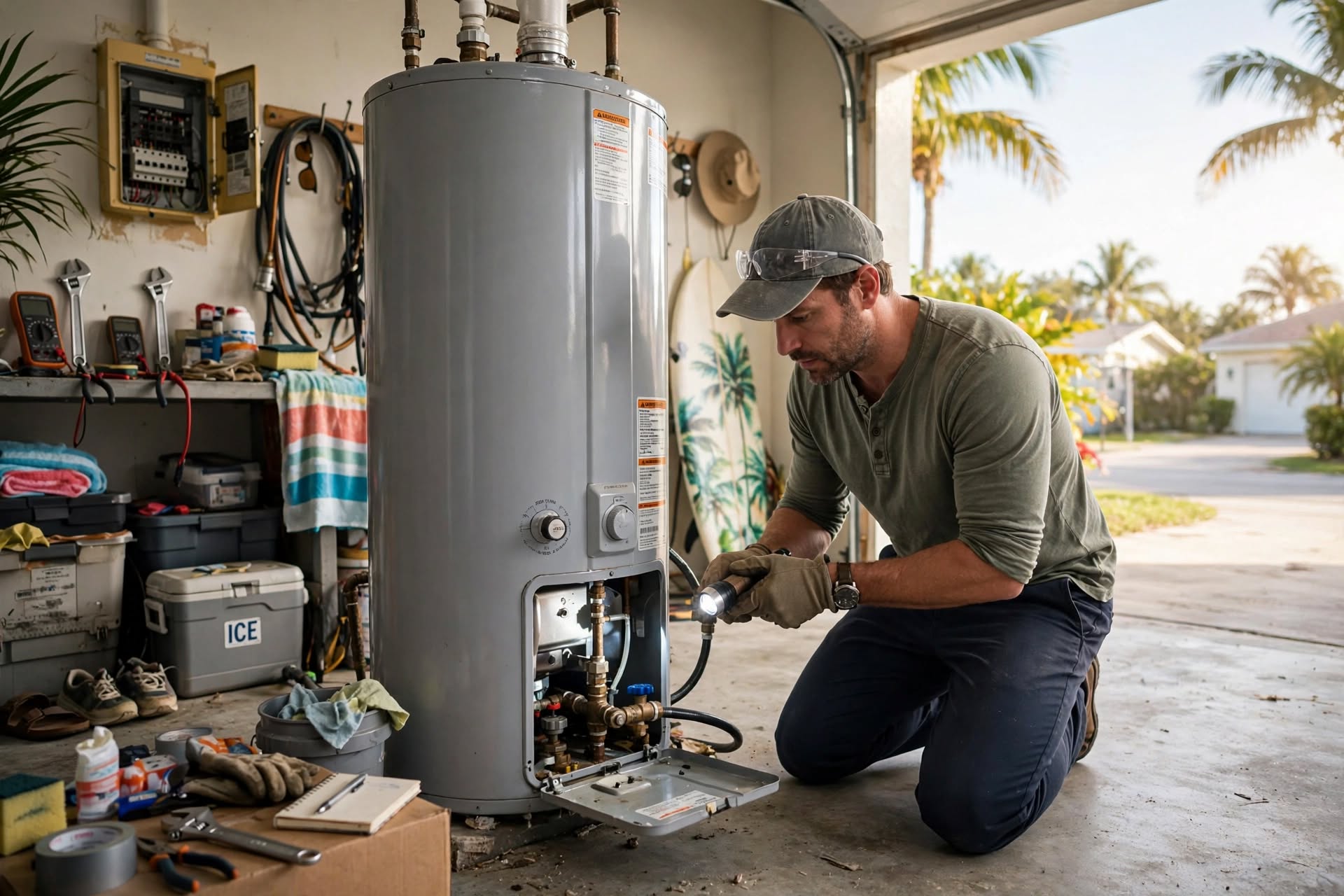
Take a look around the base of your water heater. If you see water pooling or signs of a leak, that changes things. A leaking tank can cause the heater to lose its ability to hold and heat water properly, and a significant leak means the tank may be failing. If you find a leak, it is best to call a plumber, since a leaking water heater often needs to be repaired or replaced rather than patched.
Check 6: Check the Age of Your Water Heater
If your checks have not turned up an obvious cause, consider how old your water heater is. A traditional tank water heater generally lasts around eight to twelve years. If yours is in that range or older, a failure may simply be the unit reaching the end of its life. In South Florida, the hard water can shorten that lifespan, since mineral buildup inside the tank wears it down faster. An older heater that suddenly stops producing hot water may be telling you it is time for a replacement.
Check 7: Listen for Strange Sounds
Turn off other noises and listen to your water heater. Popping, rumbling, or banging sounds coming from the tank usually mean sediment has built up on the bottom. In South Florida, the hard water leaves mineral sediment that collects in the tank over time. This sediment makes the heater work harder and less efficiently, and it can contribute to a loss of hot water. While flushing the tank can help, a heater that is making these sounds and failing to heat may need professional attention.
When to Stop Checking & Make the Call
These seven checks catch a lot of the simple problems, and sometimes you will find that a tripped breaker, a pilot light, or a thermostat setting was the whole issue. Other times, the checks point to something bigger, like a leaking tank, a failing heating element, or a unit that has reached the end of its life. Those are the situations where a plumber is the right call.
A few signs mean you should skip the rest of the troubleshooting and call for help right away. Water pooling around the tank, a gas smell, a breaker that keeps tripping, or a pilot that will not stay lit all point to problems that need a professional. Trying to force a repair on these can be unsafe or can make the problem worse.
Getting Your Mornings Back on Track
A cold shower is a rough way to start the day, but a little troubleshooting often turns up the cause quickly. Run through the seven checks: confirm the power, check the pilot light, look at the thermostat, make sure you have not just run out of hot water, check for leaks, consider the age of the unit, and listen for sediment sounds.
If one of the simple fixes solves it, you are back in business. If the checks point to a leak, a failing unit, or an electrical or gas problem, a plumber can get your hot water restored safely. Knowing which category your problem falls into saves you time and tells you exactly when it is time to make that call.