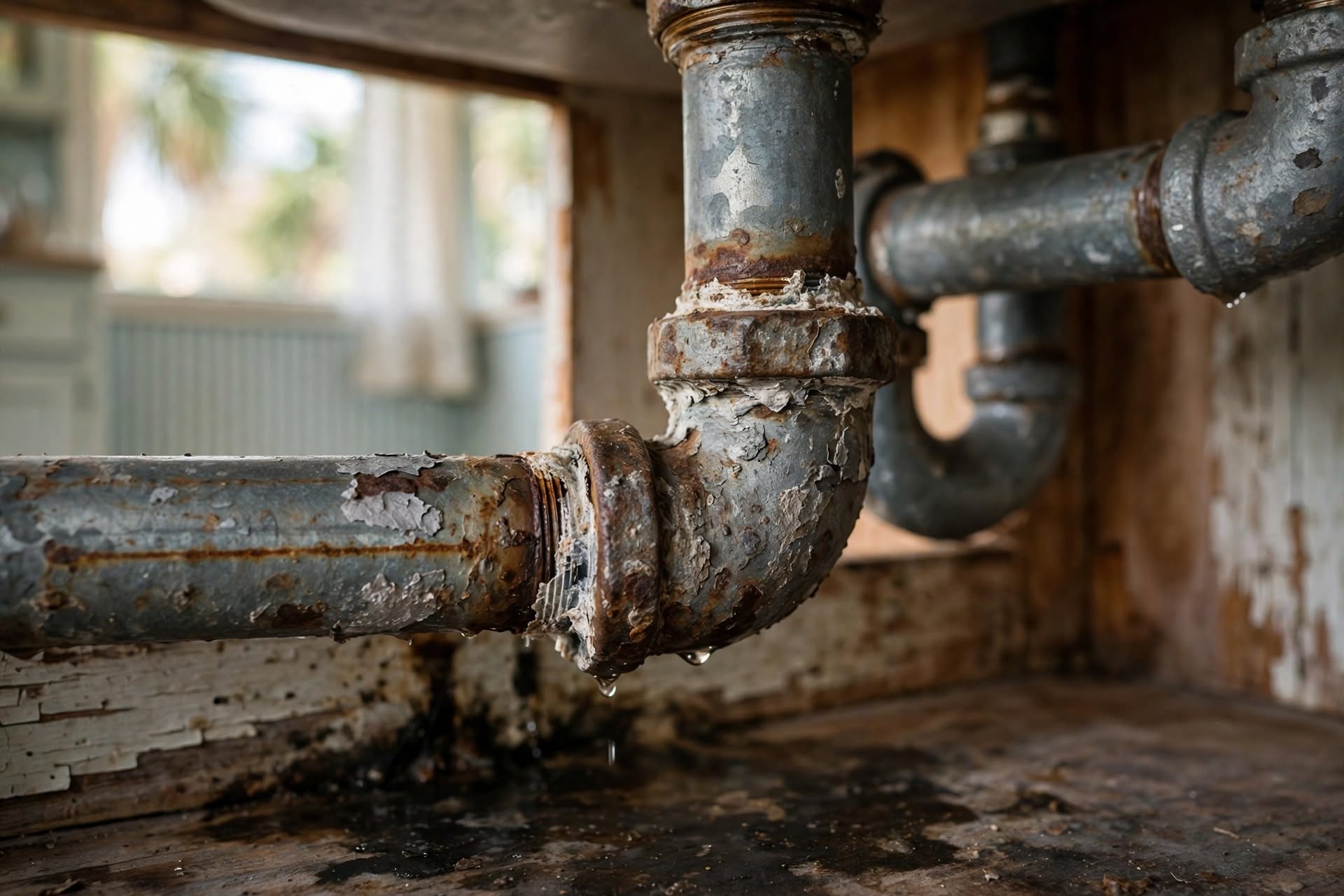

In Florida’s heat and humidity, your air conditioner runs almost constantly, and as it cools your home, it pulls a lot of moisture out of the air. That moisture has to go somewhere, and it drains away through the AC condensate drain line. When that line clogs, the water backs up, and the results range from water damage to mold growth. It is one of the more common plumbing-related problems Florida homeowners face, and it often catches people by surprise.
Knowing how the drain line works, what a clog causes, and how it gets cleared helps you deal with it before it damages your home. Here is what you need to know about a clogged AC condensate drain line.
How the Condensate Drain Line Works
Your air conditioner does more than cool the air, it removes moisture from it. As warm, humid air passes over the cold evaporator coil, the moisture condenses into water, just like droplets forming on a cold glass. That water collects in a drain pan and flows out of your home through the condensate drain line, a pipe that carries it safely away.
In Florida, where the humidity is high and the AC runs much of the year, the system removes a large amount of water day after day. The drain line handles all of it, carrying the condensation outside or to a drain. Because so much water flows through this line, and because the conditions inside it are damp, the line is prone to clogging over time.
Why the Line Clogs
The condensate drain line clogs because of what builds up inside it. The damp, dark environment inside the line is a place where algae, mold, and slime can grow. Over time, this growth builds up and blocks the line. Dust, dirt, and debris that make their way into the system add to the buildup. As the blockage grows, the water can no longer flow freely, and it begins to back up.
Florida’s climate makes this worse. The constant use of the AC and the high humidity mean the line is always damp and always carrying water, which creates ideal conditions for the growth that causes clogs. This is why condensate drain clogs are such a common problem in Florida homes, and why the line needs regular attention.
What a Clogged Drain Line Causes
When the condensate drain line clogs, the water has nowhere to go, and the consequences can be serious.
Water Damage
The most immediate problem is water damage. When the line backs up, the drain pan overflows, and the water spills out. Depending on where your AC unit is located, this water can damage ceilings, walls, floors, and anything nearby. An AC unit in an attic can send water through the ceiling below, while a unit in a closet or garage can flood the surrounding area. The water damage from a backed-up condensate line can be extensive and expensive to repair.
Mold Growth
Standing water and dampness create the conditions for mold, and a backed-up condensate line provides both. The excess moisture from an overflow can lead to mold growth in the affected areas, which is a health concern as well as a damage problem. In Florida’s already humid environment, the added moisture from a drain clog makes mold a real risk.
AC Shutdown
Many air conditioning systems have a safety switch that shuts the system off when it detects that the condensate line is backing up. This is meant to prevent water damage, but it also means your AC stops working. In the Florida heat, a sudden loss of air conditioning is more than an inconvenience, so a clogged line can leave you without cooling until it is cleared.
Signs Your Condensate Line Is Clogged
Catching a clog early helps you avoid the damage. Watch for water around your indoor AC unit, water stains on the ceiling or walls near the unit, or an AC that has shut off unexpectedly. A musty smell near the unit can indicate mold from excess moisture. If your AC is running but not cooling well, or if you notice the drain pan is full, the line may be clogged. Paying attention to these signs lets you address the problem before it causes major damage.
How the Clog Gets Cleared
Clearing a clogged condensate drain line is a job that restores the flow and prevents the backup. There are a few methods used to clear the line.
A common approach is to clear the blockage using suction to pull the clog out of the line, which removes the buildup and lets the water flow again. The line can also be flushed to clear out the algae, mold, and debris that have accumulated inside. In some cases, the access point on the line is used to clear the blockage and then flush the line clean. Once the line is clear, the water drains properly again, and the backup is resolved.
A professional can clear the line thoroughly and check that it is draining correctly. They can also look at the drain pan and the overall system to make sure everything is working as it should. Because a clogged condensate line can cause significant damage, having it cleared properly is worth it.
Preventing Future Clogs
Once the line is cleared, keeping it clear prevents the problem from returning. Regular maintenance is the key. Having the line checked and flushed periodically removes buildup before it causes a clog. Some homeowners have the condensate line serviced as part of regular AC maintenance, which keeps it flowing. In Florida, where the line works so hard, this regular attention is worth the effort to avoid the water damage and mold that a clog brings. Keeping the area around the unit clear and watching for the early signs of a backup also helps you catch problems before they grow.
Keeping the Water Flowing & Your Home Dry
A clogged AC condensate drain line is a common Florida problem that can lead to water damage, mold, and a shut-down air conditioner if it is not addressed. The line carries away the large amount of moisture your AC removes from the humid air, and the damp conditions inside it make it prone to clogging from algae, mold, and debris. Watch for the signs of a backup, such as water around the unit, ceiling stains, and an AC that has shut off, and have the line cleared when you spot them.
Regular maintenance keeps the line flowing and prevents the clogs that cause damage. Staying ahead of this common problem keeps your home dry, your air conditioning running, and the mold away, even through the hardest-working months of the Florida summer.