
| Quick Answer A pressure reducing valve (PRV), also called a water pressure regulator, is a bell-shaped brass valve near where your water line enters the house. It lowers high street pressure to a safe level, usually between 40 and 60 psi. Plumbing code calls for a PRV when static pressure in the building is over 80 psi. Signs of a failing PRV include pressure that suddenly jumps or drops, banging pipes, running toilets, leaking fixtures, and a dripping water heater relief valve. Most PRVs last about 10 to 15 years. |
Good water pressure feels great in the shower, but pressure that’s too high quietly damages your plumbing every day. A pressure reducing valve is the part that keeps it in check. When it fails, you’ll often notice the effects at your faucets, toilets, and water heater before you ever think about the valve itself.
What Does a Pressure Reducing Valve Do?
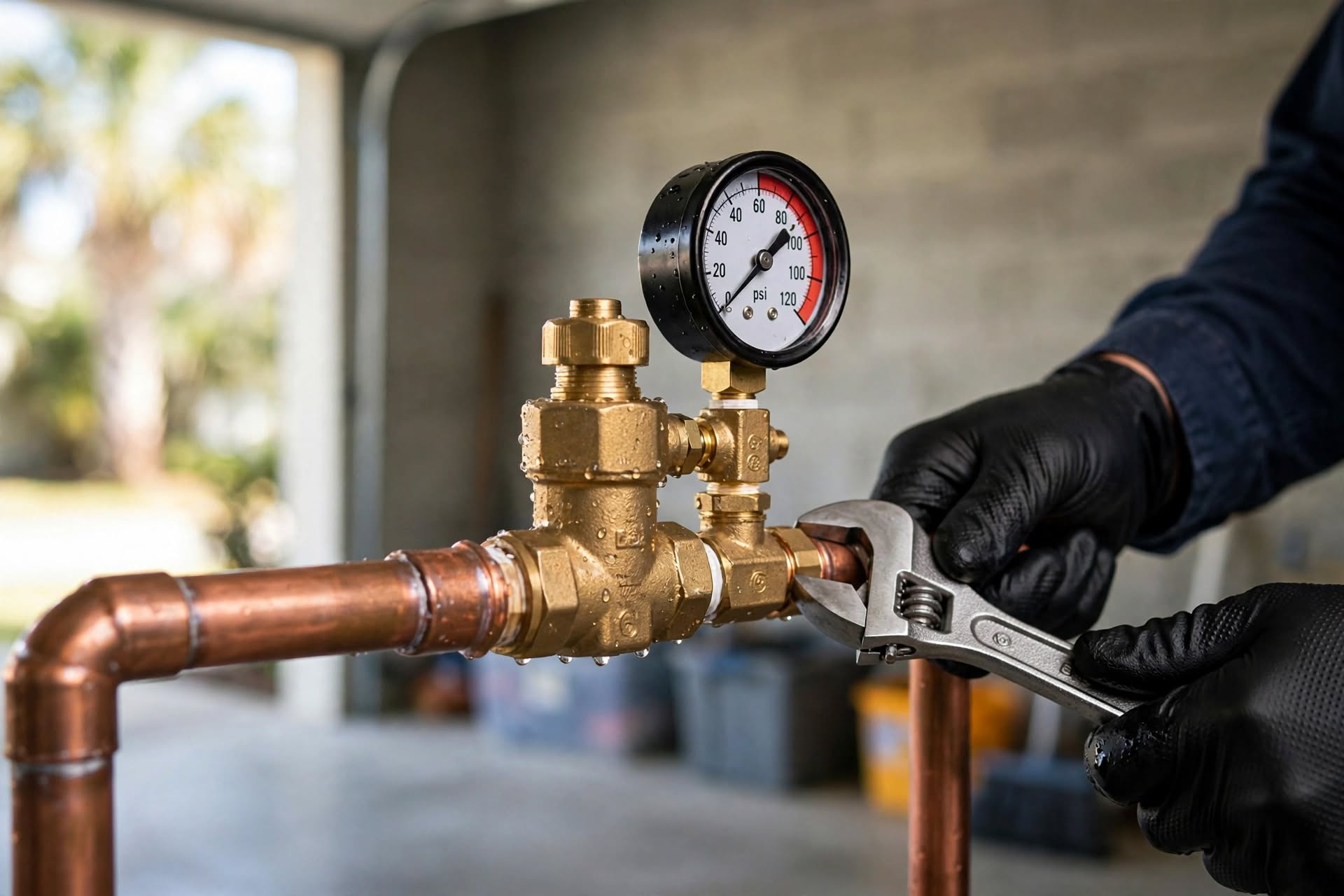
Water utilities often deliver water at higher pressure than a home needs, so it can reach every building on the line. A PRV uses an internal spring and diaphragm to reduce that incoming pressure to a steady, safe level for your home.
You’ll usually find it:
- On the main water line where it enters the house, often near the hose bib or main shut-off
- In a garage, utility closet, or near the water meter in some South Florida homes
- Shaped like a brass bell with an adjustment screw on top
What Is Normal Water Pressure for a Home?
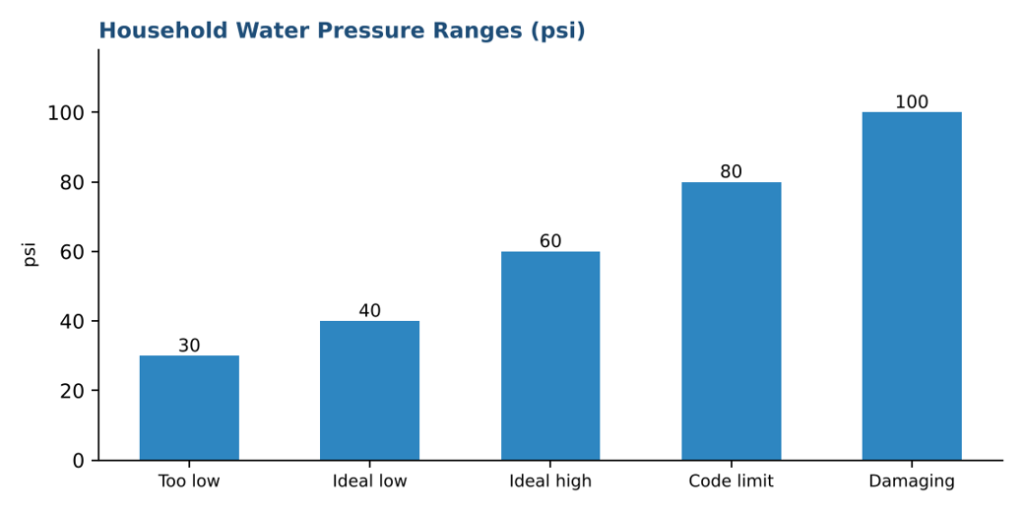
| Pressure Reading | What It Means |
| Under 40 psi | Low. Weak showers, slow fill times. |
| 40–60 psi | Ideal range for most homes |
| 60–80 psi | Acceptable, but on the high side |
| Over 80 psi | Too high. Code calls for a PRV. Risk of damage. |
The Florida Building Code, Plumbing, which follows the International Plumbing Code, requires a pressure reducing valve when static water pressure in a building exceeds 80 psi.
7 Signs Your Pressure Reducing Valve Is Failing
- Water pressure suddenly gets very high. Faucets blast, and the shower stings.
- Water pressure drops or fluctuates. A worn PRV can stick partly closed, too.
- Banging or hammering pipes when faucets or appliances shut off.
- Toilets run or refill on their own, because high pressure forces water past the fill valve.
- Leaking faucets, hose bibs, and supply lines that keep coming back after repair.
- The water heater’s T&P relief valve drips or discharges water.
- Humming, whistling, or vibration from the pipes near the valve.
High pressure also shortens the life of washing machines, dishwashers, ice makers, and water heaters. If you’ve had several fixtures or appliances fail in a short time, it’s worth checking your pressure.
How to Test Your Water Pressure
You can check it yourself with a water pressure gauge, available at most hardware stores.
- Turn off all faucets, the dishwasher, and the washing machine. Make sure no toilets are refilling.
- Screw the gauge onto an outdoor hose bib or the washing machine connection.
- Open the spigot fully and read the gauge.
- For a better picture, check it at different times of day. Some gauges have a “lazy hand” that records the highest pressure overnight, when city demand is low and pressure peaks.
If you consistently see over 80 psi, or wide swings from one reading to the next, the PRV may be failing or need adjusting.
Can You Adjust a Pressure Reducing Valve?
Yes. Most PRVs have an adjustment screw on top with a locknut.
- Loosen the locknut.
- Turn the screw clockwise to raise pressure, or counterclockwise to lower it, in small quarter-turns.
- Recheck with your gauge after each turn, then tighten the locknut.
If adjusting doesn’t change the pressure, or the pressure creeps back up, the valve’s internal parts are worn out and the PRV should be replaced.
PRV Repair vs. Replacement
| Situation | Best Option |
| Pressure slightly high, valve under 10 years old | Adjust the valve |
| Valve won’t hold its setting | Replace (or rebuild, if a kit is available for your model) |
| Valve is leaking from the body | Replace |
| Valve is 12–15+ years old | Replace |
| No PRV and pressure over 80 psi | Install a new PRV |
How Much Does PRV Replacement Cost?
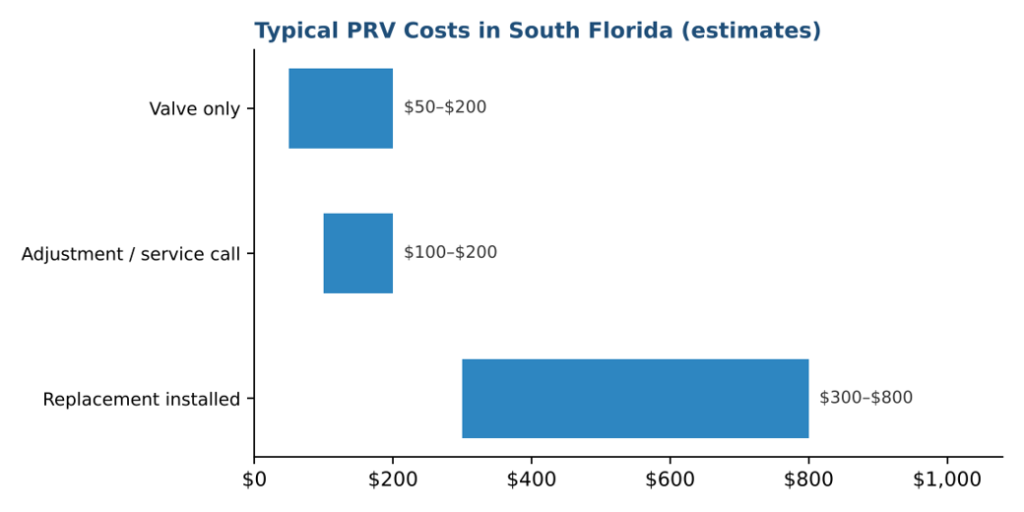
These are general market estimates. Price depends on valve size, pipe material, access, and whether shut-off valves also need replacing. Get an on-site quote for an exact price.
PRVs and Expansion Tanks Go Together
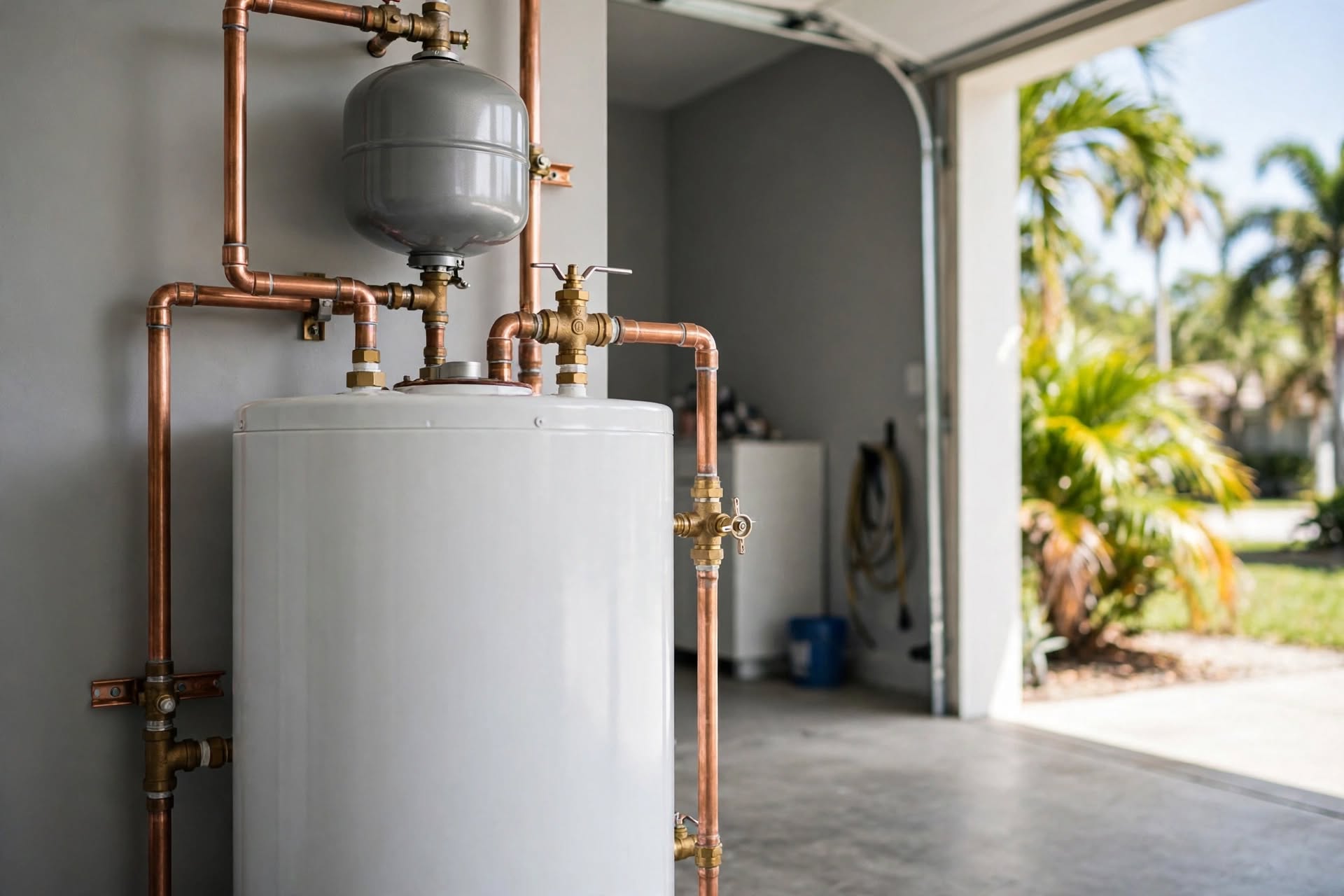
Installing a PRV usually turns your plumbing into a closed system, so the extra water created when your water heater heats can’t flow back to the street. That’s why plumbers often recommend a thermal expansion tank at the same time. Without one, pressure can still spike inside the home, even with a working PRV. Learn more in our guide to water heater expansion tanks in Florida.
Get Your Water Pressure Checked
A to Z Statewide Plumbing tests water pressure and repairs, adjusts, and installs pressure reducing valves for homes and businesses across Broward and Miami-Dade, including Fort Lauderdale, Hollywood, Miramar, Pembroke Pines, Davie, and Miami. Call (954) 981-2133 or request service online.
If you’re dealing with banging pipes, see our guide to pipes making noise, or browse more tips on our plumbing blog.
| Key Takeaways ✔ A PRV lowers incoming water pressure to a safe level, ideally 40 to 60 psi. ✔ Code calls for a PRV when static pressure is over 80 psi. ✔ Failing PRVs cause pressure swings, banging pipes, running toilets, and leaks. ✔ You can test pressure yourself with an inexpensive gauge on a hose bib. ✔ Most PRVs last 10 to 15 years. Pair a new one with an expansion tank. |
Frequently Asked Questions
How do I know if my pressure reducing valve is bad?
Common signs are very high or fluctuating water pressure, banging pipes, toilets that run on their own, repeated leaks, and a dripping water heater relief valve. A pressure gauge reading over 80 psi confirms the problem.
How long does a pressure reducing valve last?
Most last about 10 to 15 years, depending on water quality and how high the incoming pressure is.
What should my water pressure be set at?
Between 40 and 60 psi is ideal for most homes. Code requires a PRV when pressure exceeds 80 psi.
Can a bad PRV cause low water pressure?
Yes. A worn or clogged PRV can stick partly closed and reduce pressure throughout the house.
Do I need an expansion tank if I have a PRV?
In most cases, yes. A PRV creates a closed system, and an expansion tank absorbs the pressure created when your water heater heats up.