
| Quick Answer A tankless water heater costs more up front but heats water on demand, typically lasts around 20 years, saves space, and uses less energy. A tank water heater costs less to buy and install, delivers hot water to several fixtures at once, but usually lasts 8 to 12 years and loses heat while it sits. For most South Florida homes, tankless makes sense if you plan to stay long-term and can handle the install cost; a tank is the budget-friendly choice for simple replacements or rental properties. |
When your water heater fails, you have a decision to make fast. Replace it with the same type, or switch to tankless? The right answer depends on your budget, household size, fuel type (gas or electric), and how long you plan to stay in your home.
How Each Type Works
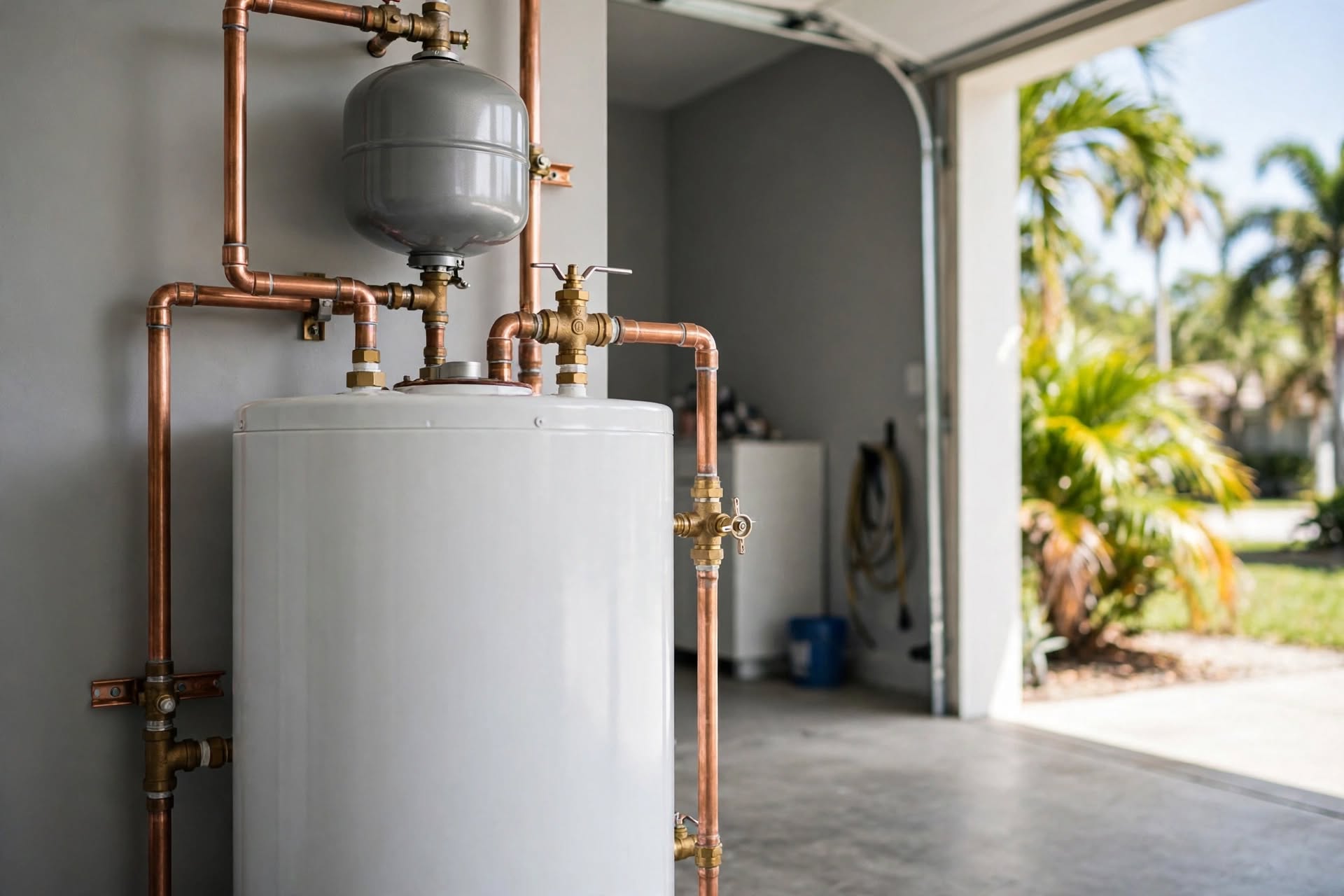
Tank (storage) water heaters keep 30 to 80 gallons of water heated and ready at all times. When you use hot water, cold water refills the tank and gets reheated.
Tankless (on-demand) water heaters have no storage tank. When you open a hot tap, water flows through a heat exchanger and is heated instantly by gas burners or electric elements.
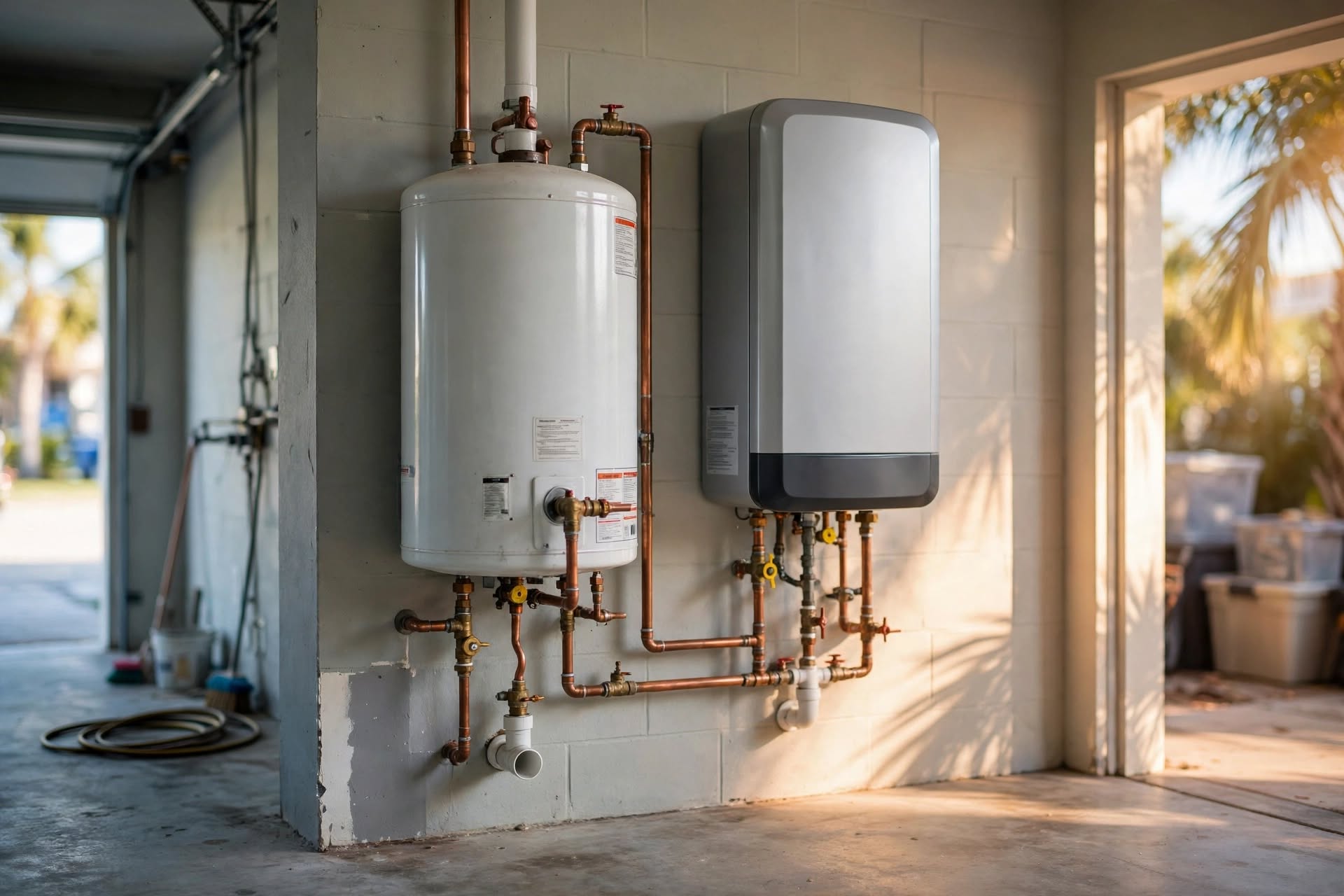
Side-by-Side Comparison
| Factor | Tank Water Heater | Tankless Water Heater |
| Upfront cost | Lower | Higher |
| Typical lifespan | 8–12 years | About 20 years |
| Energy efficiency | Lower (standby heat loss) | Higher (no standby loss) |
| Hot water supply | Limited by tank size | Continuous, limited by flow rate |
| Multiple fixtures at once | Handles well | Depends on unit size |
| Space needed | Large footprint | Wall-mounted, compact |
| Maintenance | Annual flush, anode rod checks | Annual descaling (important with hard water) |
| Installation | Simple swap in most cases | May need gas line, venting, or electrical upgrades |
Upfront Cost Comparison
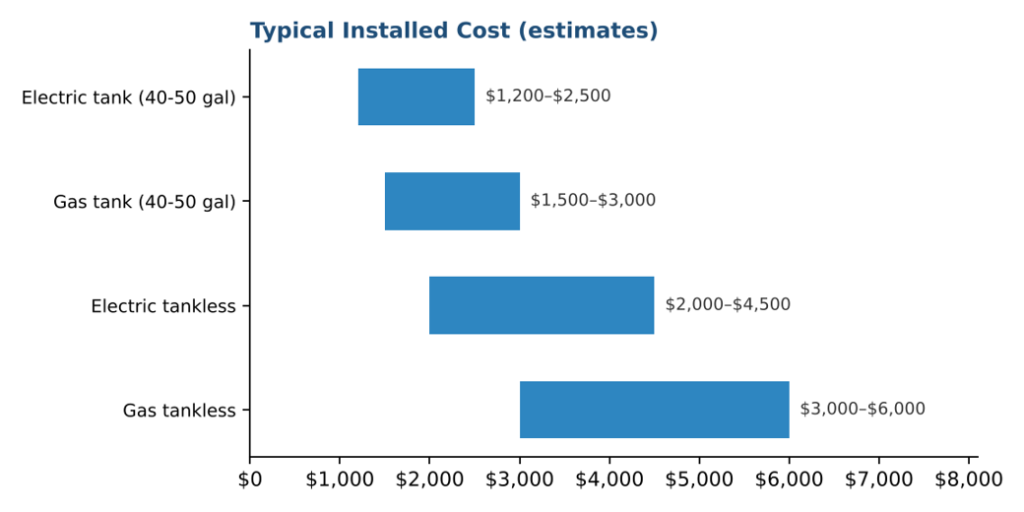
These are broad market estimates for planning only. Tankless installations vary most, because switching from a tank may require a larger gas line, new venting, or an electrical panel upgrade. For a detailed breakdown, see our guide to tankless water heater installation cost.
Lifespan Comparison
Image alt text: Typical Lifespan in Years
Tank heaters typically last 8 to 12 years. Tankless units often reach 20 years with proper maintenance. In South Florida, hard water and sediment can shorten the life of both types if they aren’t maintained.
Energy Efficiency
According to the U.S. Department of Energy, tankless water heaters can be 24% to 34% more energy efficient than conventional storage heaters for homes that use about 41 gallons of hot water a day or less, and 8% to 14% more efficient for homes using around 86 gallons a day. The savings come from eliminating standby heat loss, the energy a tank uses to keep stored water hot around the clock.
Because South Florida’s incoming water is relatively warm compared to northern states, tankless units don’t have to work as hard to reach your target temperature, which helps them deliver strong flow.
Hot Water Supply: Which Runs Out?
- Tank heaters can run out. Once the stored hot water is used, you wait while the tank reheats.
- Tankless heaters don’t run out, but they have a maximum flow rate (gallons per minute). Running two showers, the dishwasher, and the washing machine at once can exceed a small unit’s capacity.
Proper sizing is key. A plumber will size a tankless unit based on how many fixtures you use at the same time.
The Hard Water Factor in South Florida
Much of South Florida’s water is hard, carrying calcium and magnesium that leave scale inside heaters. In a tank, it settles as sediment at the bottom. In a tankless unit, it coats the heat exchanger and reduces efficiency.
- Tank heaters should be flushed once a year. See how to flush a water heater.
- Tankless heaters should be descaled about once a year. Read our guide on tankless water heater descaling in South Florida.
- A water softener can extend the life of either type.
Which One Is Right for Your Home?
| Your Situation | Better Fit |
| Tight budget, need a fast replacement | Tank |
| Planning to stay 10+ years | Tankless |
| Large family using lots of hot water at once | Large tank, or a properly sized (or dual) tankless system |
| Small condo or limited space | Tankless |
| Rental property | Tank (lower upfront cost) |
| Want lower monthly energy use | Tankless |
| Home has natural gas available | Gas tankless is a strong option |
Gas vs. Electric
Both tank and tankless heaters come in gas and electric versions. Gas tankless units generally deliver higher flow rates, while electric tankless units may need a significant electrical upgrade. If you’re also weighing fuel types, our gas vs. electric water heater guide covers the trade-offs.
Get a Professional Recommendation
A to Z Statewide Plumbing installs, repairs, and replaces both tank and tankless water heaters across Broward and Miami-Dade, including Hollywood, Pembroke Pines, Miramar, Weston, Davie, Fort Lauderdale, and Miami. We’ll look at your hot water use, fuel type, and existing setup, then give you a clear recommendation and quote. Call (954) 981-2133 or contact us online.
| Key Takeaways ✔ Tank heaters cost less up front; tankless heaters cost less to run and last longer. ✔ Tank heaters typically last 8–12 years; tankless around 20 years. ✔ The DOE estimates tankless can be 24–34% more efficient for lower-use homes. ✔ Tankless units need correct sizing to supply multiple fixtures at once. ✔ In South Florida, annual flushing or descaling protects either type from hard water. |
Frequently Asked Questions
Is a tankless water heater worth it in Florida?
For many homeowners, yes, especially if you plan to stay long-term. Tankless units last longer and save energy, and Florida’s warmer incoming water helps them deliver good flow. The higher upfront cost is the main drawback.
Do tankless water heaters run out of hot water?
They don’t run out, but they have a maximum flow rate. If too many fixtures run at once, the water may not stay as hot. Proper sizing prevents this.
How long does a tank water heater last compared to tankless?
Tank water heaters usually last 8 to 12 years. Tankless water heaters often last around 20 years with regular descaling.
Can I replace my tank water heater with a tankless one?
Yes, but it may require upgrades, such as a larger gas line, new venting, or electrical work. A plumber can check your home and give you an accurate quote.
Which is cheaper to run, tank or tankless?
Tankless is usually cheaper to run because it only heats water when you need it and avoids standby heat loss.