


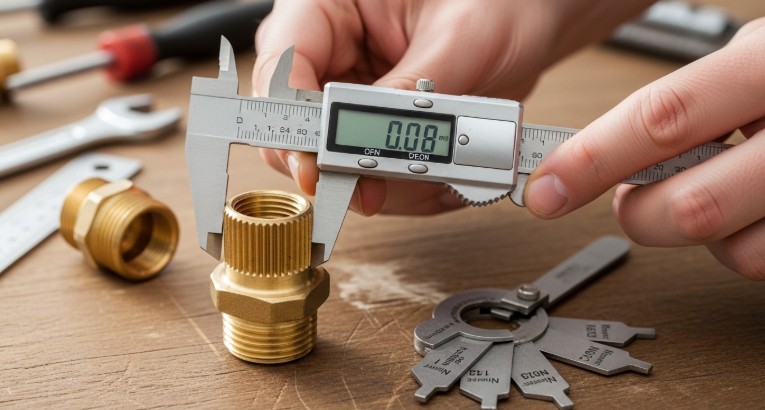
Why Measuring NPT Fittings Correctly Matters
If you’ve ever tried to fix a leaking pipe under your sink or replace a fitting during a late-night plumbing emergency, you already know how frustrating mismatched threads can be. You tighten everything properly, use sealant, and still, drip, drip, drip.
In many cases, the real issue isn’t the installation, it’s incorrect measurement.
Understanding how to measure NPT fittings is one of the most overlooked yet essential plumbing skills. Whether you’re tackling a DIY repair, installing a new water line, or avoiding an emergency plumber call, accurate sizing ensures leak-free, long-lasting connections.
Quick Answer — How to Measure NPT Fittings?
- Measure the outside diameter (OD) of male threads or inside diameter (ID) of female threads
- Use a caliper or ruler for accuracy
- Count the threads per inch (TPI) using a thread gauge
- Match measurements with an NPT sizing chart (nominal sizes ≠ actual size)
- Confirm the tapered thread angle (1:16 taper)
What Are NPT Fittings and Why Accurate Measurement Matters
NPT (National Pipe Thread) fittings are the standard for most plumbing systems in the U.S., commonly used in:
- Water supply lines
- Gas piping systems
- HVAC connections
Unlike straight threads, NPT fittings are tapered, meaning they tighten by wedging into each other, creating a seal.
Why accuracy matters:
- Incorrect sizing leads to leaking pipes
- Causes pressure drops in water systems
- Can damage threads permanently
- In gas lines, mistakes can become serious safety hazards
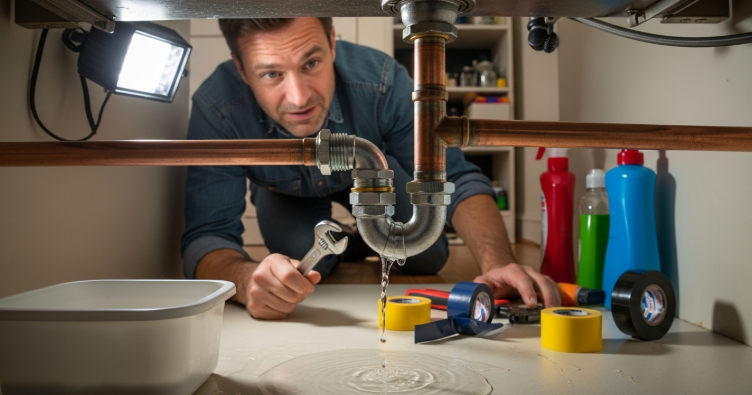
Real-life example: A homeowner trying to fix a leaking pipe under the sink uses a 1/2″ fitting that “looks right.” But because NPT sizes are nominal, the mismatch leads to constant dripping even after tightening and applying tape.
Tools Required to Measure NPT Fittings
To get professional-level accuracy, you’ll need:
- Digital caliper (best for precise OD/ID measurement)
- Thread pitch gauge (to measure TPI accurately)
- Measuring tape or ruler (backup option)
- NPT sizing chart (critical reference tool)
- Marker or notepad (to record measurements)
Understanding NPT Sizing (Before You Measure)
One of the biggest challenges in plumbing is that NPT sizes are nominal, not actual.
Key concepts:
- OD (Outside Diameter): Measured on male threads
- ID (Inside Diameter): Measured on female threads
- TPI (Threads Per Inch): Determines compatibility
- Taper rate: 1/16 inch per inch
Common sizes:
- 1/8″ NPT
- 1/4″ NPT
- 1/2″ NPT (most common in homes)
- 3/4″ NPT
- 1″ NPT
How to Measure NPT Fittings Correctly
Step 1 — Identify Male vs Female Fitting
- Male fitting: Threads on the outside
- Female fitting: Threads on the inside
This determines whether you measure OD or ID.
Step 2 — Measure the Diameter
- Male fitting → Measure outside diameter (OD)
- Female fitting → Measure inside diameter (ID)
Use a caliper for accuracy. Even a small error can lead to leaks.
Step 3 — Count Threads Per Inch (TPI)
Use a thread gauge to determine TPI.
Match this with standard NPT values.
Example:
- 1/2″ NPT = 14 TPI
Step 4 — Match with an NPT Chart
This is where many DIYers go wrong.
Your measured OD will not equal the pipe size.
Use an NPT chart to convert your measurement into the correct nominal size.
Step 5 — Double-Check the Taper
NPT threads are slightly tapered.
If the threads appear straight, you may be dealing with:
- BSP threads
- Compression fittings
Common Mistakes When Measuring NPT Fittings
Avoid these costly errors:
- Confusing OD with nominal size
- Ignoring thread pitch
- Mixing NPT with BSP or metric threads
- Measuring worn or damaged fittings
- Overlooking thread taper
Common Plumbing Problems Caused by Incorrect NPT Measurement
Improper sizing doesn’t just cause inconvenience, it leads to real plumbing issues:
- Persistent leaks even after tightening
- Cross-threading and fitting damage
- Reduced water pressure
- Misaligned pipe connections
- Expensive rework or emergency plumber visits
NPT vs Other Thread Types (Comparison Table)
| Feature | NPT | BSP | Compression Fittings |
|---|---|---|---|
| Thread Type | Tapered | Parallel/Tapered | Straight |
| Seal Method | Thread interference + sealant | Washer or thread | Ferrule compression |
| Common Use | USA plumbing systems | UK/Europe systems | Household fixtures |
| Measurement Style | OD + TPI | OD + pitch | Tube OD |
DIY vs Professional Measurement (Comparison Table)
| Factor | DIY Measurement | Professional Plumber |
|---|---|---|
| Accuracy | Moderate | High precision |
| Tools | Basic | Advanced calibrated tools |
| Cost | Low | Service fee |
| Risk of Error | Higher | Minimal |
| Best For | Small repairs | Complex systems |
Safety Precautions When Measuring Pipe Fittings
Before you start any plumbing work:
- Turn off water or gas supply
- Wear gloves to prevent cuts
- Avoid working on hot or pressurized pipes
- Ensure stable footing and good lighting
When to Call a Professional Plumber
Sometimes, DIY isn’t the safest or most cost-effective option.
Call a professional if:
- You have persistent leaks after installation
- Thread types are unknown or mixed
- You’re working on gas lines
- The system involves high pressure or commercial setups
- Measurements don’t match standard charts
In such situations, experienced professionals like A to Z State Wide Plumbing can accurately identify fittings and prevent costly mistakes or safety risks.
Cost Factors Involved in NPT Fitting Measurement & Replacement
Understanding costs helps you plan better:
- Tools (calipers, gauges): $15–$100
- Replacement fittings: $5–$50+
- Labor costs: Varies by job complexity
- Repair costs from incorrect sizing: Potentially hundreds
Maintenance Tips to Avoid NPT Fitting Issues
Prevent future problems with these expert tips:
- Inspect fittings regularly for wear
- Replace damaged threads immediately
- Use proper sealant (PTFE tape or pipe dope)
- Avoid over-tightening
- Store spare fittings in dry, protected conditions
People Also Ask — Related Questions
How to measure NPT fittings without a gauge?
Use a ruler to measure diameter and compare it to an NPT chart.
Are NPT fittings measured by inside or outside diameter?
Depends on the fitting:
- Male = OD
- Female = ID
How do I know if a fitting is NPT or BSP?
Check thread taper and angle, NPT is tapered.
What is the most common NPT fitting size?
1/2″ NPT is widely used in residential plumbing.
Can you reuse NPT fittings?
Yes, if threads are undamaged and clean.
Why do NPT threads need sealant?
The taper alone doesn’t create a perfect seal.
How tight should NPT fittings be?
Hand-tight plus 1–2 turns with a wrench.
FAQs About How to Measure NPT Fittings
How to measure NPT fittings accurately at home?
Use a digital caliper and thread gauge, then match results with an NPT chart.
What tools are best for measuring NPT threads?
Digital calipers and thread pitch gauges provide the most accurate results.
Can I use a regular ruler instead of a caliper?
Yes, but accuracy may suffer, especially for small fittings.
Do all NPT fittings have the same thread pitch?
No, each size has a specific TPI standard.
How do I convert OD measurement to NPT size?
Use a standard NPT chart to find the nominal size.
What happens if I use the wrong NPT size?
You may experience leaks, thread damage, or system failure.
Are NPT and FNPT measurements different?
Yes, NPT refers to male threads, FNPT refers to female threads.
How to measure NPT fittings for replacement parts?
Measure OD/ID, check TPI, and match with a chart before purchasing.
Conclusion: Mastering How to Measure NPT Fittings
Learning how to measure NPT fittings correctly is a small skill that delivers big results. It prevents leaks, saves money, and ensures your plumbing system runs efficiently.
Key takeaways:
- Always measure OD or ID correctly
- Use a thread gauge for TPI
- Match results with an NPT chart
- Double-check taper
For simple fixes, DIY works. But for complex systems or recurring issues, don’t hesitate to consult professionals.
Tip: Keep a basic measuring kit at home, this one step can save you from costly plumbing emergencies and repeated repairs.


