


When Hot Water Suddenly Disappears
Few things catch homeowners off guard like stepping into a cold shower. One moment your water heater is working fine, and the next, nothing but cold water and confusion. In many cases, the root cause is simple: the pilot light has gone out.
Understanding why do pilot lights go out on water heaters is essential because this small flame is what keeps your entire hot water system running. When it fails, your home quickly feels the impact. While it may seem like a major breakdown, the issue is often a minor fault or safety response designed to protect your system.
In real plumbing service calls, technicians frequently find that what homeowners assume is a full heater failure is actually a simple thermocouple issue, airflow problem, or gas interruption.
Quick Answer — Why do pilot lights go out on water heaters?
Pilot lights on water heaters typically go out due to a faulty thermocouple, gas supply interruptions, dirt buildup, strong drafts, or a malfunctioning gas control valve. In many cases, it is also a built-in safety shutdown to prevent gas leaks or unsafe combustion.
What a Pilot Light Does in a Water Heater
The pilot light is a small, continuous flame that serves as the ignition source for the main burner in gas water heaters.
It is responsible for:
- Heating household water consistently
- Keeping the burner ready to ignite when needed
- Ensuring safe and controlled combustion of gas
When this flame goes out, the system stops producing hot water immediately. This is why many homeowners mistakenly believe they need an emergency plumber, even though the issue is often localized and repairable.
Why Pilot Lights Go Out on Water Heaters
Pilot lights fail when something disrupts the combustion process or safety mechanisms inside the heater.
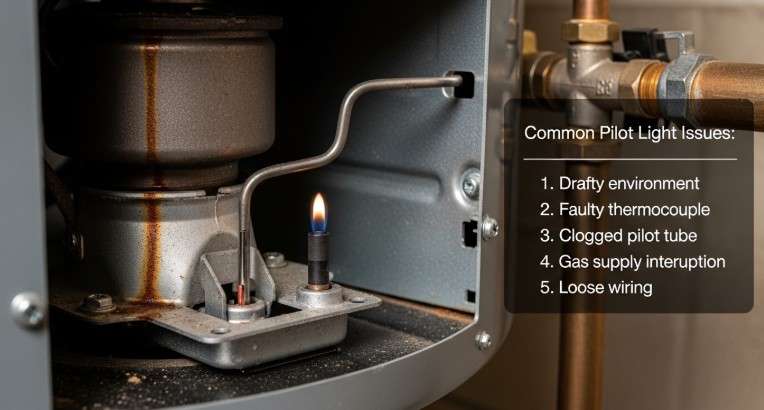
Common causes include:
A weak or faulty thermocouple that fails to sense heat
Interrupted gas supply or low gas pressure
Dust or carbon buildup clogging the pilot orifice
Strong drafts or airflow blowing out the flame
A failing gas control valve
Sediment buildup affecting burner performance
In many service cases, a simple cleaning or part replacement restores full functionality without replacing the entire unit.
Common Problems Linked to Pilot Light Failure
When the pilot light goes out, homeowners usually notice other symptoms such as:
- No hot water at taps or showers
- Water heater repeatedly shutting off
- Yellow, weak, or unstable flame
- Clicking sounds without ignition
- Gas smell near the unit (serious warning)
- Inconsistent water temperature
In real-world plumbing visits, these symptoms often mimic larger system failures but are actually linked to one small faulty component.
Tools Used for Inspection and Troubleshooting
Plumbers typically use the following tools during diagnosis:
- Flashlight for visibility
- Screwdrivers for panel access
- Multimeter for thermocouple testing
- Gas shutoff wrench
- Compressed air for cleaning pilot orifice
- Protective gloves for safety
These tools help isolate whether the issue is mechanical, electrical, or gas-related.
Safety Considerations Before Inspection
Gas water heaters require strict safety precautions:
Always turn off the gas supply before inspecting
Avoid open flames or sparks near the unit
Ensure proper ventilation in the area
Do not proceed if you smell gas
Never bypass safety valves or controls
If there is any sign of a gas leak, stop immediately and contact a professional. Gas-related issues are high-risk and should never be handled casually.
Why Pilot Lights Go Out on Water Heaters
Start by checking the pilot light itself. If it is completely out or flickering, this often indicates airflow or gas issues.
Next, confirm that the gas supply is active and that other appliances are working normally. If gas is flowing correctly, the issue may be internal.
Inspect the thermocouple for damage, looseness, or carbon buildup. This component is one of the most common failure points.
Clean the pilot orifice carefully to remove dust or debris blocking gas flow.
Relight the pilot light according to manufacturer instructions and observe whether it stays stable.
Finally, monitor the system. If the flame continues going out, a deeper mechanical issue is likely present.
Problems Caused by Ignoring Pilot Light Issues
Delaying repairs can lead to:
- Complete loss of hot water
- Increased energy consumption
- Repeated shutdowns
- Damage to burner components
- Higher risk of gas leaks or incomplete combustion
A small issue can quickly escalate into a full system failure if ignored.
Troubleshooting and Prevention Tips
Regular maintenance can prevent most pilot light problems:
Clean burner assembly at least once a year
Inspect thermocouple condition regularly
Keep heater area free from drafts
Flush tank to reduce sediment buildup
Schedule annual plumbing inspections
These steps help extend the lifespan of your water heater and reduce emergency repair calls.
DIY vs Professional Repair Approach
DIY attempts are usually limited to relighting or basic cleaning. While this can solve minor issues, gas systems are sensitive and risky.
DIY approach:
Low cost
Limited accuracy
Suitable only for simple relighting
Higher risk if misdiagnosed
Professional service:
Accurate diagnosis using proper tools
Safe handling of gas components
Long-term repair solutions
Prevention of recurring issues
When to Call a Professional Plumber
You should contact a professional immediately if:
The pilot light keeps going out repeatedly
You detect a gas smell near the unit
Relighting does not resolve the issue
The water heater fails to ignite at all
There is visible corrosion or damage on components
In these situations, experienced services like A to Z State Wide Plumbing can safely diagnose the problem, replace faulty parts, and restore reliable hot water without risking safety or further damage.
Cost Factors for Repairs
Repair costs vary depending on the issue:
Thermocouple replacement is usually low cost
Gas valve repairs are more expensive
Cleaning and maintenance are generally affordable
Emergency visits increase total cost
Older water heaters may require full replacement
Small issues are inexpensive to fix, but repeated failures may signal a system nearing the end of its lifespan.
Maintenance Tips to Prevent Pilot Light Problems
Keep the burner assembly clean and dust-free
Schedule yearly servicing for your water heater
Maintain proper ventilation around the unit
Replace worn thermocouples early
Monitor gas pressure consistency
Preventive care is always cheaper than emergency plumbing repairs.
People Also Ask
Pilot lights go out due to thermocouple failure, airflow issues, or gas interruptions.
It is not immediately dangerous, but it can become risky if gas builds up.
Yes, you can relight it if no gas smell is present.
It should remain lit continuously in gas systems.
Weak flames are usually caused by clogs or low gas pressure.
A faulty thermocouple prevents the flame from staying lit.
Always shut off gas if a leak is suspected.
Conclusion: Understanding Pilot Light Failures
Understanding why pilot lights go out on water heaters helps homeowners quickly identify whether the issue is minor or requires professional repair. While many causes are simple, like drafts or dirt buildup others involve gas system components that demand expert attention.
The key takeaway is straightforward: regular maintenance and early troubleshooting can prevent most pilot light failures, but recurring issues should always be handled by a qualified plumbing professional to ensure safety, efficiency, and long-term reliability.


