

If your home in Miami, Fort Lauderdale, or the surrounding South Florida areas was built before 1975, there may be a silent crisis brewing beneath your feet. Cast iron was the gold standard for residential sewer lines during that era, but these pipes were never intended to last forever.
At A to Z Statewide Plumbing, we are seeing a massive increase in cast iron pipe failures across the region. Understanding why these pipes fail and how to spot the signs can save you thousands of dollars in emergency repairs.
The Lifespan of Cast Iron in Florida
While cast iron is incredibly strong, it has a functional lifespan of approximately 40 to 60 years. In South Florida’s unique environment, this lifespan is often shorter due to:
- High Humidity & Salt Air: Our coastal climate accelerates the oxidation (rusting) process.
- Shifting Soil: The sandy soil of Florida can shift, causing brittle, aged iron pipes to crack or sag.
- Chemical Corrosion: Decades of using harsh drain cleaners and the natural acidity of sewage can eat away at the pipe’s interior.
5 Signs Your Cast Iron Pipes Are Failing
1. Frequent and Persistent Clogs
As cast iron ages, it undergoes a process called “tuberculation”. Rust builds up inside the pipe, creating a rough, jagged surface. This surface catches hair, grease, and debris, leading to clogs that keep coming back even after professional snaking.
2. Foul Sewer Odors
A healthy plumbing system is airtight. If you smell a persistent “rotten egg” odor in your bathroom or kitchen, it’s likely that cracks have formed in your cast iron lines, allowing sewer gas to escape into your home’s walls or crawl spaces.
3. Slow Drains Throughout the House
If only one sink is slow, it’s a local clog. However, if every drain in the house feels sluggish, the main cast iron trunk line is likely restricted by heavy scale buildup or structural collapse.
4. Discolored Water or Floor Stains
In some cases, failing cast iron pipes can lead to “slab leaks.” If you notice mysterious moisture under your carpets, warped wood flooring, or discolored grout lines in your tile, water may be seeping up from cracked pipes beneath the concrete slab.
5. Pest Infestations
Cracked sewer pipes are like an open door for cockroaches and even rodents. If you find yourself dealing with persistent pest issues despite regular exterminations, they may be entering through a breach in your underground sewer line.
The Danger of Ignoring the Issue
When a cast iron pipe finally fails, it doesn’t just leak—it can collapse. A collapsed line can lead to raw sewage backing up into your home, causing extensive structural damage and serious health risks for your family.
Historically, the only fix was to jackhammer through your home’s foundation to replace the pipes—a process that is loud, messy, and incredibly expensive.
Modern Solutions: Trenchless Pipe Lining
The good news is that you no longer have to destroy your floors to fix your pipes. At A to Z Statewide Plumbing, we specialize in Trenchless Pipe Lining (CIPP).
We can create a brand-new, seamless pipe inside your old, rusted cast iron line without digging a single trench. This “pipe-within-a-pipe” is made of a durable epoxy resin that is resistant to corrosion and root intrusion, lasting for another 50+ years.
Protect Your Home Today
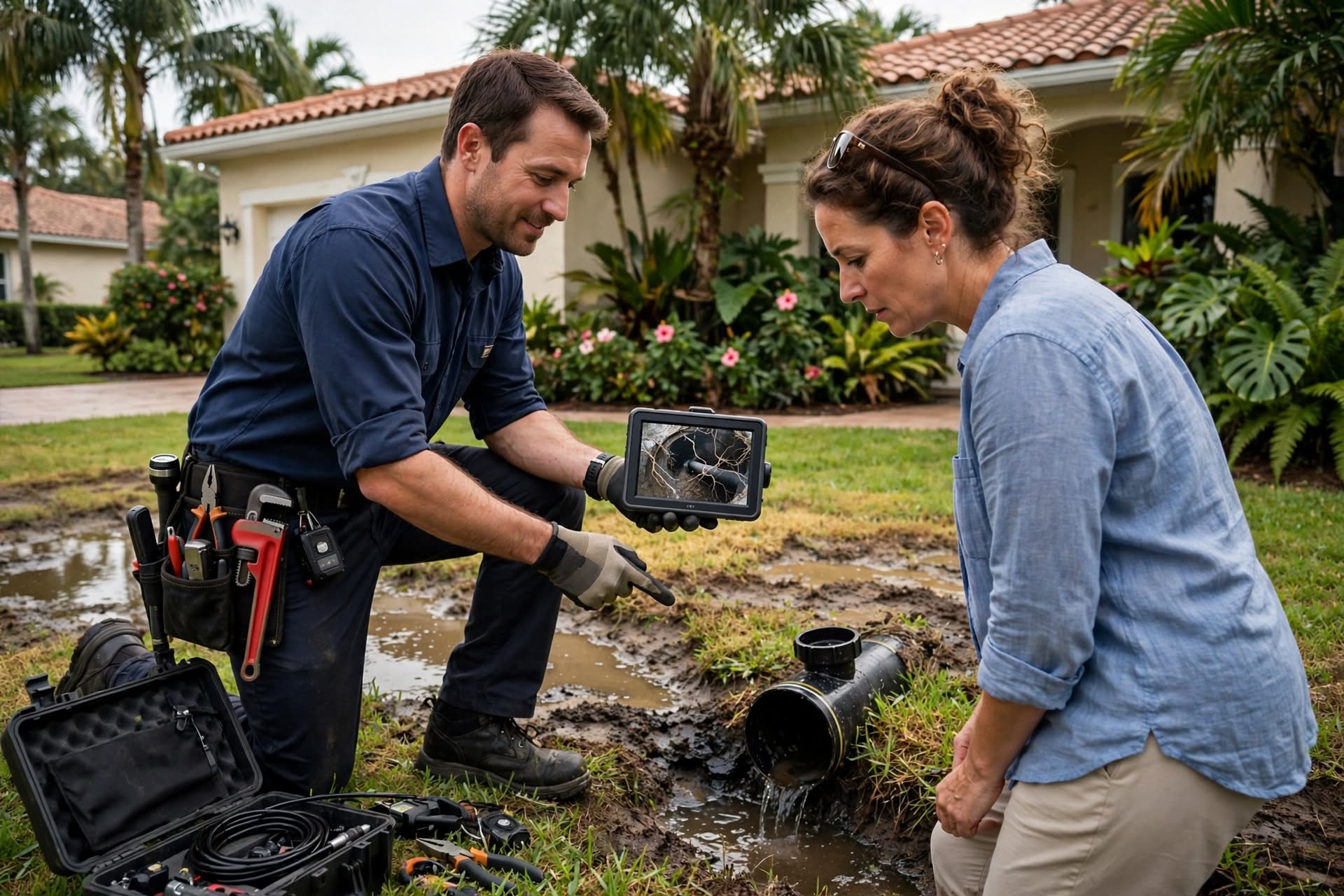
Don’t wait for a catastrophic backup to find out the condition of your plumbing. If your home is 40 years or older, a Professional Video Camera Inspection is the best way to assess your risk.
Is your plumbing at risk?
Own an older home in South Florida? Cast iron pipes fail silently — often causing slab leaks and sewage backups. Get a free pipe inspection from A to Z Plumbing: (954) 981-2133.