
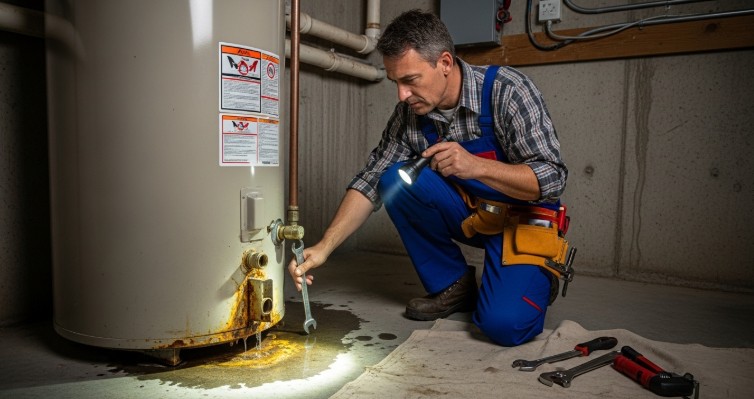
A water heater leaking from the bottom is one of those plumbing issues that immediately raises concern—and for good reason. Unlike minor drips from a valve or connection, a bottom leak often signals deeper internal failure. If ignored, it can quickly escalate into water damage, mold growth, or even complete system failure.
Understanding what to do if water heater is leaking from bottom can help you act fast, reduce repair costs, and prevent serious home damage. This guide breaks everything down into clear, practical steps any homeowner can follow.
Short Answer: What to Do If Water Heater is Leaking from Bottom?
If you notice your water heater leaking from the bottom, take immediate action:
- Turn off power (electric breaker or gas supply) immediately
- Shut off the cold water supply to stop further leaking
- Check whether the leak is coming from the drain valve or the tank body
- If water is coming from the tank itself, replacement is usually required
- Call a plumber if the leak continues or increases
Quick takeaway:
Bottom leaks are often serious and usually indicate internal tank failure or critical component breakdown.
What Does It Mean When Water Heater is Leaking from Bottom?
A leak from the bottom of a water heater does not always mean the same thing, but it usually falls into two categories:
- External component failure (like drain valve or fittings)
- Internal tank damage (corrosion or structural failure)
Water heaters store pressurized hot water. Over time, heat, sediment, and pressure weaken the internal lining. When failure occurs at the bottom, it often means the tank is no longer structurally safe.
Unlike top leaks, which are often repairable, bottom leaks are more dangerous because they typically involve internal corrosion or tank rupture risk.
Common Causes of Water Heater is Leaking from Bottom
Several issues can cause bottom leaks:
- Sediment buildup causing overheating and internal damage
- Corroded inner tank (most common serious issue)
- Faulty or loose drain valve
- Excess water pressure inside the tank
- Aging water heater reaching end of lifespan
In many homes, sediment buildup is the hidden cause. Over time, minerals settle at the bottom of the tank, creating overheating spots that slowly damage the metal lining.
What to Do If Water Heater is Leaking from Bottom Immediately
When you first notice the leak, speed matters. Follow these steps:
- Shut off power supply (breaker for electric or gas valve for gas units)
- Turn off the water inlet valve to stop incoming water
- Contain leaking water using buckets or towels
- Identify whether the leak is from valve or tank body
- Do not use hot water system until inspection is complete
This immediate response helps prevent electrical hazards, floor damage, and further system deterioration.
What to Do If Water Heater is Leaking from Bottom (Step-by-Step Fix Guide)
If the leak is minor or appears to be from a valve, you can inspect it carefully before calling a professional.
What to Do If Water Heater is Leaking from Bottom Safely
Step 1: Turn off electricity or gas supply
This eliminates shock or combustion risk.
Time: 2–3 minutes | Difficulty: Easy
Step 2: Shut off cold water inlet valve
Stops more water from entering the tank.
Time: 2 minutes | Difficulty: Easy
Step 3: Place bucket or drainage container
Control water leakage and prevent floor damage.
Step 4: Inspect drain valve for looseness
A common failure point in older units.
Step 5: Tighten or replace faulty valve if needed
Simple fix if valve is the cause.
Time: 15–30 minutes | Difficulty: Moderate
Step 6: Flush tank if sediment buildup is suspected
Helps restore efficiency and reduce pressure issues.
Time: 1–2 hours | Difficulty: Moderate
Step 7: Call plumber if leak persists
Persistent leaks often indicate internal tank failure.
Time Summary:
- Inspection: 10–15 minutes
- Minor repair: 30–60 minutes
- Full evaluation: 1–2 hours
If the problem continues, professional help from A to Z State Wide Plumbing is recommended for full system diagnosis.
Signs Your Bottom Leak is Serious
Not all leaks are equal. Watch for these warning signs:
- Continuous water pooling under the tank
- Rust-colored or discolored water leakage
- Loud rumbling or popping noises from tank
- Noticeably reduced hot water supply
- Visible corrosion at tank base
These symptoms often indicate internal tank failure rather than simple plumbing repair issues.
DIY vs Professional Fix for Water Heater Bottom Leak
Can You Fix Water Heater is Leaking from Bottom Yourself?
You can handle minor issues if the problem is external.
Basic tools needed:
- Adjustable wrench
- Hose for draining
- Bucket or drain pan
Possible DIY fixes:
- Tightening loose drain valve
- Flushing sediment buildup
However, DIY solutions have limitations. If the leak comes from inside the tank, no home repair will fix it permanently.
When to Call a Professional Plumber
Call a professional plumber immediately if you notice:
- Tank corrosion or structural damage
- Leak continues after valve replacement
- No visible external source of leak
- Water heater is 8–12+ years old
At this stage, A to Z State Wide Plumbing often handles full diagnostics to determine whether repair or replacement is required.
Water Heater Bottom Leak Solutions
| Issue | DIY Fix Possible | Average Cost | Time Required | Recommended Action |
|---|---|---|---|---|
| Loose drain valve | Yes | $10–$50 | 15–30 min | DIY repair |
| Sediment buildup | Yes | $80–$200 | 1–2 hrs | Flush tank |
| Faulty valve | Sometimes | $100–$250 | 30–60 min | DIY or plumber |
| Internal corrosion | No | $800–$2,500+ | 2–4 hrs | Replace unit |
| Severe tank leak | No | Varies | Immediate | Emergency plumber |
Repair vs Replace: What Should You Do?
Repair if:
- Drain valve is leaking
- Minor sediment issue exists
- Water heater is relatively new
Replace if:
- Tank is corroded
- Leak is coming from tank body
- Frequent plumbing repair cost is adding up
- Unit is over 10 years old
In most bottom leak cases, replacement is the more reliable long-term solution.
Cost of Fixing Water Heater is Leaking from Bottom
Here’s what homeowners typically spend:
- Drain valve replacement: $100–$250
- Tank flushing service: $80–$200
- Minor repair work: $100–$300
- Full replacement: $800–$2,500+
- Emergency plumbing service: higher depending on urgency
Costs rise significantly when internal tank damage is involved.
Safety Considerations When Water Heater is Leaking from Bottom
Safety must always come first:
- Always shut off electricity or gas first
- Avoid contact with hot leaking water
- Prevent electrical shock near wet areas
- Do not attempt repair if tank is corroded
- Ensure proper drainage to avoid flooding
Ignoring safety can quickly turn a plumbing issue into a household emergency.
What Happens If You Ignore a Bottom Water Heater Leak
Delaying repairs can lead to:
- Floor and structural water damage
- Mold and mildew growth inside walls and flooring
- Complete tank failure
- Much higher plumbing repair costs
- Possible electrical hazards
What starts as a small leak can escalate into a full system replacement scenario.
How to Prevent Water Heater Leaks in the Future
Preventive maintenance reduces risk significantly:
- Flush tank annually to remove sediment
- Inspect drain valve regularly
- Monitor water pressure levels
- Test pressure relief valve periodically
- Schedule routine plumbing inspections
Professional maintenance from A to Z State Wide Plumbing can extend water heater life and prevent sudden failures.
FAQs About Water Heater is Leaking from Bottom
What to do if water heater is leaking from bottom suddenly?
Immediately shut off power and water supply, then inspect the leak source.
Is a bottom water heater leak dangerous?
Yes, it can cause flooding, electrical hazards, and tank failure.
Can a leaking water heater be repaired?
Only if the issue is a valve or sediment-related problem.
How long can a water heater last after leaking from bottom?
Tank leaks usually require immediate replacement.
What causes most bottom water heater leaks?
Corrosion and sediment buildup are the most common causes.
Should I turn off water heater if it is leaking?
Yes, always shut off power and water immediately.
How much does it cost to fix bottom water heater leak?
Costs range from $100 to $2,500+ depending on severity.
Do I need a plumber for bottom water heater leak?
Yes, especially if the leak is continuous or tank-related.
Conclusion: What to Do If Water Heater is Leaking from Bottom
A bottom water heater leak is not something to ignore or delay. In most cases, it signals either serious internal damage or aging system failure.
Key takeaways:
- Act immediately to shut off power and water
- Identify whether the issue is valve or tank-related
- Minor issues may be repairable
- Tank corrosion usually requires full replacement
For homeowners dealing with persistent or unclear leaks, contacting experts like A to Z State Wide Plumbing ensures accurate diagnosis and prevents unnecessary damage. In many cases, early professional intervention saves both time and cost, avoiding emergency replacements and structural water damage.
Water heater leaking from the bottom is a serious sign of tank failure. Don’t wait — turn off the water supply and call A to Z Plumbing: (954) 981-2133. We offer same-day water heater repair and replacement across South Florida.