
A slab leak is one of the plumbing problems that homeowners dread most, and for good reason. It happens when a pipe underneath the concrete foundation of your home springs a leak, which means the water is hidden where you cannot see it. Left alone, a slab leak damages your foundation, raises your water bill, and can lead to mold and structural problems.
In Miami-Dade, where many homes are built on concrete slabs, these leaks are more common than homeowners realize. Knowing the warning signs, the repair costs, and when a simple fix is not enough helps you handle a slab leak before it becomes a disaster. Here is what you need to know.
What a Slab Leak Is & Why It Happens
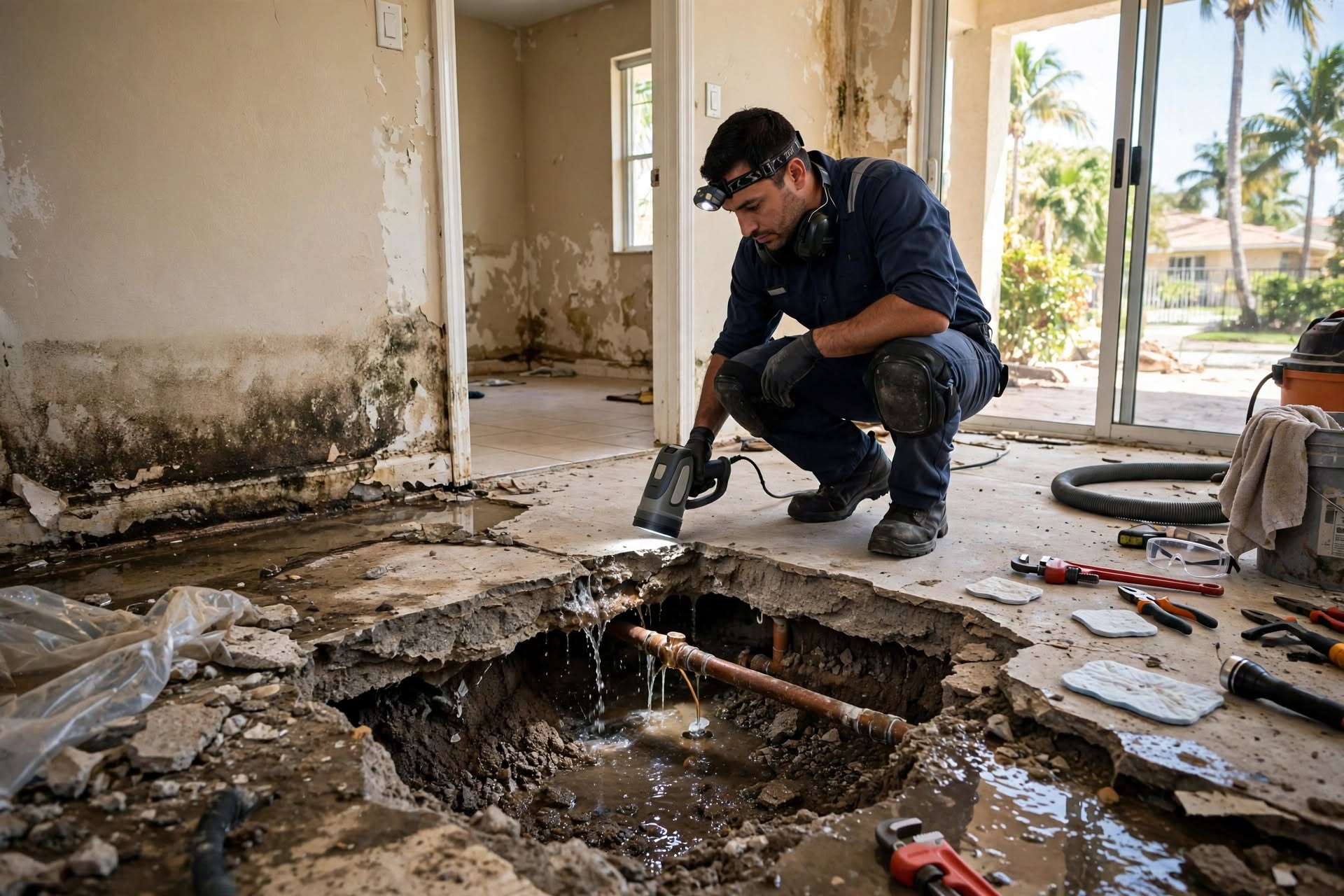
Most homes in Miami-Dade are built on a concrete slab foundation, with the water and sewer pipes running underneath or through that slab. A slab leak is a leak in one of those pipes. Because the pipe sits under the concrete, the water has nowhere to go but into the ground beneath your home and, eventually, up into the slab itself.
Slab leaks happen for a few reasons. Pipes corrode over time, especially older copper or galvanized lines. The pressure of the concrete and the ground shifting can wear on the pipes and cause them to crack. Poor installation or abrasion, where a pipe rubs against the concrete or gravel, can also create a leak over the years. In South Florida, the combination of aging pipes and the local soil and water conditions makes slab leaks a problem that many homeowners eventually face.
Warning Signs of a Slab Leak
Because a slab leak is hidden, you have to watch for the indirect signs that one is happening. Catching it early makes the repair easier and cheaper.
A Spike in Your Water Bill
One of the first signs is a water bill that jumps up without explanation. If you have not changed your water usage but your bill climbs, water may be leaking continuously under your slab. A hidden leak runs all day and night, and it shows up on your bill.
Warm Spots on the Floor
If the leak is in a hot water line, you might feel warm spots on your floor as the hot water heats the concrete. Walking across the floor and noticing an area that is unusually warm is a classic sign of a hot water slab leak.
The Sound of Running Water
When all your fixtures are off and you still hear water running, that sound may be a slab leak. The water moving through the leaking pipe under the floor can sometimes be heard in a quiet house.
Cracks & Moisture
A slab leak can cause cracks to appear in your floors or walls as the foundation is affected. You might also notice moisture, damp spots, or even mold on the floor, which points to water coming up from below. A musty smell with no obvious source is another signal.
Low Water Pressure
If a slab leak is significant, it can reduce the water pressure throughout your home, since water is escaping before it reaches your fixtures.
What Slab Leak Repair Costs in Miami-Dade
The cost of slab leak repair varies widely, and it depends on several factors. The location of the leak, how deep it is, how it is accessed, and the repair method all affect the price. A simple, accessible leak costs far less than one that requires breaking through the slab in a hard-to-reach spot.
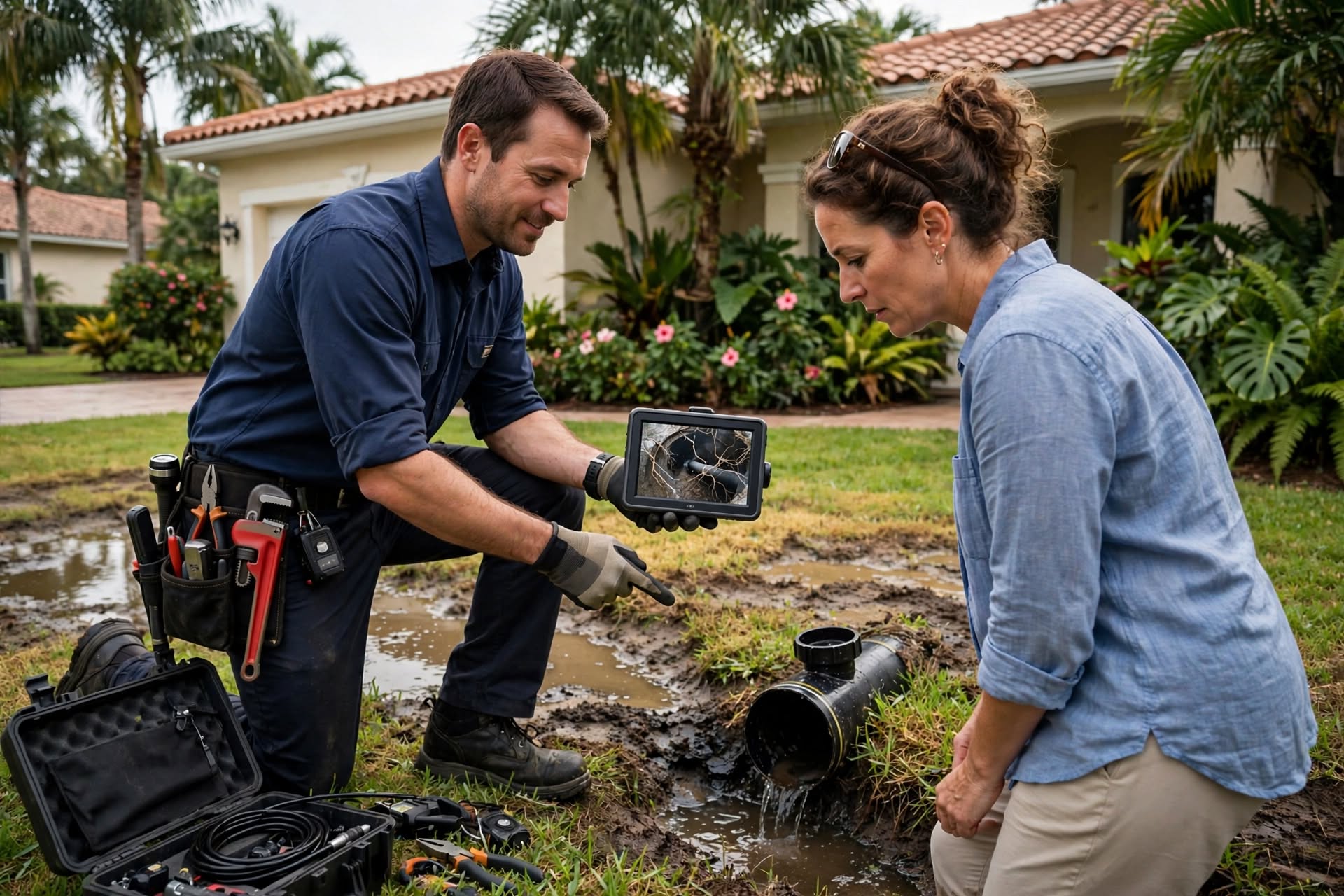
The first cost is often leak detection, since the leak has to be located precisely before it can be fixed. Plumbers use electronic equipment to pinpoint the leak without tearing up the whole floor. Once the leak is found, the repair cost depends on the method used. A spot repair, where only the leaking section is accessed and fixed, costs less than a more involved solution. When the pipe is accessed by breaking through the slab, the cost rises because of the labor and the need to restore the concrete and flooring afterward.
Because the range is so wide, getting a clear estimate after the leak is located is important. A plumber who offers upfront, straightforward pricing tells you the cost before the work begins, so you are not surprised by the final bill.
When a Simple Fix Isn’t Enough
Sometimes a slab leak is a one-time problem that a spot repair solves completely. The plumber accesses the leaking section, repairs it, and the issue is resolved. For a single leak in an otherwise sound system, this is often the right approach, and it is the least expensive option.
Other times, a slab leak is a sign of a bigger problem. If your pipes are old and corroded throughout, one slab leak may be the first of many. Fixing one spot only to have another leak appear a few months later is frustrating and costly. In these cases, a plumber might recommend rerouting the pipe or repiping part or all of the home rather than chasing individual leaks.
Rerouting the Pipe
Rerouting means abandoning the leaking pipe under the slab and running a new line through the walls or ceiling instead. This avoids breaking through the concrete and gives you a fresh pipe that is easier to access in the future. For a leak in a difficult location, rerouting can be the better choice.
Repiping the Home
When the whole system is aging and leaks are becoming a pattern, repiping replaces the old pipes with new ones, often using modern materials like PEX that resist corrosion. Repiping is a bigger investment, but it solves the underlying problem and prevents the repeated cost and disruption of fixing one leak after another. For an older Miami-Dade home with original plumbing, repiping is sometimes the smarter long-term decision.
Making the Right Call for Your Home
A slab leak is a serious problem, but it is manageable when you catch it early and handle it correctly. Watch for the warning signs, such as a rising water bill, warm spots on the floor, the sound of running water, and unexplained cracks or moisture. Have the leak located precisely, get a clear estimate, and then decide on the right repair. For a single leak, a spot repair may be all you need. For an aging system with recurring problems, rerouting or repiping saves you money and headaches down the road.
The homeowners who come through a slab leak in the best shape are the ones who act on the early signs and choose the repair that fits their home’s real condition, not just the cheapest patch of the moment.