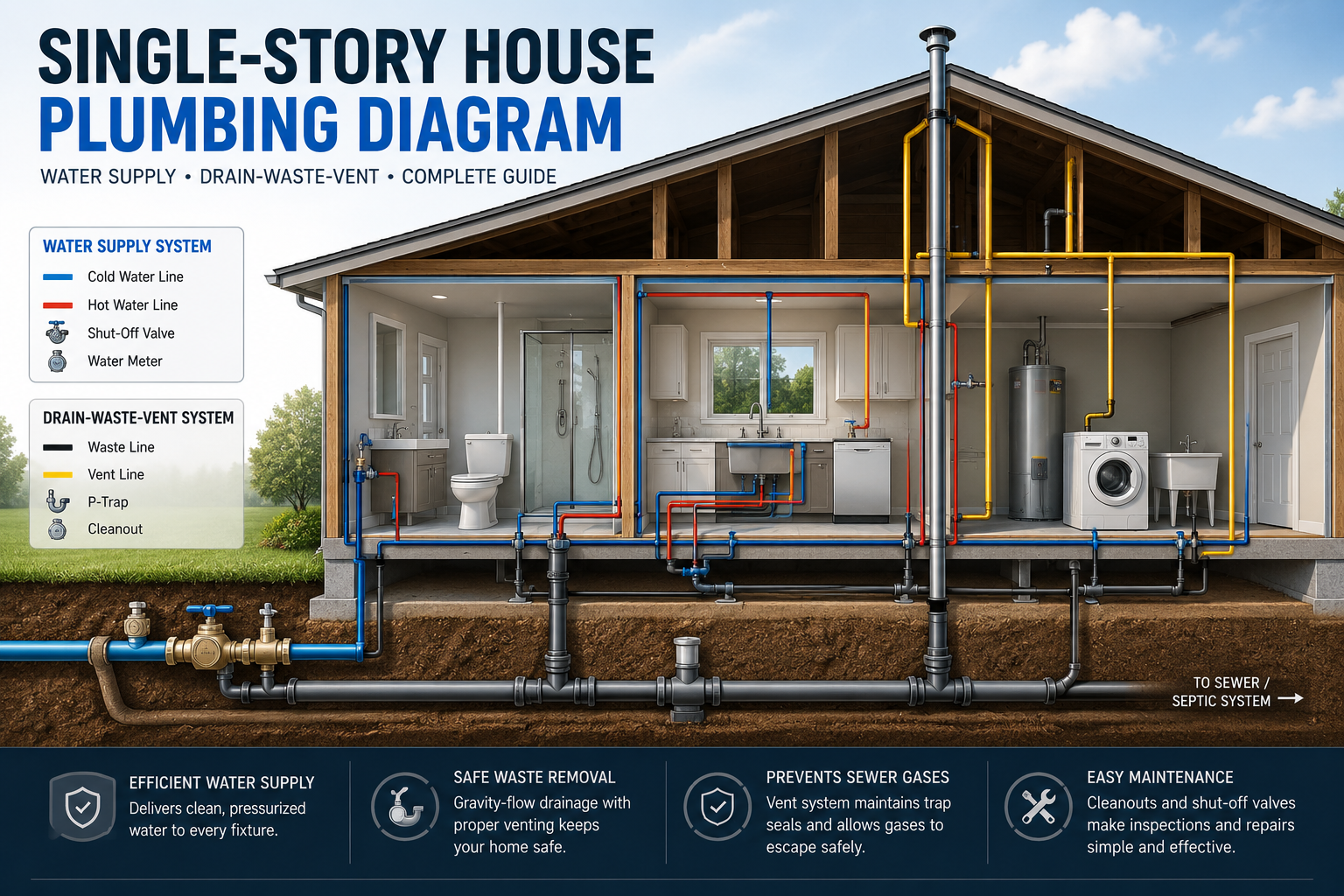

Most homeowners have a general idea that their drains slope downward toward the main sewer line. That slope is what makes gravity do the work of moving wastewater out of the house. But what happens when a section of pipe sags in the wrong direction? That’s called a bellied pipe, and it’s one of those problems that sits hidden underground for years while quietly getting worse.
Sewer camera inspection is the tool that finds it. Without a camera, a bellied pipe is nearly impossible to diagnose until it’s causing regular backups, and by that point it’s been collecting waste and sediment at the low point of the belly for a long time.
What a Bellied Pipe Actually Is
Pipe slope is measured in inches of fall per foot of horizontal run. The standard for most residential drain lines is about a quarter inch of drop per foot. That consistent slope keeps wastewater and solids moving toward the sewer main without pooling or slowing.
A belly forms when a section of pipe loses that slope. It can sag below the natural grade or develop a low spot that sits lower than the pipe sections on either side of it. When wastewater hits that low spot, it slows down. Solids settle at the bottom. Over time, that spot becomes a collection point for debris, grease, and sediment that builds into a partial or complete blockage.
How Bellies Form
Soil movement is the most common cause. The soil beneath a buried pipe shifts over time due to settling, erosion, root activity, or changes in moisture content. When the soil drops in one area, the pipe follows it. Heavy clay soils are particularly prone to this because they expand when wet and contract when dry, which creates a cycle of movement that works on buried pipes over years.
Poor installation is another source. If a pipe wasn’t bedded in the right material or wasn’t backfilled properly, the support beneath it was never adequate to begin with. That kind of belly shows up relatively quickly after installation.
How Camera Inspection Maps the Problem
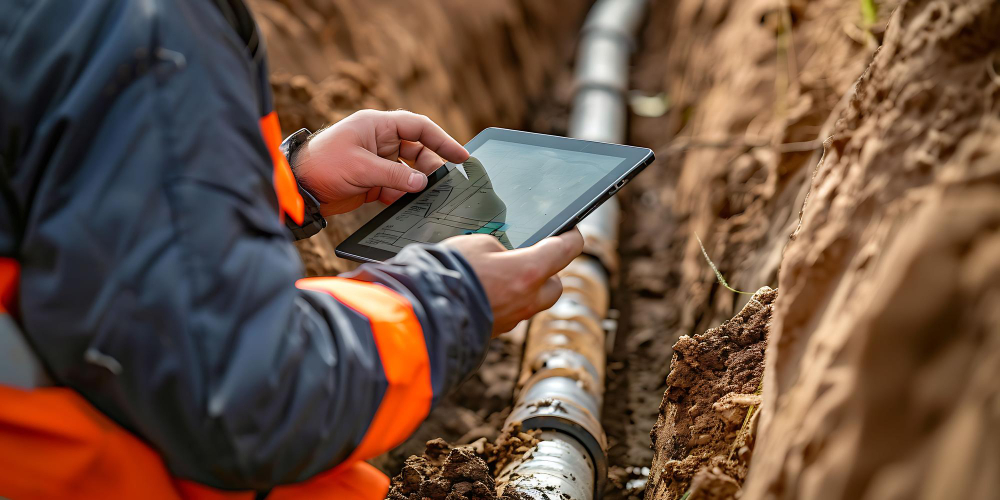
A sewer camera inspection involves feeding a flexible cable with a high-resolution camera head into the pipe through a cleanout or access point. The camera transmits live footage to a monitor where the technician can see exactly what’s inside the line.
For locating bellies, the footage tells part of the story, but the data attached to it tells the rest. Modern camera systems track the position of the camera head as it moves through the pipe, which allows the technician to build a map of where the pipe runs underground and at what depth. When the camera hits a belly, it’s visible on screen as standing water at the low point, and the position data shows exactly where that low point is relative to the surface.
Measuring the Severity
Not every belly is the same. A minor sag of half an inch over a 10-foot run isn’t going to cause immediate problems, though it will collect more sediment than a properly sloped section. A severe belly where the pipe dips several inches and holds standing water consistently is a much more active problem.
The camera footage gives the technician enough information to assess severity and make a recommendation based on what’s actually in the pipe rather than guessing. That matters because the repair approach for a mild belly is different from the approach for a severe one that’s causing repeated backups.
What Camera Inspection Finds Alongside a Belly
One of the advantages of a full sewer camera inspection is that it doesn’t just find the one thing you’re looking for. A technician running a camera to locate a belly will also see root intrusion, cracked pipe sections, offset joints, grease buildup, and any other issues in the line at the same time.
That’s useful information. A homeowner who knows their main sewer line has a belly, two sections of root intrusion, and a cracked joint near the property line can make an informed decision about repair options. Someone who only knew about the belly and fixed it without seeing the rest of the line might be calling a plumber again in six months.
Before & After Jetting
Camera inspection is also standard practice before and after hydro-jetting a sewer line. The inspection before jetting confirms what type of blockage is present and what the pipe can handle. The inspection after jetting confirms the line is clear and identifies anything the jetting couldn’t fix, like a belly where water is still pooling even though the line is otherwise clean.
Repair Options for Bellied Pipes
Once the belly is located and its severity is assessed, the repair options range from monitoring to full pipe replacement.
For mild bellies that aren’t causing symptoms, regular jetting and monitoring may be the approach until conditions change. For moderate bellies that are causing slow drains and occasional backups, pipe lining can sometimes fill in the low spot and restore adequate flow if the belly isn’t too severe.
For significant bellies where the pipe has dropped well below grade, excavation and pipe replacement is usually the right answer. The pipe needs to be reset at the correct slope and properly bedded so the problem doesn’t recur. That’s a more involved job, but it addresses the cause rather than just the symptoms.
The camera inspection is what makes it possible to make that call confidently. Without it, you’re making decisions about underground plumbing infrastructure based on what drains feel like from inside the house, which is not a reliable way to do it.
If you’ve been dealing with slow drains or recurring backups that don’t fully clear after cleaning, a camera inspection of the main sewer line is a logical next step. It takes the guesswork out of what’s happening below ground.