
You walk into your basement or utility room and notice something’s off, there’s water pooling around your hot water heater. Maybe it’s a slow drip, or maybe it’s spreading fast. Either way, it’s one of those common plumbing problems that can go from minor inconvenience to expensive damage very quickly.
The good news? Most water heater leaks follow predictable patterns. Once you understand why it’s happening, you can decide whether it’s a quick DIY fix or time to call in a professional.
Short Answer: Why Is My Hot Water Heater Leaking?
The most common reasons your water heater is leaking include:
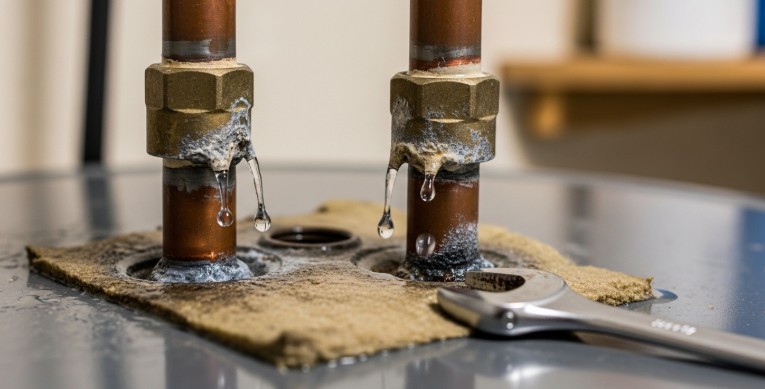
- Loose or damaged pipe connections
- Faulty pressure relief (T&P) valve
- Corroded tank (most serious issue)
- Sediment buildup inside the tank
Quick severity guide:
- Minor leak (fixable): Loose fittings, valves
- Major leak (replacement needed): Tank corrosion
Immediate action steps:
- Turn off power (breaker for electric / gas valve for gas heater)
- Shut off the cold water supply
- Contain the leak with towels or a bucket
Acting fast can prevent major plumbing repair cost and water damage.
What Causes a Hot Water Heater to Leak? (Core Explanation)
To understand leaks, you need to know how your system works.
A traditional water heater consists of:
- A storage tank
- Heating elements (electric or gas burner)
- Valves (pressure relief, drain valve)
- Inlet and outlet pipes
Why leaks happen over time:
- Metal tanks corrode
- Sediment builds up and damages components
- Pressure fluctuations weaken seals
Internal vs external leaks:
- External leaks: Pipes, valves, fittings (often fixable)
- Internal leaks: Tank damage (usually requires replacement)
Early detection is key. What starts as a drip can quickly become an emergency plumbing fix.
Why Is My Hot Water Heater Leaking From Different Areas
Why Is My Hot Water Heater Leaking From the Top
This is usually the easiest problem to fix.
Common causes:
- Loose inlet or outlet pipe connections
- Worn-out shut-off valve
Tightening connections or replacing a valve often solves this in under 30 minutes.
Why Is My Hot Water Heater Leaking From the Bottom
This is where things get serious.
Possible causes:
- Tank corrosion (requires replacement)
- Condensation (harmless, often mistaken for a leak)
If water is constantly pooling, assume the worst and prepare for replacement.
Why Is My Hot Water Heater Leaking From the Pressure Relief Valve
The T&P valve releases pressure when it gets too high.
Leaks here mean:
- Excess pressure in the tank
- Faulty or worn valve
Ignoring this can lead to system failure or worse.
Why Is My Hot Water Heater Leaking From the Drain Valve
This is usually a small but annoying issue.
Causes:
- Loose valve
- Worn-out washer or seal
This is one of the most common how to fix plumbing leaks situations homeowners can handle.
How to Fix a Leaking Hot Water Heater
Here’s a practical, real-world repair guide:
Step 1: Turn Off Power Supply
- Electric: Switch off breaker
- Gas: Turn off gas valve
Time: 5 minutes | Difficulty: Easy
Step 2: Shut Off Cold Water Supply
Stops more water from entering the tank
Time: 5 minutes | Difficulty: Easy
Step 3: Identify the Leak Source
Check top, bottom, valves, and pipes
Time: 10–15 minutes | Difficulty: Easy
Step 4: Tighten Loose Connections
Use a wrench to secure fittings
Time: 10–20 minutes | Difficulty: Easy
Step 5: Replace Faulty Valves
- T&P valve or drain valve
- Use plumber’s tape for sealing
Time: 30–60 minutes | Difficulty: Moderate
Step 6: Drain the Tank (If Needed)
Required for deeper repairs
Time: 30–60 minutes | Difficulty: Moderate
Step 7: Test the System
Turn everything back on and check for leaks
Time: 10 minutes | Difficulty: Easy
If the leak persists after these steps, it’s time to consider when to call a plumber.
Common Signs Your Water Heater Leak Is Serious
Some warning signs mean you shouldn’t delay:
- Rusty or discolored hot water
- Loud popping sounds (sediment buildup)
- Reduced hot water supply
- Visible corrosion on the tank
- Water pooling continuously
These indicate internal damage not just a simple fix.
Repair vs Replace: What’s the Right Choice?
When repair is enough:
- Loose connections
- Faulty valves
- Minor pressure issues
When replacement is necessary:
- Corroded tank
- Multiple component failures
- Unit older than 8–12 years
In many cases, replacing an old unit is cheaper long-term than repeated repairs.
DIY vs Professional Water Heater Repair
Can You Fix a Leaking Water Heater Yourself?
Yes, for minor issues.
Tools needed for plumbing:
- Adjustable wrench
- Pipe tape (Teflon tape)
- Replacement valves
Safe DIY fixes:
- Tightening connections
- Replacing valves
Risky DIY work:
- Tank repairs
- Gas system issues
- Electrical components
When to Call a Professional Plumber
Call a pro if:
- The tank itself is leaking
- You have a gas water heater
- Electrical parts are involved
- The leak is worsening
Working with experts like A to Z State Wide Plumbing ensures:
- Proper diagnosis
- Safe repairs
- Long-term solutions
Water Heater Leak Solutions
| Issue | DIY Fix Possible | Average Cost | Time Required | Recommended Action |
|---|---|---|---|---|
| Loose connection | Yes | $10–$50 | 15–30 min | DIY |
| Faulty valve | Yes | $20–$150 | 30–60 min | DIY/Pro |
| Pressure issues | Sometimes | $100–$300 | 1–2 hours | Professional |
| Tank corrosion | No | $800–$2,500 | 2–4 hours | Replace unit |
| Major leak | No | Varies | Immediate | Emergency plumber |
What Causes Water Heater Leaks Over Time
Leaks don’t just happen randomly, they build up over time.
Main causes:
- Sediment buildup damaging the tank
- High water pressure stressing components
- Lack of maintenance
- Natural wear and tear
These are some of the most overlooked common plumbing problems.
Cost of Fixing a Leaking Water Heater
Here’s what you can expect:
- Minor repairs: $50–$200
- Valve replacements: $100–$300
- Full replacement: $800–$2,500+
Factors affecting cost:
- Type of heater (tank vs tankless)
- Labor rates
- Severity of the leak
Delaying repairs almost always increases the final bill.
Safety Considerations When Dealing With a Leaking Water Heater
This isn’t just about water, it’s about safety.
- Risk of electrical shock (electric heaters)
- Gas leak hazards
- Burns from hot water
- Pressure-related dangers
Always shut off power and water before attempting any fix.
How to Prevent Water Heater Leaks in the Future
Prevention is cheaper than repair.
- Schedule annual maintenance
- Flush the tank to remove sediment
- Check valves and connections regularly
- Monitor water pressure
These simple steps can extend your heater’s lifespan by years.
FAQs About Water Heater Leaks
Why is my hot water heater leaking all of a sudden?
Sudden leaks are usually caused by pressure changes or a component failure like a valve.
Is a leaking water heater dangerous?
Yes, especially if it involves gas, electricity, or major water leakage.
Can I still use my water heater if it’s leaking?
Only for minor leaks temporarily. Otherwise, shut it off immediately.
How long can a leaking water heater last?
Minor issues can last weeks, but tank leaks require immediate replacement.
How do I know if my water heater needs replacing?
If it’s over 10 years old, corroded, or leaking from the tank, it’s time.
What is the most common cause of water heater leaks?
Sediment buildup and corrosion inside the tank.
How much does it cost to fix a leaking water heater?
Anywhere from $50 for small fixes to $2,500+ for full replacement.
Should I repair or replace my leaking water heater?
If the tank is damaged or the unit is old, replacement is the smarter choice.
Conclusion: What to Do If Your Hot Water Heater Is Leaking
A leaking water heater is never something to ignore. Whether it’s a loose valve or a failing tank, the key is acting quickly and correctly.
Final expert takeaways:
- Fix small leaks immediately
- Don’t ignore warning signs like rust or noise
- Replace aging units before they fail completely
And when the issue goes beyond a simple DIY fix, trust professionals like A to Z State Wide Plumbing to handle it safely and efficiently.
Because in plumbing, delays don’t save money, they multiply the damage.