
| Quick Answer To fix a clogged kitchen sink, start by running the garbage disposal (if you have one) and checking its reset button. Then try boiling water with dish soap, a sink plunger, and baking soda and vinegar. If that fails, clean the P-trap under the sink or use a drain snake. If the kitchen sink backs up when other fixtures drain, or several drains are slow at once, the clog is likely in your main line, and you need a plumber. |
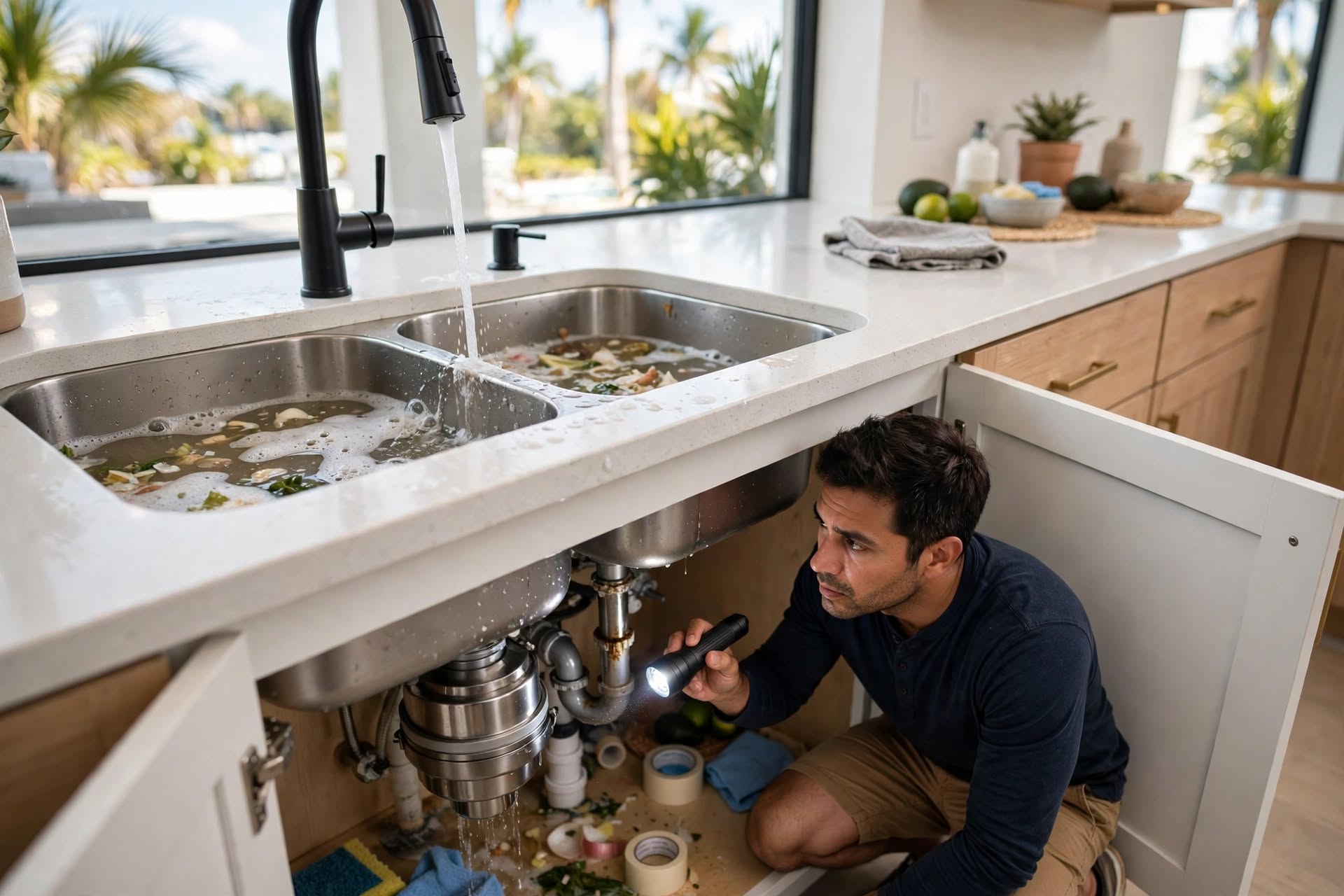
Kitchen sinks clog more often than any other drain in the house. They deal with grease, food scraps, coffee grounds, and soap every day. Most clogs are close to the sink and easy to clear. Some are deeper in the line, where DIY tools can’t reach.
Why Kitchen Sinks Clog
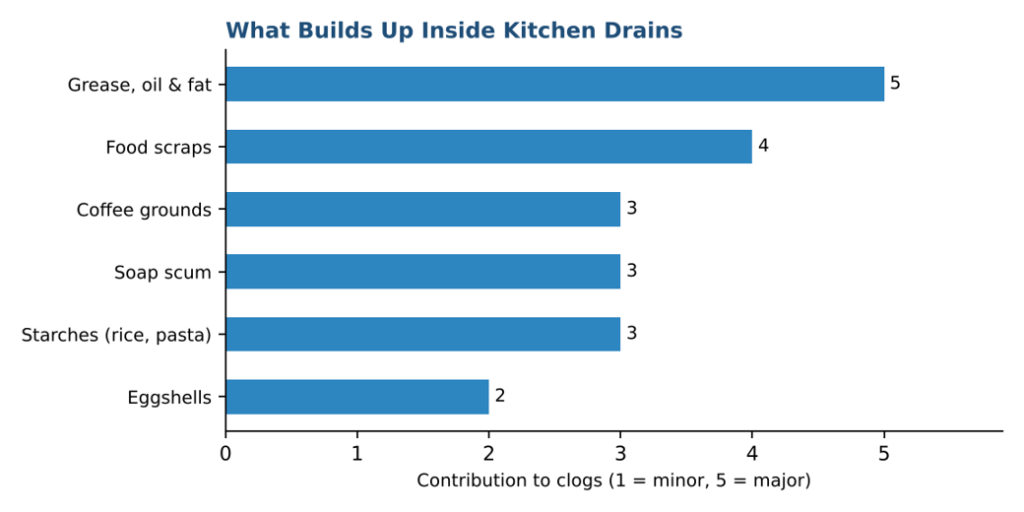
This is a general guide to which materials cause the most trouble in kitchen drains, based on common plumbing experience, not a measured study.
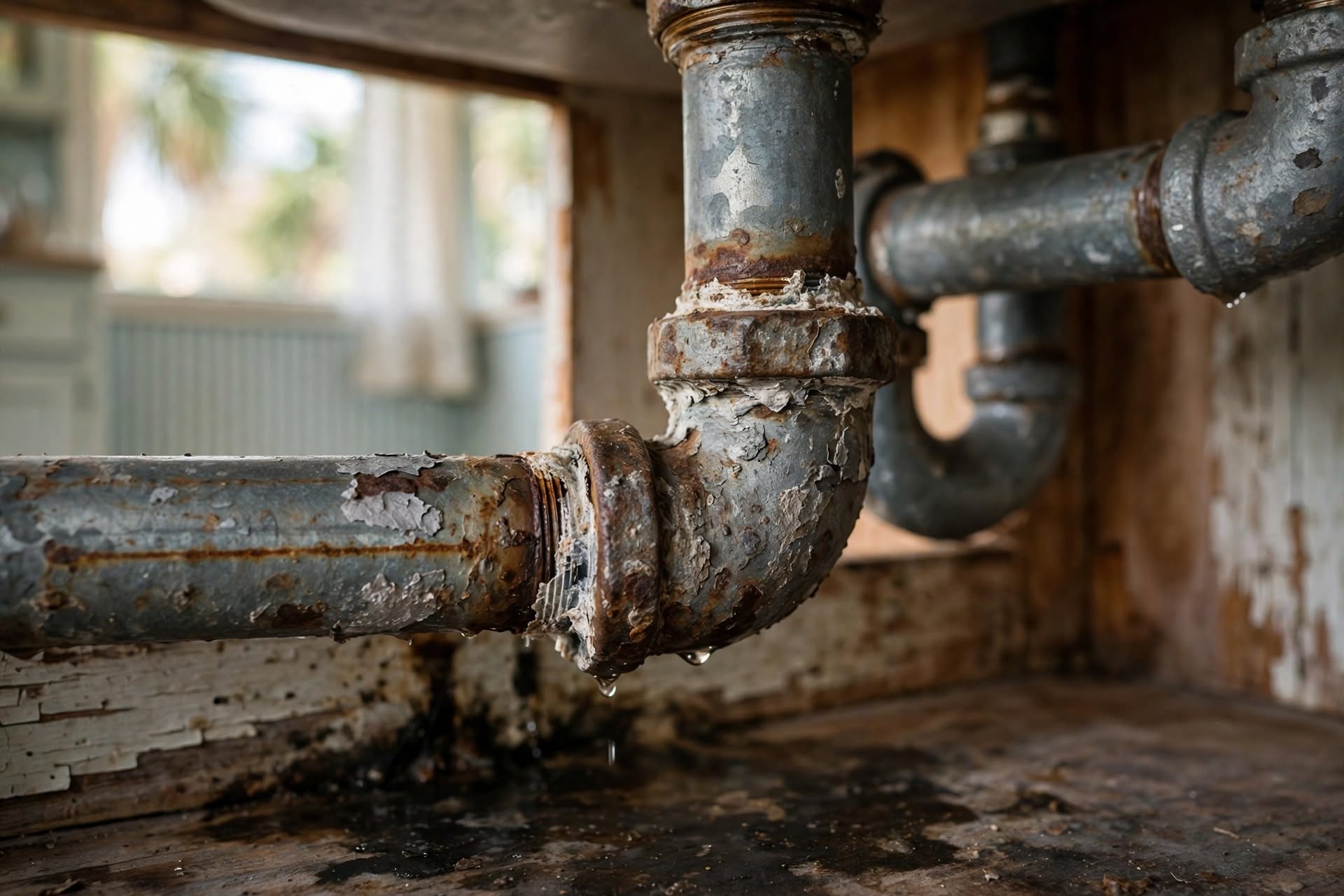
Grease is the biggest culprit. It goes down as a warm liquid, then cools and hardens on pipe walls. Food particles stick to it, and the opening gets smaller with every meal. In older South Florida homes with cast iron or galvanized drain lines, the rough interior of the pipe makes that buildup worse.
7 Ways to Unclog a Kitchen Sink
| Method | Best For | Tools Needed |
| 1. Check the disposal | Clogs right at the disposal | Allen wrench |
| 2. Hot water + dish soap | Light grease clogs | Kettle, dish soap |
| 3. Sink plunger | Clogs near the drain | Flat-bottom plunger, wet rag |
| 4. Baking soda + vinegar | Mild clogs and odors | Baking soda, vinegar |
| 5. Clean the P-trap | Clogs in the trap under the sink | Bucket, channel-lock pliers |
| 6. Drain snake | Clogs past the trap in the wall | Hand drain auger |
| 7. Wet/dry vacuum | Soft clogs you can pull back out | Shop vac |
1. Check the Garbage Disposal
If one side of a double sink is clogged and the disposal is on that side, the disposal may be the problem. Press the reset button underneath and run it with cold water. If it hums but won’t spin, see our guide on fixing a garbage disposal that’s not working.
2. Hot Water and Dish Soap
Squirt dish soap into the drain, then slowly pour a kettle of hot water down it. This can soften and loosen a light grease clog. If you have PVC pipes, use very hot tap water rather than boiling water, since repeated boiling water can weaken PVC joints.
3. Use a Sink Plunger
Use a flat-bottom sink plunger (not a toilet plunger). For a double sink, plug the other drain with a wet rag so the pressure isn’t lost. Fill the sink with a few inches of water and plunge firmly 10 to 15 times.
4. Baking Soda and Vinegar
Pour ½ cup of baking soda down the drain, followed by 1 cup of white vinegar. Cover the drain and wait 15 to 30 minutes, then flush with hot water. This works best on mild clogs and odors, not solid blockages.
5. Clean the P-Trap
The P-trap is the curved pipe under the sink. It holds water to block sewer gas, and it’s also where debris collects.
- Put a bucket under the trap.
- Loosen the slip nuts on both ends (by hand or with pliers).
- Remove the trap and empty it.
- Clean it out with a brush, then reinstall and hand-tighten.
- Run water and check for leaks.
6. Use a Drain Snake
If the trap was clear, the clog is further into the wall. Remove the trap, feed a hand drain snake into the pipe, and turn the handle as you push. When you hit resistance, keep cranking to break up or hook the clog.
7. Try a Wet/Dry Vacuum
Set the vac to liquid mode, create a tight seal over the drain, and run it on high. It can pull a soft clog back out.
Why You Should Skip Chemical Drain Cleaners
Chemical drain cleaners can generate heat and harsh reactions that damage older pipes, seals, and garbage disposals. They often don’t fully clear grease clogs, and they make the drain dangerous to work on afterward. Enzyme-based cleaners are a gentler option for routine maintenance.
Is It a Kitchen Clog or a Main Line Clog?
| Sign | Likely Location |
| Only the kitchen sink is slow | Kitchen drain branch |
| Both sides of a double sink are clogged | Below where the two sides join, or further down |
| Sink backs up when the dishwasher or washer drains | Kitchen branch or main line |
| Toilets gurgle or tub fills when the sink drains | Main sewer line |
| Several drains slow at once | Main sewer line |
| Clog returns every few weeks | Grease buildup deeper in the line, roots, or pipe damage |
When the problem is deeper, plumbers use a professional drain machine or hydro jetting, which scours grease from the full pipe diameter instead of just poking a hole through it. Learn the difference in our guide to hydro jetting vs. drain snaking. A sewer camera inspection can also show whether old pipes, roots, or a sag in the line are causing repeated clogs.
How to Prevent Kitchen Sink Clogs
- Never pour grease down the drain. Let it cool, then put it in the trash.
- Wipe greasy pans with a paper towel before washing.
- Use a sink strainer to catch food scraps.
- Run cold water for 15 to 30 seconds when using the disposal.
- Flush the drain with hot water once a week.
- Schedule drain cleaning if you live in an older home with frequent clogs.
Restaurants and Commercial Kitchens
Commercial kitchens face the same problem at a much bigger scale. That’s why grease traps and interceptors are required for many food service businesses. A to Z Statewide Plumbing also provides grease trap cleaning and commercial drain cleaning for restaurants across South Florida.
Need a Kitchen Drain Cleared?
A to Z Statewide Plumbing clears clogged kitchen sinks and main sewer lines across Broward and Miami-Dade, including Fort Lauderdale, Hollywood, Pembroke Pines, Miramar, Coral Springs, and Miami. We offer drain cleaning, hydro jetting, and camera inspections, plus 24/7 emergency service. Call (954) 981-2133 or contact us online.
| Key Takeaways ✔ Grease is the number one cause of kitchen sink clogs. ✔ Start with the disposal, hot water and soap, and a sink plunger. ✔ Cleaning the P-trap and using a drain snake fixes most deeper sink clogs. ✔ Avoid chemical drain cleaners, especially in older pipes. ✔ Multiple slow drains or gurgling toilets point to a main line clog. |
Frequently Asked Questions
How do I unclog a kitchen sink with standing water?
Bail out most of the water first. Then try a sink plunger, followed by baking soda and vinegar. If that doesn’t work, put a bucket under the P-trap, remove it, and clean it out.
Why does my kitchen sink keep clogging?
Repeated clogs usually mean grease has built up deeper in the drain line, beyond what a plunger or hand snake can reach. Professional drain cleaning or hydro jetting removes that buildup.
Can I use boiling water to unclog a kitchen sink?
Boiling water can help with grease clogs in metal pipes, but repeated use can weaken PVC joints. Very hot tap water with dish soap is a safer choice.
Why are both sides of my double kitchen sink clogged?
The clog is below the point where the two sides connect, often in the shared trap or further into the wall.
When should I call a plumber for a clogged kitchen sink?
Call a plumber if DIY methods don’t work, the clog keeps coming back, other drains are affected, or you notice sewage odors or gurgling toilets.