

A hidden water leak is one of the most frustrating plumbing issues a homeowner can face. Unlike a burst pipe that makes itself obvious, a hidden leak can drip silently for months, leading to astronomical water bills, structural damage, and dangerous mold growth—especially in South Florida’s humid climate.
At A to Z Statewide Plumbing, we specialize in non-invasive leak detection. If you suspect your home has a “silent killer” in the walls, here are the most effective ways to find a hidden water leak before it causes major damage.
1. The Water Meter Test (The Ultimate Proof)
The quickest and most reliable way to confirm you have a leak is to check your water meter.
The Method:
- Turn off every faucet, shower, and water-using appliance (dishwasher, laundry, etc.) in your home.
- Go to your water meter box and observe the dial.
- If the triangular leak indicator or the numbers are moving despite everything being off, you definitely have a leak.
2. Monitor Your Water Bill
Has your water bill spiked significantly without any change in your household’s water usage?
The Sign:
A sudden increase of $20, $50, or more is a red flag. In many South Florida cities, utility companies provide a “leak notification” if your usage stays high for 24 hours, but you shouldn’t wait for that alert to take action.
3. The Toilet “Dye Test”
Toilets are often the most common source of hidden leaks. A faulty flapper can leak hundreds of gallons of water a day without any noticeable signs.
The Method:
- Drop a few drops of food coloring or a dye tablet into the toilet tank.
- Wait 15–20 minutes without flushing.
- If the color appears in the bowl, you have a silent leak that needs a simple repair.
4. Check for “Hot Spots” on the Floor
In homes with slab foundations (common in Miami and Fort Lauderdale), a hot water line leak under the concrete can sometimes be felt through the flooring.
The Sign:
If you notice a specific area of your tile or laminate floor feels warm to the touch, or if your pets constantly huddle in one warm spot, you likely have a slab leak.
5. Look for Discoloration and Texture Changes
Water always leaves a trail. Inspect your walls, ceilings, and floors for the following signs of hidden leaks:
The Signs:
- Bubbling Paint or Wallpaper: Moisture trapped behind paint causes it to peel or bubble.
- Musty Odors: A persistent earthy or damp smell in a specific room is often a sign of water leaking behind the drywall.
- Soft Spots: Press on your drywall or kitchen cabinets; if they feel soft or “spongy,” water is being absorbed.
6. Inspect Outdoor Irrigation and Service Lines
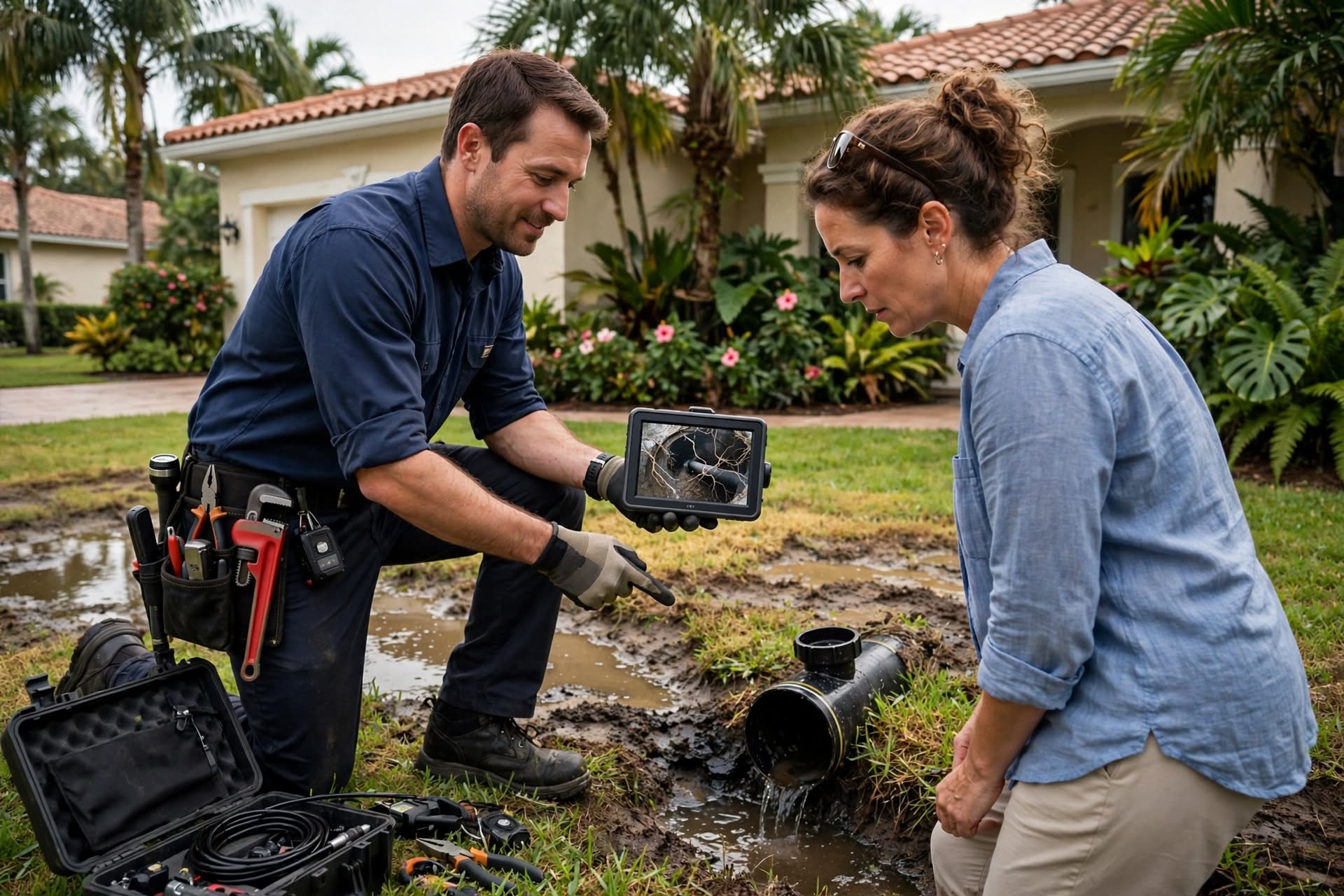
In South Florida, leaks aren’t always inside. Our sandy soil can hide leaks in the main service line between the meter and the house.
The Sign:
Look for patches of grass that are unusually green or consistently muddy spots in your yard when it hasn’t rained.
When to Call the Professionals
Finding the general area of a leak is one thing; pinpointing it without tearing down walls is another. DIY methods can help locate a leak’s general location but have limits.
At A to Z Statewide Plumbing, we use Electronic Leak Detection technology, including:
- Acoustic Sensors: To hear the sound of water escaping pipes deep underground.
- Thermal Imaging Cameras: To see “heat signatures” of moisture inside walls without making a single hole.
Don’t Let a Hidden Leak Drain Your Bank Account
If your water bill is rising or you smell mystery dampness, contact A to Z Statewide Plumbing today for professional leak detection in South Florida. Our experts use advanced tools to identify the source of the leak quickly and restore proper flow, preventing further damage to your home.
Check your meter, look for warm spots, and listen for hissing. Can’t find it? Professional electronic leak detection. A to Z Plumbing FL: (954) 981-2133.