

Why Kitchen Drains Get Clogged So Easily
A slow or smelly kitchen sink is one of the most common plumbing complaints homeowners face. One day your water drains normally, and the next you’re dealing with standing water, foul odors, or even a full blockage that feels like an emergency plumber situation.
The reality is that kitchen drain problems rarely happen suddenly. They build up over time layer by layer, due to grease, food scraps, soap residue, and everyday cooking waste. Homeowners often underestimate how quickly these materials harden inside pipes, slowly narrowing the passage until water can barely flow.
Learning how to clean kitchen drain properly is not just a DIY skill, it’s a preventive maintenance habit that can save you from expensive repairs, drain clog emergencies, and long-term pipe damage. In this guide, we’ll break down exactly how plumbers handle this issue in real-world situations and how you can fix it yourself safely and effectively.
Quick Answer — How to Clean Kitchen Drain?
- Flush with hot water to loosen grease buildup
- Use a baking soda + vinegar solution to break clogs
- Remove debris from the P-trap if needed
- Use a plunger or drain snake for stubborn blockages
- Rinse thoroughly with hot water again
What Is a Kitchen Drain and Why It Gets Clogged
A kitchen drain is part of your home’s plumbing system that carries wastewater from the sink into the main sewer line. While it seems simple, it’s one of the most vulnerable points in your plumbing system.
Why kitchen drains clog:
- Food waste, grease, soap, and oils stick to pipe walls
- Grease solidifies as it cools inside pipes
- Food particles accumulate and restrict water flow
- Soap scum binds debris into thick blockages
Why proper cleaning matters:
- Prevents emergency plumber callouts
- Eliminates foul odors from the sink
- Maintains steady drainage flow
- Avoids pipe damage and costly backups
Common Causes of a Clogged Kitchen Drain
- Cooking oil and grease buildup
- Food scraps washed down the sink
- Coffee grounds accumulation
- Soap residue from dishwashing
- Improper garbage disposal usage
Tools Required to Clean Kitchen Drain
Before starting any drain clog solution, gather the right tools:
- Plunger
- Drain snake or auger
- Bucket
- Rubber gloves
- Baking soda
- White vinegar
- Hot water kettle
- Pipe wrench (for P-trap removal)
Safety Precautions Before Cleaning Kitchen Drain
Safety is critical when working with plumbing systems:
- Turn off garbage disposal before starting
- Wear rubber gloves to avoid bacteria exposure
- Never mix chemical drain cleaners
- Avoid boiling water on PVC pipes
- Ensure proper ventilation when using vinegar
Step-by-Step Guide: How to Clean Kitchen Drain Effectively
Step 1 — Remove Surface Debris
Start with the basics:
- Clear sink strainer
- Remove visible food particles
- Rinse with warm water
This alone often improves drainage in minor clogs.
Step 2 — Flush with Hot Water
- Pour hot (not boiling) water into the drain
- Helps dissolve early grease buildup
- Improves initial water flow
This is often the first step plumbers use during a fix leaking pipe or drain blockage inspection.
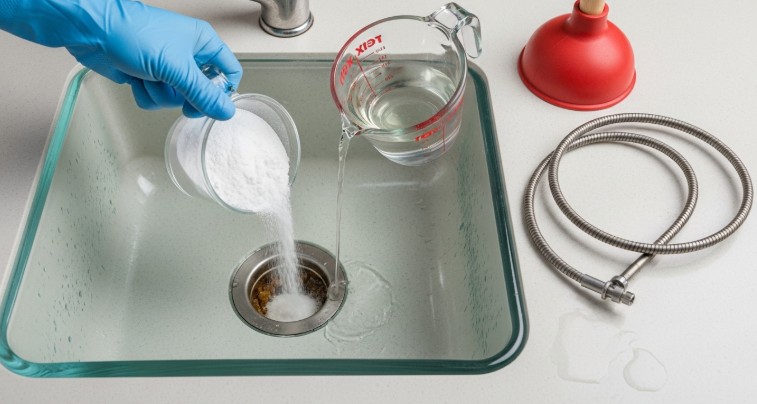
Step 3 — Apply Baking Soda & Vinegar
A natural reaction helps break down buildup:
- Pour ½ cup baking soda
- Add 1 cup vinegar
- Let it fizz for 10–15 minutes
- Flush with hot water
This method is widely used as a safe drain odor prevention solution in residential plumbing.
Step 4 — Plunge the Drain
- Seal overflow hole
- Use plunger for 20–30 seconds
- Repeat if needed
This is effective for soft clogs near the sink opening and often restores flow instantly.
Step 5 — Clean the P-Trap (If Needed)
If the clog persists:
- Place bucket under sink
- Unscrew P-trap carefully
- Remove trapped grease and debris
- Reassemble tightly
Many real-world plumbing calls are solved right here.
Step 6 — Use a Drain Snake for Deep Blockages
For stubborn or deep clogs:
- Insert drain snake into pipe
- Rotate to break blockage
- Pull out debris carefully
This step is often used before calling an emergency plumber.
Common Plumbing Problems Caused by Dirty Kitchen Drains
- Slow-draining sinks
- Persistent foul odors
- Frequent backups
- Gurgling pipe noises
- Increased risk of full blockage
Troubleshooting & Prevention Tips
Prevent future issues with these expert habits:
- Never pour grease or oil down sink
- Use drain strainers daily
- Run hot water after each use
- Clean drain weekly with natural solutions
- Flush garbage disposal with ice cubes occasionally
Consistent maintenance reduces the need for drain clog solution emergencies.
How to Clean Kitchen Drain — DIY vs Professional Methods
| Factor | DIY Cleaning | Professional Plumber |
|---|---|---|
| Cost | Low | Higher service cost |
| Effectiveness | Good for minor clogs | High for deep blockages |
| Tools | Household items | Industrial equipment |
| Time Required | 30–60 minutes | Fast diagnosis & repair |
| Risk Level | Moderate | Low (expert handling) |
When to Call a Professional Plumber
Call a professional if:
- Water is fully blocked and not draining
- Clogs keep returning frequently
- Foul odor persists after cleaning
- Deep pipe blockage is suspected
- Drain snake doesn’t solve the issue
In these cases, experienced services like A to Z State Wide Plumbing can safely diagnose hidden pipe issues and perform advanced cleaning without damaging your plumbing system.
This is especially important when DIY methods no longer solve the issue and you’re approaching a full emergency plumber scenario.
Cost Factors for Cleaning Kitchen Drain
- DIY supplies (baking soda, vinegar): very low cost
- Tools (plunger, snake): one-time affordable purchase
- Professional drain cleaning: varies by severity
- Emergency plumbing visits: higher due to urgency
Maintenance Tips to Keep Kitchen Drain Clean
- Never pour grease or oil into sink
- Install mesh drain strainer
- Run hot water after dishwashing
- Clean drain weekly with natural solutions
- Flush garbage disposal with ice cubes occasionally
People Also Ask — Related Questions
How to clean kitchen drain naturally?
Use baking soda, vinegar, and hot water for safe and effective cleaning.
How often should you clean kitchen drain?
Light cleaning weekly and deep cleaning monthly is recommended.
Can boiling water damage kitchen pipes?
Yes, especially PVC pipes, use hot water instead.
Why does my kitchen drain smell bad?
Due to trapped grease, food particles, and bacterial buildup.
What is the fastest way to unclog a kitchen drain?
A plunger combined with hot water flush is usually the fastest fix.
Is chemical drain cleaner safe for kitchen drains?
Not recommended due to pipe corrosion and long-term damage.
How to clean kitchen drain without a plumber?
Use plunging, snaking, and natural cleaning methods like baking soda and vinegar.
FAQs About How to Clean Kitchen Drain
How to clean kitchen drain effectively at home?
Use hot water, baking soda, vinegar, and a plunger for most common clogs.
What is the best natural method to clean kitchen drain?
Baking soda and vinegar followed by a hot water flush is highly effective.
Can I use vinegar alone to clean kitchen drain?
Yes, but it works best when combined with baking soda for a stronger reaction.
How do I remove grease buildup from kitchen drain pipes?
Use hot water flushing and natural or enzyme-based cleaners regularly.
What tools are best for cleaning kitchen drain clogs?
Plunger, drain snake, bucket, and pipe wrench for deeper blockages.
How to clean kitchen drain that keeps clogging?
You may need professional inspection for deeper or recurring pipe issues.
Is professional drain cleaning necessary for kitchen sinks?
Yes, when clogs are recurring or located deep in the plumbing system.
How to prevent kitchen drain blockages long-term?
Avoid grease disposal, use strainers, and maintain weekly cleaning habits.
Conclusion: Best Way to Clean Kitchen Drain and Prevent Clogs
Keeping your kitchen drain clean is one of the simplest ways to avoid expensive plumbing problems. While DIY methods are effective for minor clogs, recurring or deep blockages often require professional attention.
Key takeaways:
- Regular maintenance prevents major plumbing issues
- DIY methods work for light to moderate clogs
- Severe problems require expert intervention
- Prevention is always cheaper than emergency repair
Final takeaway: If you stay consistent with simple cleaning habits and address slow drainage early, you can avoid costly plumbing emergencies and keep your kitchen sink running smoothly year-round.