
| Quick Answer Most household septic tanks should be pumped every 3 to 5 years, and the U.S. EPA recommends having the system inspected at least every 3 years. The exact schedule depends on tank size, how many people live in the home, how much water you use, and whether you use a garbage disposal. Large households with smaller tanks may need pumping every 1 to 3 years. South Florida’s high water table and sandy soils make regular pumping especially important to protect the drain field. |
Septic systems are out of sight, which makes them easy to forget until something goes wrong. But waiting until sewage backs up into your home or surfaces in the yard turns a routine pumping into a costly repair. Here’s how to figure out the right schedule for your home.
Why Septic Tanks Need Pumping
Everything that goes down your drains flows into the septic tank. Inside, it separates into three layers:
- Scum (fats, oils, and grease) floats on top
- Effluent (liquid wastewater) sits in the middle and flows out to the drain field
- Sludge (solids) settles at the bottom
Bacteria break down some of the solids, but not all of them. Sludge and scum build up over time. If they get too thick, solids can flow out into the drain field, clogging the soil and pipes. Drain field repair or replacement is one of the most expensive septic problems.
Septic Pumping Schedule by Tank Size and Household
The chart below is a commonly used planning guide for estimated years between pumpings. Use it as a starting point, then adjust based on inspections.
| Tank Size | 1 Person | 2 People | 3 People | 4 People | 5 People | 6 People |
| 1,000 gal | 12.4 yrs | 5.9 yrs | 3.7 yrs | 2.6 yrs | 2.0 yrs | 1.5 yrs |
| 1,500 gal | 18.9 yrs | 9.1 yrs | 5.9 yrs | 4.2 yrs | 3.3 yrs | 2.6 yrs |
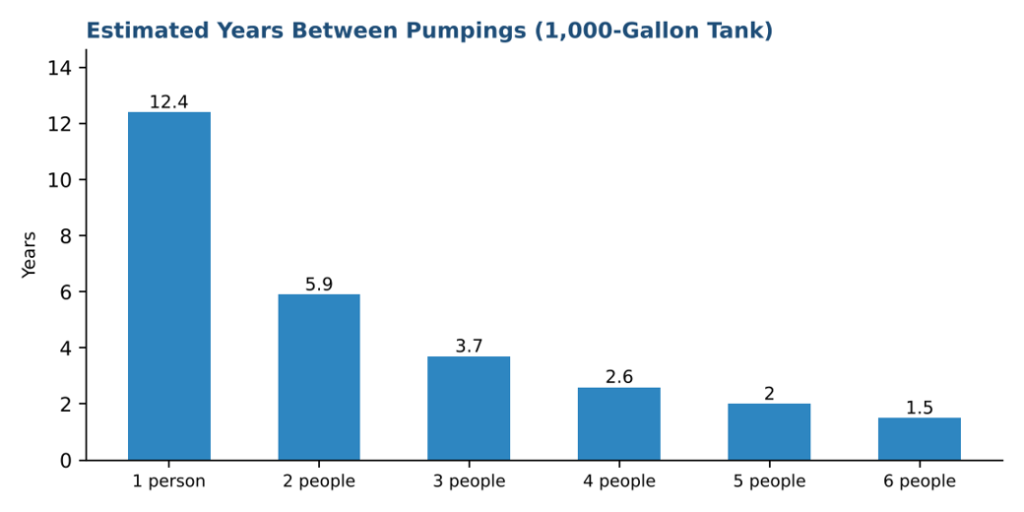
These are general planning estimates. A garbage disposal, heavy water use, or frequent guests can mean pumping much sooner. A professional inspection measuring sludge and scum levels is the most accurate guide.
Florida-Specific Factors
Florida has a large number of homes on septic systems, including many neighborhoods in western Broward and parts of Miami-Dade. A few local conditions make maintenance more important here:
- High water table. In many South Florida areas, groundwater sits close to the surface. That leaves less unsaturated soil to treat effluent, so a drain field overloaded with solids can fail sooner.
- Heavy rainy season. Summer storms saturate the soil, which can slow drainage and make a nearly full tank back up.
- Sandy soils and limestone. These drain quickly, which makes proper treatment in the tank and drain field even more important for protecting groundwater.
- State oversight. Florida’s onsite sewage program is overseen by the Florida Department of Environmental Protection, and permits are required for repairs and modifications. Rules vary by county.
Warning Signs Your Septic Tank Is Full
- Slow drains throughout the house
- Gurgling in toilets and drains
- Sewage odors inside or around the yard
- Standing water or soggy ground over the drain field
- Unusually green, lush grass over the tank or drain field
- Sewage backing up into tubs, showers, or floor drains
If you notice any of these, schedule a pumping right away. Waiting can push solids into the drain field.
What Increases How Often You Need Pumping?
| Factor | Effect on Pumping Frequency |
| More people in the home | More frequent |
| Garbage disposal use | Noticeably more frequent |
| High water use (long showers, frequent laundry) | More frequent |
| Flushing wipes, grease, or chemicals | More frequent, and risk of damage |
| Water-efficient fixtures | Less frequent |
| Larger tank | Less frequent |
How to Extend the Time Between Pumpings
- Spread out laundry over the week instead of doing it all in one day.
- Fix leaks and running toilets quickly.
- Skip the garbage disposal, or use it sparingly.
- Never pour grease down drains.
- Only flush toilet paper. No wipes, hygiene products, or paper towels.
- Avoid harsh chemicals that kill the bacteria in your tank.
- Keep cars and heavy equipment off the tank and drain field.
- Direct gutter and roof runoff away from the drain field.
How Much Does Septic Pumping Cost?
Cost depends on tank size, access, and how long it’s been since the last pumping. For a full breakdown, see our guide on how much it costs to pump a septic tank.
Buying a Home With a Septic System?
If you’re buying in South Florida, ask when the tank was last pumped and inspected. A septic inspection before closing can reveal tank condition, drain field problems, and needed repairs. Our guide to septic vs. sewer in South Florida explains how to tell which one a home uses.
Schedule Septic Tank Pumping
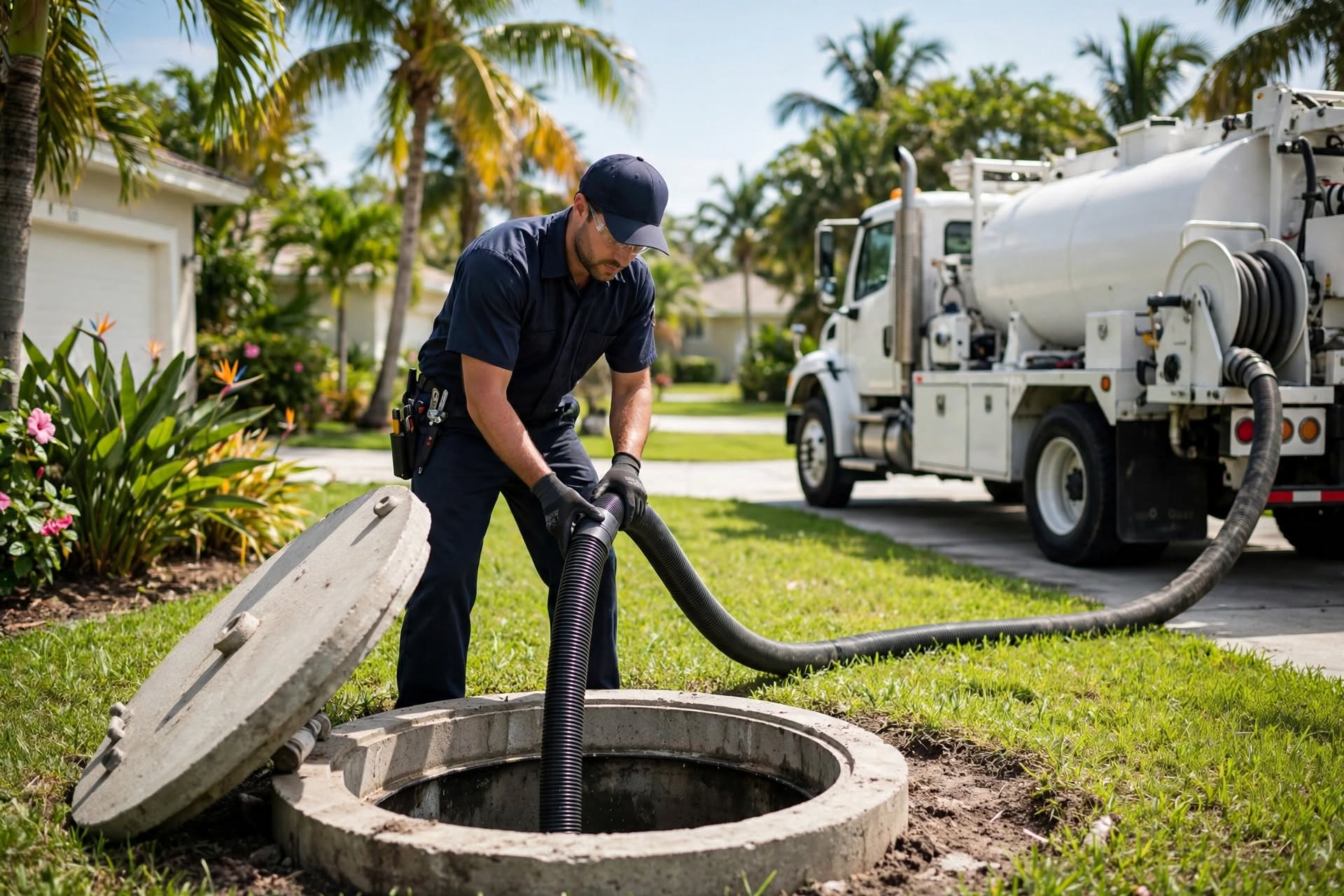
A to Z Statewide Plumbing provides septic tank pumping and cleaning across Broward and Miami-Dade, including Fort Lauderdale, Hollywood, Pembroke Pines, Davie, Southwest Ranches, Cooper City, Weston, and Miami. We also offer vacuum truck services and commercial septic work. Call (954) 981-2133 or contact us online.
| Key Takeaways ✔ Most septic tanks need pumping every 3 to 5 years. ✔ The EPA recommends inspecting your system at least every 3 years. ✔ Bigger households, smaller tanks, and garbage disposals mean more frequent pumping. ✔ South Florida’s high water table makes protecting the drain field critical. ✔ Slow drains, gurgling, odors, and soggy ground are signs the tank is full. |
Frequently Asked Questions
How often should a septic tank be pumped?
Most septic tanks should be pumped every 3 to 5 years. Large households or smaller tanks may need pumping every 1 to 3 years.
What happens if you never pump your septic tank?
Solids build up and eventually flow into the drain field, clogging it. This can lead to sewage backups, odors, groundwater contamination, and costly drain field repair or replacement.
Can you pump a septic tank too often?
Pumping more often than needed won’t harm the system, but it costs more than necessary. An inspection that measures sludge and scum levels helps you set the right schedule.
Does rain affect a septic tank?
Yes. Heavy rain can saturate the soil around the drain field, slowing drainage. A nearly full tank is more likely to back up during South Florida’s rainy season.
How do I know when my septic tank was last pumped?
Check your home records or ask the previous owner. Septic service companies often keep records, and some counties keep permit records for septic work.