
If you’ve ever scheduled a plumbing inspection and wondered “Is this going to take all day?”, you’re not alone. Backflow testing is one of those essential services that most homeowners don’t fully understand, until they need it. Whether you’re dealing with an irrigation system, a commercial property, or routine maintenance, knowing how long a backflow test takes helps you plan better and avoid surprises.
In this complete guide, you’ll learn exact timelines, what affects testing duration, how the process works, and when to call a professional like A to Z State WidePlumbing.
Short Answer: How Long Does a Backflow Test Take?
For most homeowners, a backflow test takes 20 to 45 minutes.
- Residential systems: 20–45 minutes
- Larger or commercial systems: 45–90+ minutes
Factors that affect timing:
- Accessibility of the backflow preventer
- Size and complexity of your plumbing system
- Condition of the device
Quick takeaway: If your system is easy to access and in good condition, expect the job to be done in under an hour.
What Is a Backflow Test and Why It Matters
Backflow testing ensures that contaminated water doesn’t flow backward into your clean water supply, a serious but often overlooked plumbing risk.
What is backflow?
Backflow happens when water reverses direction due to pressure changes, potentially pulling contaminants like:
- Fertilizers from irrigation systems
- Chemicals from industrial lines
- Dirty water from drainage systems
Why testing matters:
- Protects your drinking water
- Prevents cross-contamination
- Keeps your plumbing system functioning safely
A backflow preventer acts as a safeguard, and regular testing ensures it’s working properly.
How Long Does a Backflow Test Take in Different Situations
How Long Does a Backflow Test Take for Residential Properties
For standard homes with irrigation systems:
- Simple setup: 20–30 minutes
- Moderate complexity: 30–45 minutes
Example: A homeowner with a sprinkler system in the backyard usually sees quick testing unless the valve is buried or hard to access.
How Long Does a Backflow Test Take for Commercial Buildings
Commercial systems are more complex:
- Multi-zone irrigation or plumbing systems
- Larger valves and multiple test points
Expect 45 to 90 minutes or more, depending on system size.
How Long Does a Backflow Test Take If Repairs Are Needed
If something fails:
- Troubleshooting adds 30–60 minutes
- Repairs may take 1–3 hours total
- Re-testing is required
This is where delays happen, and why maintenance matters.
How a Backflow Test Is Performed
Understanding the process helps you know what’s happening during the visit and why it takes the time it does.
Step 1: Shut Off Water Supply Safely
The technician isolates the system to prevent interference during testing.
Time: 5 minutes
Step 2: Connect Testing Equipment
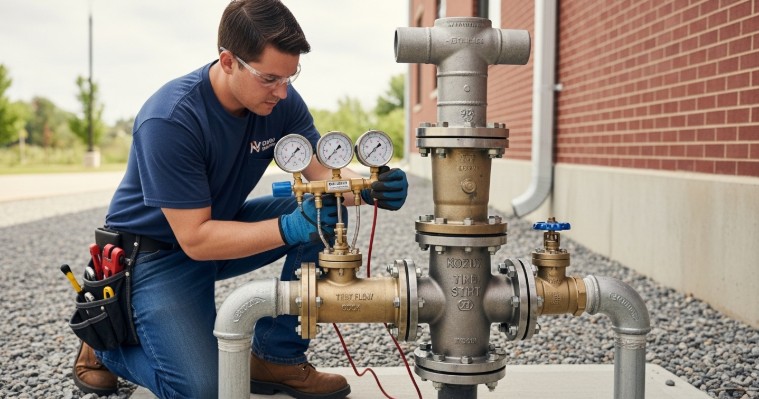
Special pressure gauges are attached to the backflow preventer.
Time: 5–10 minutes
Step 3: Check Pressure Levels
Each valve is tested to ensure proper pressure and function.
Time: 10–15 minutes
Step 4: Inspect for Leaks or Failures
Technicians look for worn seals, leaks, or valve malfunctions.
Time: 5–10 minutes
Step 5: Record Results
All readings are documented for compliance and records.
Time: 5 minutes
Step 6: Restore Water Supply
The system is safely turned back on and checked.
Time: 5 minutes
Total estimated time: 20–45 minutes for most jobs
Common Factors That Affect Backflow Test Duration
Not all plumbing systems are equal. These factors can speed up—or slow down—the process:
- Accessibility: Buried or hidden valves take longer
- Type of device: RPZ valves are more complex than double check valves
- Water pressure issues: Inconsistent pressure requires extra checks
- System age: Older systems often need more inspection
- Weather conditions: Outdoor systems can be harder to access in extreme weather
Signs Your Backflow Preventer May Fail the Test
Catching issues early can save time and reduce plumbing repair cost.
Watch for:
- Water leaking around the valve
- Discolored or foul-smelling water
- Sudden pressure drops
- Vibrating or noisy pipes
- Previous failed inspections
These are common plumbing problems that may turn a quick test into a longer repair job.
DIY vs Professional Backflow Testing
Can You Perform a Backflow Test Yourself?
Technically, testing requires:
- Specialized pressure gauges
- Knowledge of valve systems
- Certification in most cases
DIY attempts often lead to inaccurate results or system damage.
Why Hiring a Certified Plumber Saves Time
A professional:
- Completes testing faster
- Identifies issues immediately
- Prevents costly rework
Working with experts like A to Z State Wide Plumbing ensures accurate results and saves you time.
Backflow Testing Scenarios
| Scenario | Average Time | Difficulty Level | Recommended Approach |
|---|---|---|---|
| Basic residential test | 20–30 minutes | Easy | Professional |
| Irrigation system test | 30–45 minutes | Moderate | Professional |
| Commercial system | 45–90 minutes | Complex | Certified specialist |
| Failed test + repair | 1–3 hours | High | Professional only |
| DIY attempt | Varies (often longer) | High risk | Not recommended |
What Happens If a Backflow Test Takes Longer Than Expected
If your test runs over time, it’s usually due to:
- Hidden leaks inside the valve
- Internal damage or worn parts
- Pressure inconsistencies
- Need for replacement components
In these cases, what started as a routine check can turn into an emergency plumbing fix.
Cost vs Time: What to Expect
Backflow testing is relatively affordable compared to other plumbing services.
- Residential cost: $50–$150
- Commercial systems: Higher depending on size
Important insight:
A quick test isn’t always a good test.
Thorough inspections prevent future issues and reduce long-term plumbing repair cost.
Safety Considerations During Backflow Testing
Backflow testing involves pressurized systems and potential contamination risks.
Key safety points:
- Always shut off water properly
- Avoid exposing pipes to contaminants
- Use professional-grade tools
- Never bypass safety valves
This is why DIY plumbing vs professional plumber decisions matter here.
FAQs About Backflow Testing
How long does a backflow test take from start to finish?
Typically 20–45 minutes for homes, longer for complex systems.
How often should backflow testing be done?
Once a year is recommended to keep your plumbing system safe and functional.
Can a backflow test be done without shutting off water?
No. Water must be shut off to get accurate pressure readings.
What happens if my backflow preventer fails the test?
It will need repair or replacement, followed by re-testing to ensure it works properly.
Is backflow testing required by law?
Requirements vary, but regular testing is commonly expected for system safety and maintenance.
Does weather affect how long a backflow test takes?
Yes. Cold weather or outdoor access issues can slow things down.
How can I prepare for a faster backflow test?
- Clear access to the valve
- Ensure no obstructions
- Schedule regular maintenance
Who is qualified to perform a backflow test?
A trained and certified plumbing professional is the best choice for accurate results.
Conclusion: What to Expect When Scheduling a Backflow Test
So, how long does a backflow test take? In most cases, less than an hour—but the real value lies in ensuring your water supply stays clean and safe.
Regular testing:
- Prevents contamination
- Reduces costly repairs
- Keeps your plumbing system efficient
Due for your annual backflow test? A to Z Statewide Plumbing is certified to perform backflow prevention testing across Miami-Dade, Broward, and Palm Beach Counties. Call (954) 981-2133 to schedule.