
| Quick Answer A French drain typically costs about $20 to $60 per linear foot for a standard exterior yard drain, or roughly $1,500 to $6,000 for many residential projects. Deeper drains, interior (basement-style) systems, hardscape removal, and connections to dry wells or storm systems cost more. In South Florida, where heavy summer rains and a high water table are common, a properly designed French drain can move surface water away from your home’s foundation, driveway, and low spots. |
Standing water after every afternoon storm isn’t just annoying. It can damage landscaping, creep toward your foundation, breed mosquitoes, and make driveways and walkways slippery. A French drain is one of the most common solutions, but cost varies a lot depending on how and where it’s installed.
All prices below are general market estimates for planning purposes, not a quote. Site conditions change pricing.
What Is a French Drain?
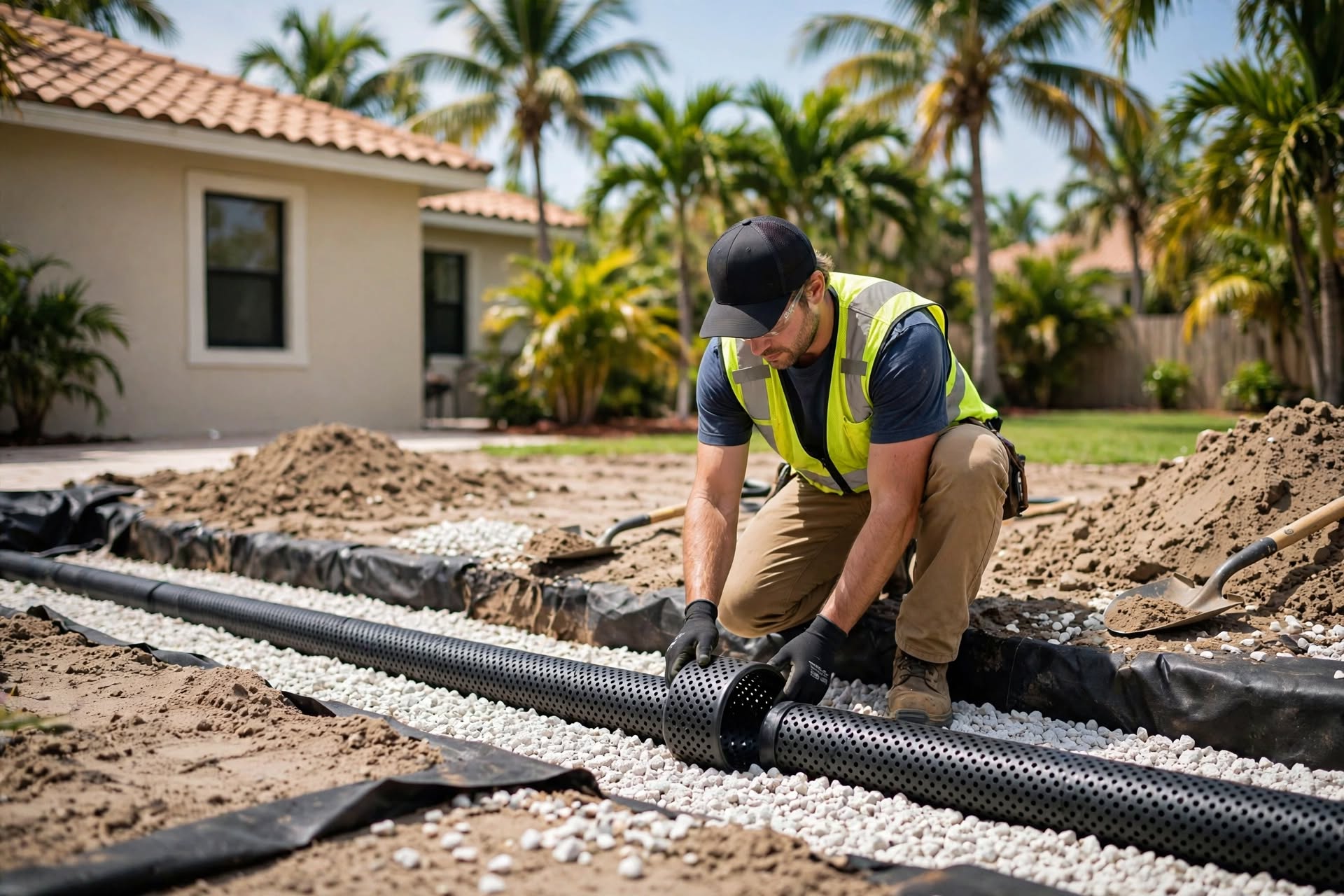
A French drain is a sloped trench filled with gravel that contains a perforated pipe. Water seeps into the gravel, enters the pipe, and flows by gravity to a safe discharge point, such as a dry well, a lower area of the property, the street (where allowed), or a storm system.
A typical system includes:
- A trench sloped at least about 1 inch for every 8 to 10 feet
- Landscape fabric to keep soil out of the gravel
- Washed gravel or stone
- Perforated PVC or corrugated pipe
- A discharge point or dry well
French Drain Cost Breakdown
| Project Type | Typical Cost Range | Notes |
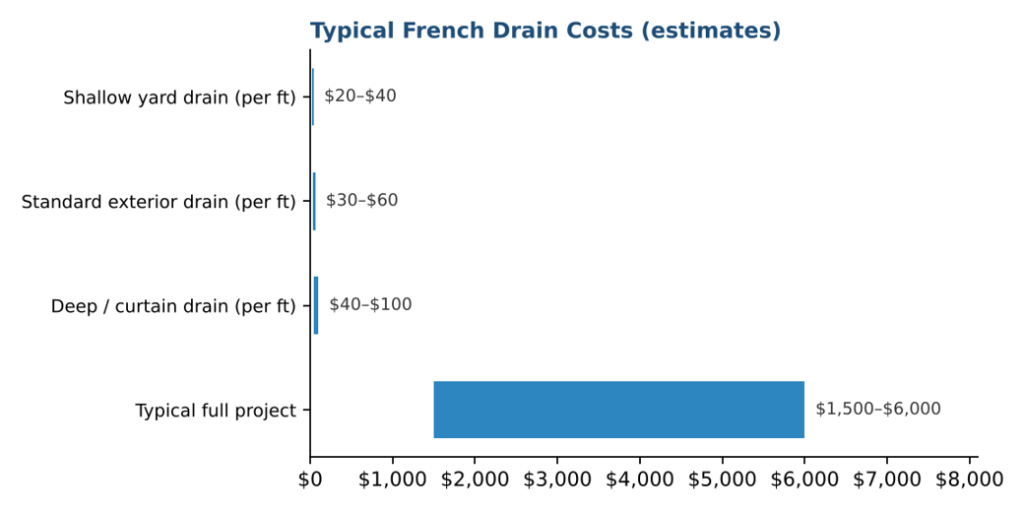
| Shallow exterior yard drain | $20–$40 per foot | Lawn areas, easy access |
| Standard exterior French drain | $30–$60 per foot | Includes gravel, pipe, fabric |
| Deep or curtain drain | $40–$100 per foot | Intercepts water before it reaches the house |
| Dry well add-on | $1,000–$3,500 | Gives water somewhere to go on flat lots |
| Typical residential project | $1,500–$6,000 | Depends on length, depth, and discharge |
What Affects the Cost?
Length and Depth
Longer and deeper trenches mean more digging, more gravel, and more labor.
Soil and Water Table
South Florida soils are often sandy over limestone, and the water table is high in many neighborhoods. That affects how deep a drain can go and where the water can discharge. On some flat lots, a dry well or connection to an existing storm system is needed.
Obstacles
Driveways, pavers, patios, irrigation lines, tree roots, and utility lines all add work. Cutting and replacing pavers or concrete increases cost.
Discharge Point
Water has to go somewhere. Discharging to a lower area of the yard is the simplest. Dry wells, pump basins, or storm connections add cost. Local rules may limit discharging onto neighboring properties or the street.
Permits
Some municipalities require permits for drainage work, especially when it ties into storm systems or affects grading.
Signs Your Property May Need a French Drain
- Water pools near your foundation after rain
- Soggy lawn areas that stay wet for days
- Water flowing toward the house from a slope or neighbor’s yard
- Erosion or washed-out mulch beds
- Water stains or moisture on lower walls or garage floors
- Mosquito problems from standing water
French Drain vs. Other Drainage Solutions
| Solution | Best For | Typical Relative Cost |
| Regrading | Mild slope problems | Low to medium |
| Gutter downspout extensions | Roof runoff pooling near the house | Low |
| Channel / trench drain | Driveways and patios | Medium |
| French drain | Subsurface water and yard pooling | Medium |
| Dry well | Flat lots with nowhere to discharge | Medium to high |
| Storm drain repair or cleaning | Existing drains that back up | Varies |
Sometimes the issue isn’t missing drainage but a clogged storm drain or catch basin that’s full of sand and debris. Cleaning it out can restore flow without new construction. A to Z Statewide Plumbing provides storm drain cleaning and vacuum truck services for residential and commercial properties.
Is a French Drain Worth It in South Florida?
For many properties, yes. Protecting your foundation, landscaping, and driveway from repeated water damage usually costs far less than repairing that damage later. A French drain is especially worth considering if:
- Water pools in the same place after every heavy rain
- Water flows toward your home’s foundation
- You’re investing in new landscaping or pavers
- You’ve had water intrusion in a garage or ground-floor room
It’s less effective on properties where the water table is already near the surface, because the water has nowhere to drain. In those cases, a dry well, regrading, or a pump solution may be better.
How Long Does a French Drain Last?
A well-built French drain can last many years, often decades. The biggest threat is clogging from soil, sand, and roots. Landscape fabric, clean gravel, and periodic flushing of the pipe help it last longer.
Get Drainage Help in South Florida
A to Z Statewide Plumbing provides excavation services, storm drain cleaning, and drainage solutions across Broward and Miami-Dade, including Pembroke Pines, Miramar, Weston, Davie, Southwest Ranches, Hollywood, and Fort Lauderdale. We’ll look at where the water is coming from, where it can go, and what will actually fix the problem. Call (954) 981-2133 or contact us online.
If you have a sump pump, see our guide on how often a sump pump should run during heavy rain.
| Key Takeaways ✔ Exterior French drains typically cost about $20–$60 per foot. ✔ Many residential projects fall between $1,500 and $6,000. ✔ Depth, obstacles, discharge point, and permits drive the price. ✔ South Florida’s high water table affects design. A dry well may be needed. ✔ Sometimes cleaning an existing storm drain solves the problem for less. |
Frequently Asked Questions
How much does a French drain cost per foot?
Many exterior French drains cost about $20 to $60 per linear foot. Deeper drains or those that require removing concrete or pavers cost more.
Do French drains work in Florida?
Yes, when designed for local conditions. Because South Florida has a high water table in many areas, the drain needs a proper discharge point, such as a dry well or lower area of the property.
How deep should a French drain be?
Many residential French drains are about 18 to 24 inches deep, but the right depth depends on the problem, soil, and water table.
How long does a French drain last?
A well-installed French drain can last for decades. Clogging from sediment and roots is the most common reason they fail.
Do I need a permit for a French drain?
It depends on your city and the scope of work. Projects that tie into storm systems or change grading are more likely to need a permit.