


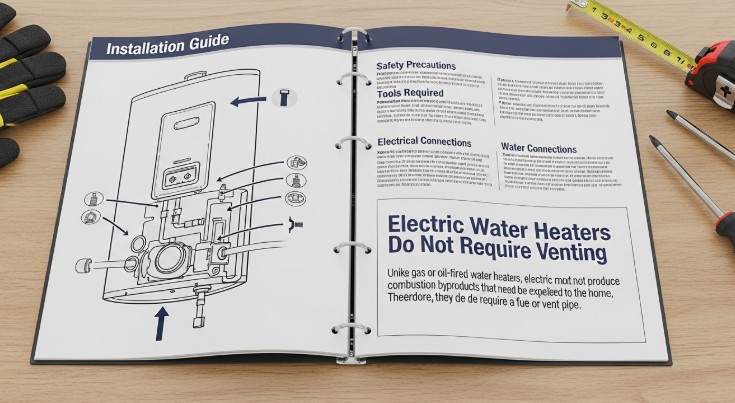
Do electric water heaters need to be vented? This confusion often comes from comparing electric systems with gas-powered units, which require flue pipes and ventilation for safe exhaust removal.
The concern is understandable, after all, ventilation is a major safety requirement in many home appliances. But when it comes to electric water heaters, the answer is much simpler than most people expect. There is no combustion process involved, which means no harmful gases are produced and no venting system is required.
However, understanding why this is true is important for safe installation, proper maintenance, and avoiding costly plumbing mistakes. In real-world plumbing service calls, technicians often find homeowners worried about “missing vents” when installing electric units, when in reality, nothing is missing at all.
Quick Answer — Do Electric Water Heaters Need to Be Vented?
Electric water heaters do not need venting because they do not burn fuel. Unlike gas water heaters, they produce no combustion gases, so no flue or exhaust system is required.
What “Venting” Means in Water Heaters
Venting refers to the process of removing dangerous gases created during fuel combustion, such as carbon monoxide, from a building.
Gas water heaters require venting because they burn natural gas or propane. Without proper ventilation, toxic gases could build up indoors.
Electric water heaters work differently:
- They use electrical heating elements
- No flame or combustion occurs
- No exhaust gases are produced
- No chimney or vent pipe is needed
This makes electric systems much simpler to install, especially in tight indoor spaces like closets or utility rooms.
Why Electric Water Heaters Do Not Require Venting
Electric water heaters operate using resistance heating. Electricity passes through internal heating elements, which convert energy into heat and warm the surrounding water inside the tank.
Because there is no burning fuel:
- No carbon monoxide is created
- No smoke or fumes are produced
- No air exhaust system is needed
This is one of the biggest advantages of electric models in modern residential plumbing systems, especially in homes where installing vent pipes would be difficult or expensive.
Common Plumbing Confusion About Venting
Many homeowners mistakenly believe all water heaters need venting. This often leads to unnecessary concern during installation.
Common misunderstandings include:
- Thinking electric heaters require chimneys
- Confusing gas installation rules with electric systems
- Assuming ventilation is needed for heat release
- Misdiagnosing electrical issues as airflow problems
In real plumbing scenarios, technicians frequently arrive to service calls where homeowners suspect “venting issues,” but the actual problem is a faulty thermostat or heating element.
Tools Used for Electric Water Heater Inspection
Even though venting is not required, proper inspection still requires basic tools:
- Multimeter for electrical testing
- Voltage tester
- Screwdriver set
- Pipe wrench
- Flashlight
- Insulated gloves
These tools help plumbers diagnose heating or electrical issues safely and accurately.
Safety Considerations
While electric water heaters remove gas-related risks, safety is still critical:
- Always shut off power before inspecting the unit
- Avoid touching exposed wiring or terminals
- Never operate the heater if there is a water leak
- Keep the electrical panel dry and accessible
- Ensure proper breaker protection is installed
Electric systems eliminate carbon monoxide risks, but electrical shock hazards still require caution.
How Electric Water Heaters Work (and Why No Venting Is Needed)
First, confirm the unit is electric by checking the label and power supply. There should be no gas line or flue connection.
Next, electricity flows into the heating elements located inside the tank. These elements heat the water directly.
Then, the thermostat controls temperature, typically between 120°F and 140°F, ensuring consistent hot water delivery.
As hot water is used in the home, cold water enters the tank to replace it, restarting the heating cycle.
Since there is no combustion process at any stage, there is no need for venting or exhaust removal.
Finally, the system continues cycling automatically until the desired temperature is reached.
Common Problems in Electric Water Heaters
Even though venting is not required, electric units can still experience issues:
- No hot water due to burned-out heating elements
- Tripped circuit breakers
- Faulty thermostat readings
- Sediment buildup inside tank
- Slow heating performance
These problems are often mistaken for “airflow” or ventilation issues, when they are actually electrical or maintenance-related.
Troubleshooting & Prevention Tips
To keep your electric water heater running efficiently:
- Flush the tank once a year to remove sediment
- Check thermostat settings regularly
- Inspect heating elements every few years
- Ensure stable electrical supply
- Keep surrounding area dry to prevent corrosion
Routine maintenance can extend the life of the unit significantly and improve energy efficiency.
Electric vs Gas Water Heater Venting Requirements
| Feature | Electric Water Heater | Gas Water Heater |
|---|---|---|
| Venting Required | No | Yes |
| Exhaust Gases | None | Carbon monoxide |
| Installation Complexity | Low | High |
| Safety Risks | Electrical only | Gas + ventilation risks |
| Maintenance Needs | Moderate | Higher |
| Energy Source | Electricity | Natural gas or propane |
When to Call a Professional Plumber
You should contact a professional if:
- The water heater is not producing hot water
- Circuit breakers keep tripping repeatedly
- You are unsure whether your system is gas or electric
- Water leaks or corrosion are visible
- You need installation or replacement services
In such cases, experienced technicians from A to Z State Wide Plumbing can safely inspect your system, confirm correct installation, and ensure everything is operating efficiently without safety risks.
Real-World Example
A common service call involves homeowners in newer houses who panic when they don’t see a vent pipe connected to their water heater. They assume something is missing. In reality, the installer simply installed an electric unit, which never required venting in the first place.
Once explained, the confusion is resolved, and attention shifts to actual maintenance needs like flushing sediment or replacing a worn heating element.
Conclusion
Understanding whether electric water heaters need to be vented helps homeowners avoid confusion during installation and maintenance. Unlike gas systems, electric models do not burn fuel, which means no exhaust gases and no venting requirements.
The key takeaway is simple: electric water heaters are safer, easier to install, and ideal for enclosed spaces, but they still require proper electrical safety and regular maintenance to perform efficiently.
If you’re ever unsure about your system, getting a professional inspection ensures your water heater is safe, efficient, and correctly installed for long-term performance.


