


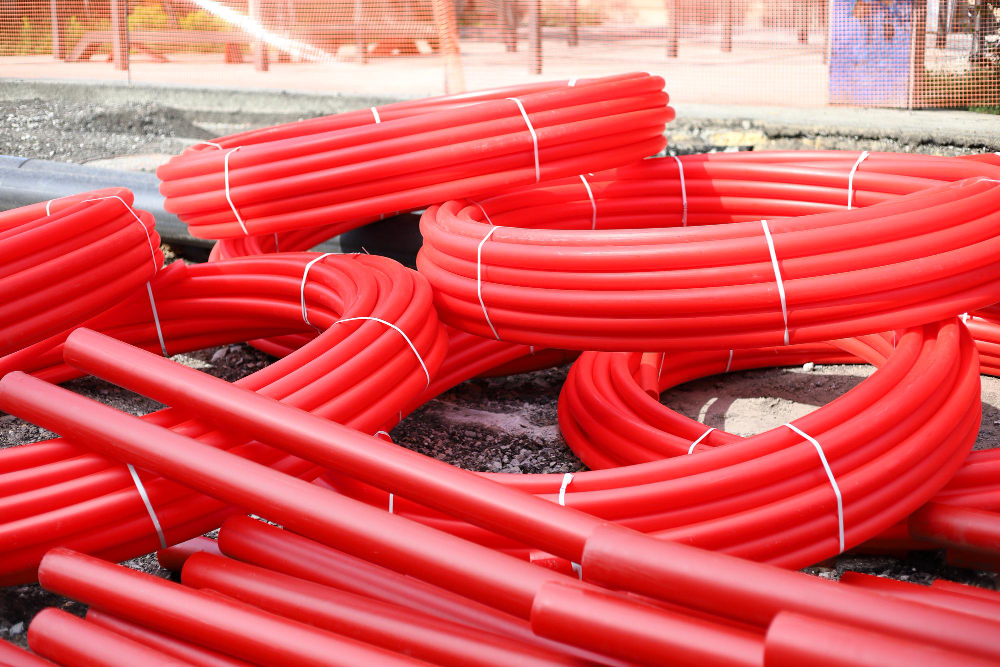
Copper pipe has been the standard for residential water supply lines for decades. It earned that reputation for good reasons: copper is durable, handles pressure well, and has a long track record in plumbing systems around the world. But in coastal areas, copper runs into a problem it can’t fully overcome, and that problem is the environment itself.
Corrosive coastal plumbing conditions are a real and specific challenge in places like South Florida. Salt air, high humidity, and the mineral content in the local water supply create conditions that accelerate copper corrosion in ways that simply don’t happen in drier inland regions. PEX tubing has become the preferred alternative in these environments, and knowing why requires a quick look at what actually causes copper to fail in coastal conditions.
What Makes Coastal Environments Hard on Copper
Copper corrodes through a process called oxidation. In normal indoor conditions, this happens slowly over many decades. But salt accelerates the process significantly. Salt ions act as an electrolyte, increasing the conductivity of moisture and speeding up the electrochemical reactions that break down copper.
In a coastal environment, salt gets everywhere. It’s in the air, in the groundwater, in the soil surrounding buried pipes, and in the moisture that condenses on pipes in unconditioned spaces like crawl spaces and utility rooms. Copper pipes in these environments can show significant corrosion in 10 to 15 years, sometimes less.
Pitting Corrosion
The most destructive form of copper corrosion in these conditions is pitting. Unlike general corrosion, which wears the pipe uniformly, pitting forms concentrated small holes in the copper wall. These pits can penetrate all the way through the pipe wall in a relatively short time, creating pinhole leaks.
Pinhole leaks in copper supply lines are a well-documented problem in South Florida specifically. They’re expensive to deal with because they’re hard to find, they often occur inside walls, and they tend to happen in multiple locations at once as the corrosion process affects the whole pipe run.
What PEX Is & How It Works
PEX stands for cross-linked polyethylene. It’s a flexible plastic tubing that’s been used in plumbing systems in Europe since the 1970s and has been growing in adoption across the United States for the last two decades.
The cross-linking process that gives PEX its name creates bonds between the polymer chains in the material, which gives it properties that standard plastic pipe doesn’t have. It can handle high temperatures, maintains its flexibility at cold temperatures without becoming brittle, and has pressure ratings that make it suitable for water supply applications.
PEX Variants: A, B, & C
There are three types of PEX, distinguished by the method used to cross-link the polymer chains. PEX-A is made using the Engel method and is the most flexible of the three. It can be expanded for fittings and will return to its original diameter, which creates a tight connection. PEX-B is made with a moisture cure method and is slightly less flexible but still performs well. PEX-C uses an electron beam process and is the most rigid of the three.
For residential plumbing installations, PEX-A is generally considered the preferred option because of its flexibility and the reliability of the expansion fitting system. For most applications in South Florida homes, the difference in everyday performance between the types is minor.
Why PEX Outperforms Copper in Coastal Conditions
The most direct answer is that PEX doesn’t corrode. Salt, chlorine, hydrogen sulfide in the groundwater, acidic soil conditions: none of these affect cross-linked polyethylene the way they affect copper. A PEX supply line installed in a coastal Florida home will look and perform the same at year 20 as it did at installation, assuming it’s not exposed to prolonged UV light, which is why outdoor PEX installations require protection.
PEX is also flexible, which matters in a region where ground movement from moisture fluctuations is common. Rigid copper pipe can crack at joints when a structure shifts slightly. PEX flexes without losing its integrity.
Freeze Resistance
Florida doesn’t freeze often, but when temperatures drop, PEX handles it better than copper. If water inside a PEX line freezes, the tubing expands with it and typically returns to its normal diameter when the ice thaws. Copper has no such flexibility. A frozen copper pipe can split along its length, and the damage doesn’t become obvious until the ice thaws and water starts moving again.
Installation Advantages
PEX installs faster than copper. It doesn’t require soldering, which eliminates the open-flame work that copper installation involves. Connections are made with push-fit fittings, crimp rings, or expansion fittings, depending on the system being used. The flexibility of the tubing means fewer fittings are needed overall, since it can be routed around obstacles in a way that rigid pipe cannot.
Fewer fittings mean fewer possible leak points, which is a real advantage in a supply line that’s going to spend 30 or 40 years inside walls and under floors.
When Copper Is Still the Right Choice
PEX has limitations. It can’t be used outdoors without UV protection. It can’t be used directly connected to a water heater, which is why installations typically include a short copper or CPVC stub-out at the heater connection before transitioning to PEX. Some municipalities still have code requirements that affect where PEX can be used, though most of South Florida has updated codes to accommodate PEX fully.
For above-ground outdoor applications, copper or CPVC remains the better option. For indoor supply lines in a coastal environment, the case for PEX is strong. The corrosion resistance alone makes it the more practical long-term choice for homes and buildings where salt air is a constant presence.


