
Natural gas is one of the most efficient and convenient energy sources available to South Florida homeowners — but it comes with serious safety responsibilities. A gas leak is not a plumbing inconvenience. It is a life-threatening emergency.
At A to Z Statewide Plumbing, our licensed plumbers respond to gas line emergencies across Miami-Dade, Broward, and Palm Beach Counties around the clock. We’ve seen what happens when gas line safety is ignored — and we want every South Florida homeowner to know what to watch for and what to do.
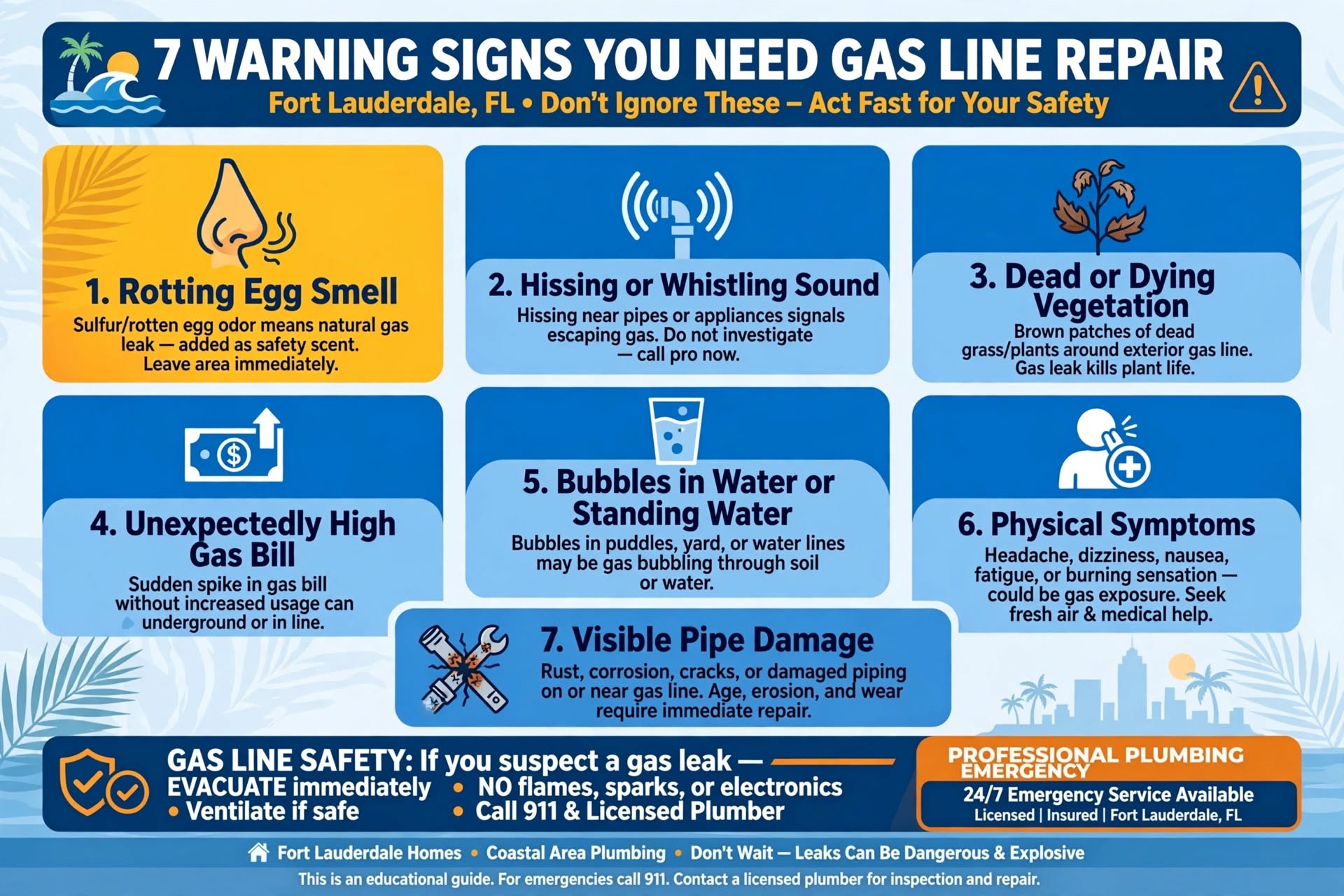
Signs of a Gas Leak in Your South Florida Home
Natural gas is odorless in its natural state, but gas companies add a chemical called mercaptan that creates a distinctive rotten egg or sulfur smell. This is intentional — it’s your warning system. Know all the signs:
- Smell of rotten eggs or sulfur near appliances, the meter, or along walls
- Hissing or whistling sound near gas lines, appliances, or your meter
- Dead or dying vegetation in a specific patch of your yard — can indicate an underground gas leak
- Bubbling in puddles near the gas meter after rain
- Pilot lights that won’t stay lit or frequently go out
- Higher-than-normal gas bills with no change in usage
- Physical symptoms — dizziness, nausea, or headaches indoors that resolve when you go outside
Any single one of these signs warrants immediate action. Do not wait to confirm it.
What to Do Immediately If You Suspect a Gas Leak
This is non-negotiable. If you suspect a gas leak in your South Florida home:
- Do NOT use light switches, electrical outlets, or any device — a spark can trigger an explosion
- Do NOT use your phone inside the building
- Do NOT try to find the leak yourself
- Leave the building immediately — leave the door open as you exit
- Go to a safe distance — at least 100 feet from the building
- Call your gas company (TECO, FPL, or your provider) to shut off supply
- From a safe distance, call 911 and then A to Z: (954) 981-2133
Do not re-enter the building until emergency services and a licensed plumber have cleared it as safe.
Gas Line Maintenance — What South Florida Homeowners Should Do
Annual Gas Line Inspection
Have a licensed plumber inspect your gas lines at least once a year. This includes checking connections, looking for signs of corrosion, testing shutoff valves, and pressure-testing the line. Annual inspections are especially important for:
- Homes over 20 years old
- Properties with older steel or iron gas pipes
- Homes with gas appliances added after original construction
- Properties near salt water — coastal corrosion accelerates pipe deterioration
Know Where Your Gas Shutoff Is
Every adult in your household should know where the main gas shutoff valve is and how to close it. In most South Florida homes, it’s located at the gas meter outside the home. You typically need a special wrench to turn it — keep one accessible.
Never DIY Gas Line Work
Florida law requires all gas line installation, repair, and modification to be performed by a licensed contractor. This is not a guideline — it’s the law. DIY gas line work is illegal and can result in explosions, fires, and criminal liability. Always call a licensed plumber like A to Z Statewide Plumbing.
Be Cautious When Landscaping or Excavating
Buried gas lines run through your yard. Before any digging project, call 811 (Florida’s free ‘Call Before You Dig’ service) to have underground utilities marked. Striking a gas line with a shovel or equipment is among the most dangerous home accidents.
Common Gas Appliances South Florida Homeowners Have
Gas line safety applies to all natural gas appliances, including:
- Natural gas water heaters
- Gas stoves and ovens
- Gas dryers
- Outdoor gas grills and BBQ hookups
- Gas fire pits and outdoor fireplaces
- Pool and spa heaters
- Whole-home gas generators
Each appliance has its own shutoff valve in addition to the main house shutoff. Know where each one is.
When to Call a Licensed Gas Line Plumber
Beyond emergencies, call a licensed plumber for:
- Any new gas appliance installation
- Extending a gas line to a new location
- After a hurricane or major storm — check for damage before using gas appliances
- If you purchase an older home — get a full gas line inspection before using any gas appliances
- If an appliance’s pilot light keeps going out
Gas Line Emergency or Scheduled Inspection in South Florida?
📞 24/7 Emergency Line: (954) 981-2133
A to Z Statewide Plumbing — Licensed Gas Line Specialists Since 1981
CFC License #CFC1426919 | Insured | Available 24/7 | No Overtime Charges
Frequently Asked Questions
Q: What should I do if I smell gas but I’m not sure?
A: Treat it as a real gas leak every time. The consequences of being wrong and assuming it’s nothing are catastrophic. Leave the building and call your gas company and A to Z at (954) 981-2133.
Q: Can I use my carbon monoxide detector to detect a gas leak?
A: No — carbon monoxide detectors do not detect natural gas. You need a dedicated gas detector for that. However, we strongly recommend having both in your South Florida home.
Q: How long does a gas line inspection take?
A: A typical residential gas line inspection takes 1–2 hours. We check all connections, test pressure, inspect shutoffs, and look for corrosion throughout the system.
Q: Are gas lines required to be permitted in Florida?
A: Yes. All gas line work — installation, repair, and modification — requires permits in Florida. A to Z Statewide Plumbing pulls all required permits and coordinates inspections.