
A new year means a fresh start — and for South Florida homeowners, it’s also the perfect time to take stock of your home’s plumbing system. While most people are making resolutions about fitness and finances, smart homeowners in Miami-Dade and Broward Counties are making sure their pipes, drains, and water heaters are ready for another year of Florida’s heat, humidity, and hard water.
At A to Z Statewide Plumbing, we’ve been maintaining South Florida homes since 1981. In that time, we’ve seen exactly what gets neglected and what ends up costing homeowners thousands in preventable repairs. This checklist covers it all.
Why January Is the Best Time to Check Your Plumbing in South Florida
South Florida’s ‘winter’ is actually its mildest season — moderate temperatures, lower humidity, and the tail end of the rainy season. This makes January the ideal window to inspect, repair, and upgrade plumbing before the brutal summer heat, the June–November rainy season, and hurricane season arrive.
Waiting until a problem becomes obvious is the most expensive approach. A small leak discovered in January costs a fraction of what a burst pipe or slab leak costs in August. January is your window — use it.
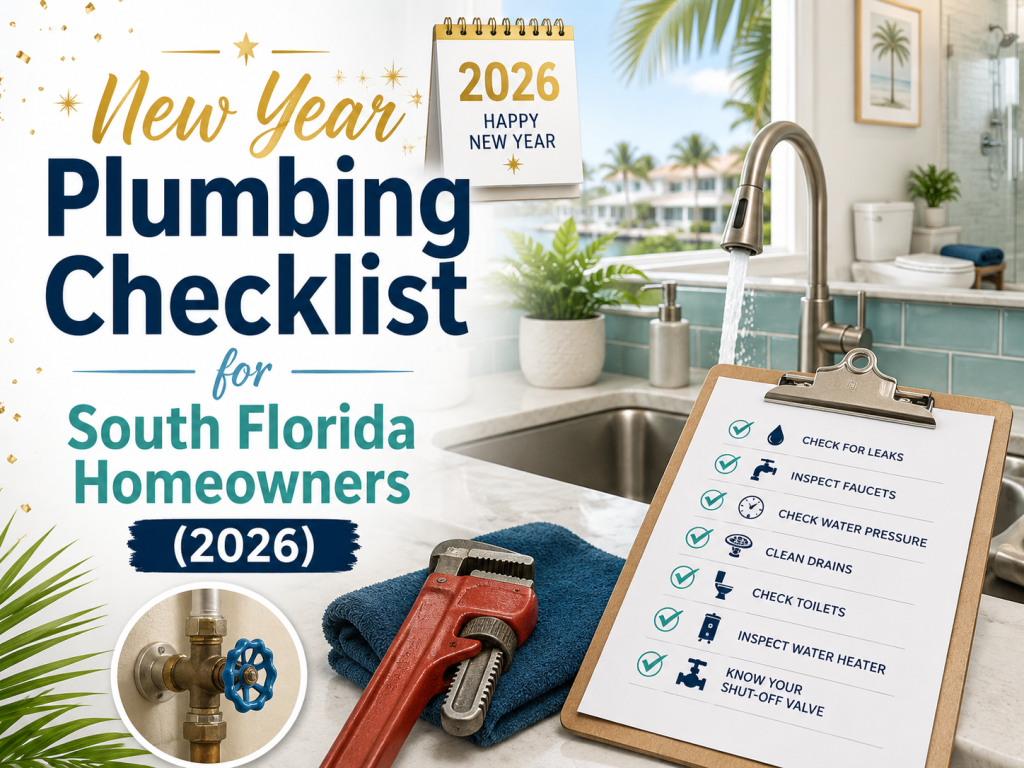
Your 10-Point South Florida Plumbing Inspection Checklist
1. Check Your Water Heater
Your water heater works harder in South Florida than almost anywhere else in the country. Hard water mineral buildup reduces efficiency and lifespan. Check for:
- Rust or corrosion on the tank or connections
- Strange noises (popping, banging) — signs of sediment buildup
- Water temperature inconsistency — heater struggling to keep up
- Age — if it’s over 8–10 years old, start planning for replacement
Flush your water heater annually to remove sediment. If you haven’t done this in years, call A to Z Plumbing — we’ll handle it safely.
2. Inspect All Visible Pipes
Walk through your home and check under sinks, behind toilets, and anywhere pipes are exposed. Look for:
- Moisture, drips, or water stains around pipe joints
- Corrosion or greenish buildup on copper pipes
- Cracks or damage on PVC or plastic pipes
If your home was built before 1975 and has never been repiped, you likely have cast iron or galvanized steel pipes that are approaching end of life.
3. Test Every Faucet and Fixture
Turn on every faucet, shower, and outdoor hose bib. Check for:
- Drips when fully closed — a dripping faucet wastes up to 3,000 gallons per year
- Reduced water pressure — could indicate mineral buildup or a hidden leak
- Discolored water — rust or sediment in your pipes
4. Flush Every Toilet
Flush each toilet and observe the fill cycle. Warning signs:
- Running toilet — a continuously running toilet can waste 200 gallons per day
- Slow fill — could be a failing fill valve
- Rocking or movement — may indicate a failing wax ring seal
5. Check All Drains
Run water in every sink, tub, and shower drain and watch the drainage speed. Slow drains in multiple fixtures simultaneously signal a main sewer line issue — not just a local clog. Don’t ignore this.
6. Inspect Your Water Meter
Turn off all water sources in your home, then check your water meter. If it’s still moving, you have a leak somewhere in your system. This simple test catches hidden leaks before they become disasters.
7. Test Your Water Pressure
South Florida homes should have water pressure between 40–80 PSI. Too high (over 80 PSI) stresses pipes and causes leaks. Too low affects comfort and may signal a problem. A pressure gauge from any hardware store checks this in seconds.
8. Check Under-Sink Areas
Open every cabinet under sinks in kitchens and bathrooms. Look for moisture, water stains, or warping in the cabinet floor — early signs of a slow leak that could be rotting your cabinetry undetected.
9. Inspect Your Water Shutoff Valves
Know where your main water shutoff valve is and make sure it turns easily. In a plumbing emergency, a jammed shutoff valve can turn a minor problem into a flood. Test it once a year.
10. Look for Signs of Slab Leaks
South Florida’s concrete slab foundations make slab leaks a serious and common threat. Warning signs include:
- Hot spots on your floor — warm area on tile or flooring with no explanation
- Sound of running water when everything is off
- Unexplained spike in water bill
- Cracks in walls or flooring
Slab leaks require professional electronic detection. If you notice any of these signs, call immediately.
Signs You Need to Call a Professional After Your Self-Check
DIY inspection is a starting point — not a replacement for professional diagnosis. Call A to Z Statewide Plumbing if you find:
- Any active leaks or water damage
- Slow drains in multiple fixtures
- Pipes over 30 years old with no recent inspection
- Water pressure consistently outside normal range
- Warm spots on floors or unexplained high-water bills
- Water heater over 10 years old showing any symptoms
Schedule Your Annual Plumbing Inspection
The best new year’s resolution you can make for your South Florida home is scheduling a professional plumbing inspection. A to Z Statewide Plumbing offers comprehensive residential inspections — we’ll catch what you can’t see and give you a clear picture of your plumbing system’s health.
Need a Licensed Plumber in South Florida?
Call A to Z Statewide Plumbing
📞 (954) 981-2133 — Available 24/7
✉ service@atozstatewideplumbing.com
Serving Miami-Dade, Broward & Palm Beach Counties since 1981.
Licensed (CFC1426919) | Insured | Drug-Tested Technicians | No Overtime Charges
Frequently Asked Questions
Q: How often should South Florida homeowners do a plumbing inspection?
A: At minimum once a year. South Florida’s hard water, high humidity, and aging infrastructure mean plumbing degrades faster than in many other regions. An annual professional inspection catches problems early.
Q: What does a professional plumbing inspection include?
A: A to Z’s inspection covers all visible pipes, fixtures, water heater, water pressure, drain flow, shutoff valves, and a check for signs of leaks and slab issues. We use electronic equipment to detect hidden leaks.
Q: How much does an annual plumbing inspection cost in South Florida?
A: Costs vary, but a standard residential inspection is typically $150–$300. This is a fraction of the cost of an undetected leak or burst pipe repair. Call (954) 981-2133 for current pricing.
Q: What is the biggest plumbing risk for South Florida homeowners?
A: Slab leaks are the costliest and most common major plumbing issue in South Florida. Hard water also dramatically shortens the lifespan of water heaters and pipes. Both are preventable with regular maintenance.