
If you own an older home in Florida, there is a good chance it was built with galvanized steel pipes, which were the standard for plumbing for much of the twentieth century. These pipes served homes well for decades, but they have a limited lifespan, and the ones still in use today are often well past their prime. Galvanized pipes corrode from the inside out, which causes a range of problems that get worse over time.
Knowing the signs of failing galvanized pipes, how long they last, and what your replacement options are helps you plan before a small problem becomes a big one. Here is what Florida homeowners should know about galvanized pipes.
What Galvanized Pipes Are
Galvanized pipes are steel pipes coated with a layer of zinc, which was meant to protect the steel from corrosion. For a time, this was a reliable plumbing material, and it was used widely in homes built from the early 1900s through the 1960s and into the 1970s. The zinc coating does protect the steel for a while, but it does not last forever.
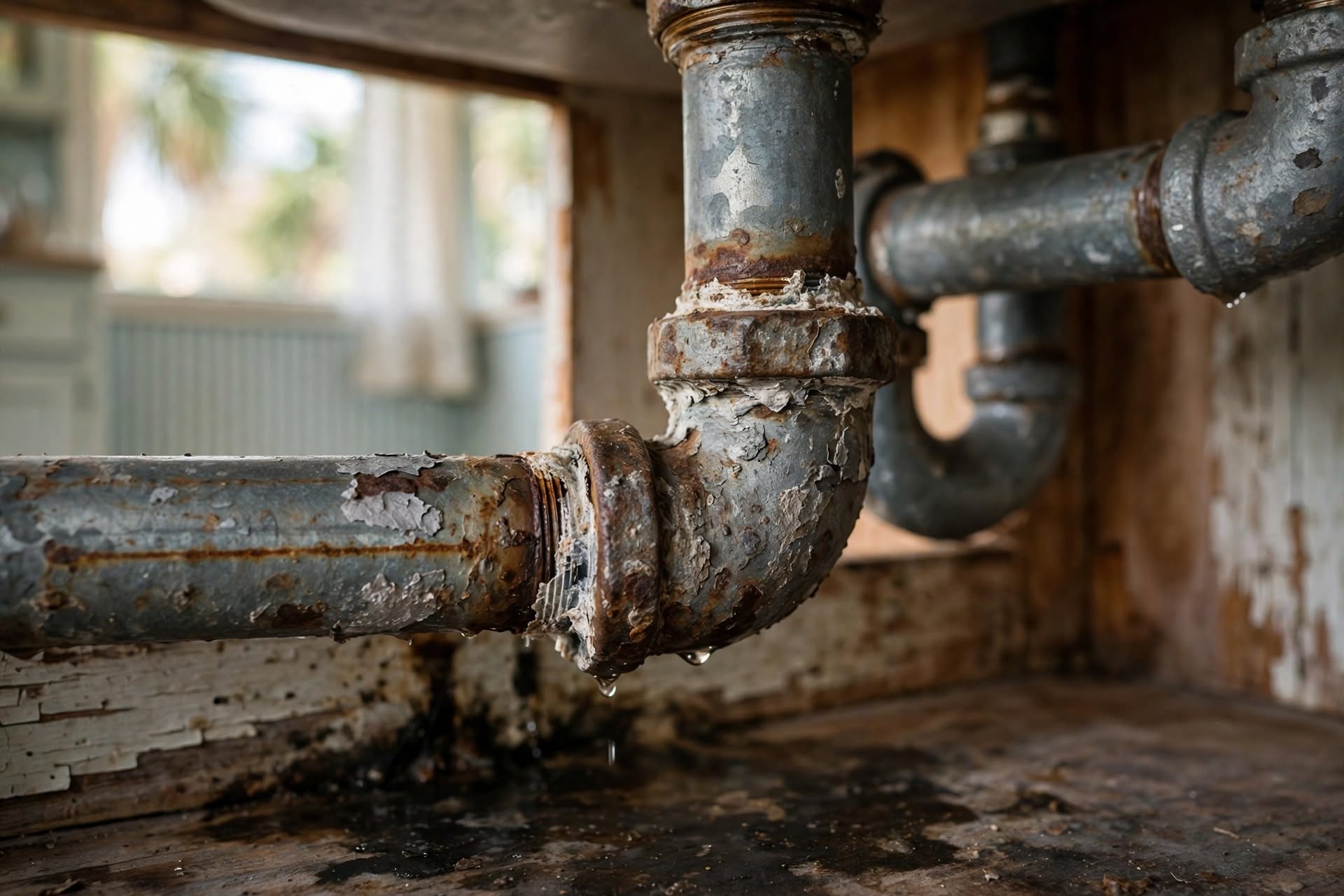
Over the decades, the zinc coating wears away, and once it does, the steel underneath begins to corrode. The corrosion happens on the inside of the pipe, where you cannot see it, which is what makes galvanized pipes a hidden problem. By the time the effects show up, the corrosion has usually been building for years.
How Galvanized Pipes Fail
Galvanized pipes fail from the inside. As the zinc wears away and the steel corrodes, rust and mineral deposits build up on the inside walls of the pipe. This buildup does two things. It narrows the passage through the pipe, which restricts the water flow, and it contaminates the water with rust as it breaks loose. Eventually, the corrosion weakens the pipe to the point where it can leak or fail.
In Florida, the hard water common across the region can contribute to the buildup inside the pipes, adding mineral deposits to the rust. The combination accelerates the narrowing and the decline of the pipe.
Signs of Failing Galvanized Pipes
Galvanized pipes send clear signals as they fail, and knowing them helps you catch the problem.
Low Water Pressure
As the inside of the pipe narrows with rust and buildup, less water can flow through, so the water pressure drops. Low water pressure throughout the house is one of the most common signs of failing galvanized pipes. If your pressure has gradually weakened over the years, corroded pipes may be the reason.
Discolored or Rusty Water
When the rust inside the pipe breaks loose, it ends up in your water. Brown, yellow, or rusty water, especially when you first turn on a tap after the water has been sitting, is a clear sign that the pipes are corroding. This discolored water is unpleasant and is a strong indication that the pipes are failing.
Leaks
As galvanized pipes corrode and weaken, they develop leaks. A pipe that has corroded through, or a joint that has weakened, will start to leak. Frequent leaks in an older home with galvanized pipes are a sign that the system is reaching the end of its life.
Uneven Water Flow
Corroded pipes can cause uneven water flow, where the pressure drops when another fixture is used or the flow is inconsistent. This happens because the narrowed pipes cannot supply water evenly to multiple fixtures at once.
How Long Galvanized Pipes Last
Galvanized pipes generally last around 40 to 50 years, though this varies based on the water conditions and how the pipes have held up. Given that these pipes were installed decades ago in older homes, many of the galvanized systems still in use today are at or beyond the end of their expected lifespan. A home built in the 1950s or 1960s with its original galvanized pipes has plumbing that is well past the point where problems become likely.
This is why so many older Florida homes are dealing with galvanized pipe problems now. The pipes have simply aged out, and the corrosion that was building for decades is showing its effects.
Replacement Options
When galvanized pipes are failing, replacing them is the solution that ends the problems. There are modern materials that work far better and last longer than the old galvanized pipes.
PEX
PEX is a flexible plastic piping that has become a popular choice for replacing galvanized pipes. It resists corrosion, which means it will not develop the rust and buildup problems that galvanized pipes have. PEX is flexible, which can make installation faster and less disruptive, and it tends to cost less than copper. In Florida’s hard water, PEX holds up well since it does not corrode.
Copper
Copper is another option, with a long track record as a reliable plumbing material. It is durable and long-lasting. Copper generally costs more than PEX, both in material and installation, but some homeowners prefer it for its proven reliability.
Whole-House Repiping
When galvanized pipes are failing throughout a home, whole-house repiping is often the best approach. Rather than replacing one section at a time as problems appear, repiping replaces the entire system with new material. This ends the recurring problems and gives the home a fresh plumbing system that will last for decades. For an older home with original galvanized pipes, repiping is frequently the smarter long-term decision.
Planning for Pipe Replacement
Galvanized pipes in an older Florida home are a problem that catches up with every homeowner eventually, since these pipes corrode from the inside and have a limited lifespan. Watch for the signs of low water pressure, discolored water, leaks, and uneven flow, which all point to pipes that are failing. Given that most galvanized systems are now past their expected life of 40 to 50 years, replacement is often the right move.
Modern materials like PEX and copper last far longer and avoid the corrosion problems, and whole-house repiping ends the recurring failures for good. If your older home still has its galvanized pipes, having a professional assess their condition tells you where you stand and helps you plan the replacement before a leak forces the issue. Replacing aging galvanized pipes on your own schedule is always better than dealing with a failure you did not see coming.