
The drain field is the part of a septic system that quietly does the final step of treating your wastewater, and most homeowners never think about it until something goes wrong. When a drain field starts to fail, the signs are hard to miss, and the cost of ignoring them climbs quickly. In Florida, where high water tables and sandy soil both affect how septic systems perform, drain field problems are something many septic homeowners eventually face.
Knowing the warning signs and what replacement costs helps you catch trouble early and plan for it. Here is what you need to know about septic drain field failure in Florida.
How a Drain Field Works
To understand why a drain field fails, it helps to know what it does. A septic system has two main parts. The tank collects the waste from your home, where solids settle to the bottom and begin breaking down. The liquid that flows out of the tank goes to the drain field, which is a network of perforated pipes buried in the ground across a section of your yard.
In the drain field, that liquid slowly filters down through the soil, which cleans it naturally before it rejoins the groundwater. The whole system depends on the soil being able to absorb the water. When the soil can no longer do that, the liquid has nowhere to go, the system backs up, and you have a failing drain field on your hands.
Signs Your Drain Field Is Failing
A failing drain field sends clear signals, and catching them early can mean the difference between a repair and a full replacement. These signs often appear together, which makes the cause easier to identify.
Wet or Soggy Spots in the Yard
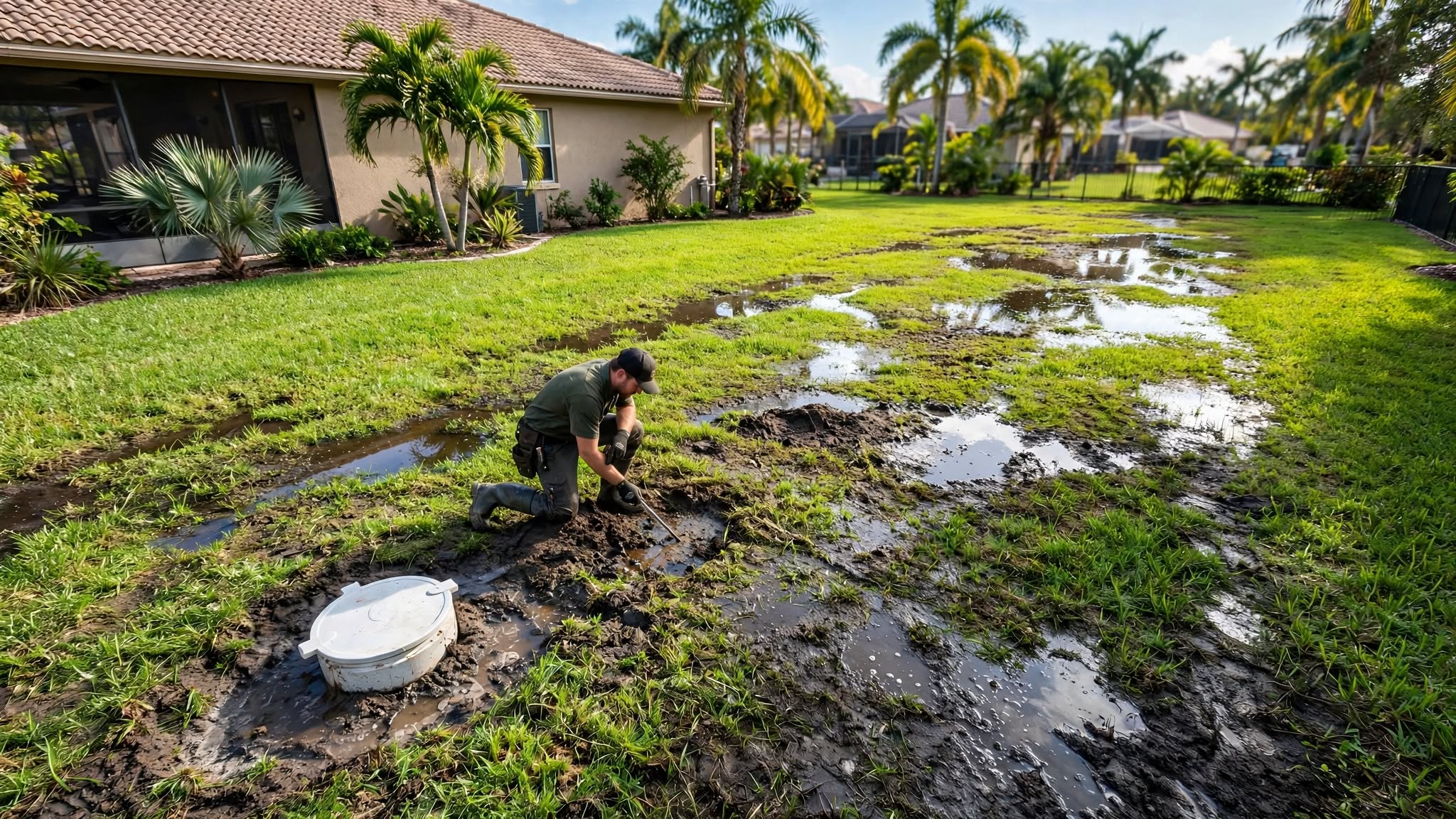
One of the clearest signs is standing water or soggy ground over the drain field, even when it has not rained. When the soil can no longer absorb the wastewater, the liquid rises to the surface. You might notice squishy ground, puddles, or areas that never seem to dry out. The grass over a failing field sometimes grows greener and faster than the rest of the lawn, because the wastewater is feeding it.
Slow Drains & Backups Inside
When the drain field cannot take the water, the backup works its way back toward the house. Drains throughout the home slow down, toilets flush weakly, and in bad cases, sewage backs up into the lowest drains. If every drain in the house has turned sluggish at once, the drain field or the septic system as a whole may be the reason.
Sewage Odors
A failing drain field often produces a sewage smell, either outside over the field or inside through the slow drains. When wastewater surfaces in the yard or backs up in the system, the odor comes with it. A persistent sewage smell is a strong sign that something in the septic system needs attention.
What Causes a Drain Field to Fail
Drain fields fail for a few common reasons, and knowing them helps with prevention. The most frequent cause is a tank that was not pumped often enough. When solids build up in the tank and are not removed, they can flow out into the drain field and clog the soil, which stops it from absorbing water. Overloading the system with too much water can also overwhelm the field. Damage from tree roots, heavy vehicles driving over the field, and simple age all contribute as well. Many of these causes trace back to maintenance that was skipped over the years.
What Drain Field Replacement Costs in Florida
The cost of replacing a drain field varies widely, and it depends on several factors. The size of the field, the type of system, the condition of the soil, the accessibility of the site, and the local permit requirements all affect the final price. A drain field replacement is one of the more expensive repairs a septic home can face, which is exactly why catching problems early matters so much.
Several things drive the cost. The size of the drain field needed depends on the size of the home and the soil conditions, and a larger field costs more. The soil has to be suitable, and if it is not, additional work may be required to make the site work. Permits and inspections are part of the process in Florida, since septic work is regulated, and those add to the cost. The accessibility of the site matters too, since a field in a hard-to-reach spot takes more labor.
Because the range is so wide, getting a proper assessment and a clear estimate is important. A professional can evaluate your system, determine what is actually needed, and give you an accurate price rather than a guess. Sometimes an inspection reveals that the problem is a tank that needs pumping rather than a failed field, which is a far cheaper fix, so an assessment can save you from assuming the worst.
What to Do When You Spot the Signs
When you notice the warning signs, the right move is to act rather than wait, since a drain field problem only gets worse with time. Start by having the system inspected to confirm what is happening. Sometimes the problem is a full tank that simply needs pumping, which is a much easier fix than a failed field. The inspection tells you whether you are dealing with a maintenance issue or a genuine failure.
While you wait for the inspection, reducing your water use eases the strain on the system. Spreading out laundry, fixing any running toilets, and going easy on water helps keep the situation from getting worse. If the field has genuinely failed, the professional can explain your options and what the replacement involves.
Protecting Your Septic Investment
A drain field replacement is costly, which makes prevention well worth the effort. Pumping your septic tank on a regular schedule is the single best thing you can do, since it keeps solids from reaching and clogging the field. Being mindful of what goes down the drain, avoiding excess water use, and keeping heavy vehicles and deep-rooted trees off the field all help extend its life.
Watch for the warning signs of soggy spots, slow drains, and sewage odors, and have the system inspected the moment they appear. A septic system that is cared for can run for many years, and staying ahead of drain field trouble keeps you far from the cost of replacing it before its time.