
| Quick Answer Orangeburg pipe is a sewer pipe made from layers of wood fiber and pulp bonded with coal tar pitch. It was widely installed in homes built from about the 1940s through the early 1970s. It was expected to last about 50 years, so nearly all Orangeburg still in the ground today is past its expected life. Over time it softens, flattens into an oval, blisters, and lets tree roots in. If your South Florida home was built in that era and has a history of slow drains or sewer backups, a sewer camera inspection is the best way to find out what’s underground. |
Many homes in established neighborhoods across Broward and Miami-Dade were built during the post-World War II housing boom. Some of those homes still have their original sewer lines, and some of those lines are Orangeburg. If you’re buying, selling, or living in an older home, it’s worth knowing what this pipe is and why it causes so many problems.
What Is Orangeburg Pipe?
Orangeburg pipe, also called bituminized fiber pipe, gets its name from Orangeburg, New York, where it was manufactured in large volumes. It was lightweight, cheap, and easy to cut, which made it popular when metal was in short supply during and after World War II.
The problem is what it’s made of. Wood pulp and tar don’t hold up well to decades of moisture, soil pressure, and roots.
How Orangeburg Pipe Compares to Other Sewer Pipes
| Pipe Material | Common Era of Installation | Typical Expected Lifespan | Common Problems |
| Orangeburg (fiber) | 1940s–1970s | About 50 years | Deforms, blisters, root intrusion, collapse |
| Clay | Early 1900s–1970s | 50–60+ years | Cracked joints, root intrusion |
| Cast iron | Early 1900s–1980s | 50–75+ years | Corrosion, scaling, cracks |
| PVC | 1970s–today | 70–100 years | Rare; poor installation, settling |
Lifespans are general industry estimates. Soil, groundwater, roots, and installation quality all affect real-world performance.
Image alt text: Typical Expected Lifespan of Sewer Pipe Materials
Why Orangeburg Pipe Fails
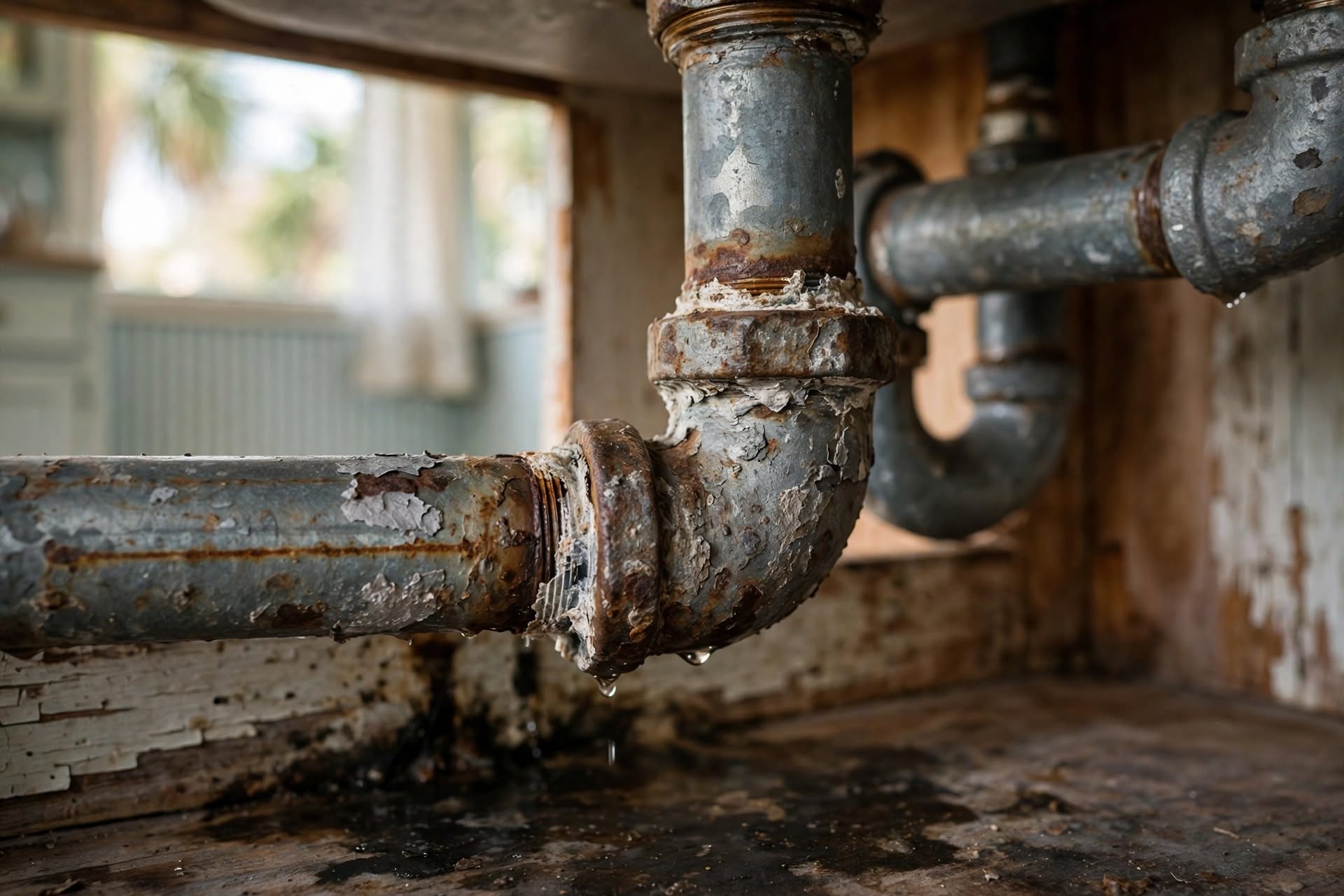
- It deforms. Soil weight presses the softened pipe into an oval shape, shrinking the opening.
- It blisters. The inner layers bubble and peel, catching waste and paper.
- Roots get in. Tree roots are drawn to the moisture and grow straight through weak spots. South Florida’s year-round growing season and large shade trees make this especially common.
- It collapses. Once it loses enough shape, a section can cave in completely and block the line.
Signs You May Have Orangeburg Pipe
You can’t confirm Orangeburg by looking at a drain inside the house, but these clues raise the odds:
- Your home was built between the 1940s and early 1970s
- The sewer line has never been replaced
- Slow drains throughout the house
- Gurgling toilets or water backing up into the tub when you flush
- Frequent clogs that come back after being cleared
- Soggy, sunken, or unusually green spots in the yard over the sewer line
- Sewage odors outside or inside the home
For more warning signs, see our guide to the 5 early signs your sewer line is failing in South Florida.
How to Confirm Orangeburg Pipe
The most reliable way is a sewer camera inspection. A plumber feeds a waterproof camera through a cleanout to see the pipe material, its shape, and any roots, cracks, or collapsed sections. A to Z Statewide Plumbing uses DrainVision sewer camera inspection to record the full line, so you can see exactly what’s going on before you decide anything.
This is especially smart if you’re buying an older home. Many standard home inspections don’t include a sewer scope, and a failing Orangeburg line can be an expensive surprise after closing.
Orangeburg Pipe Replacement Options
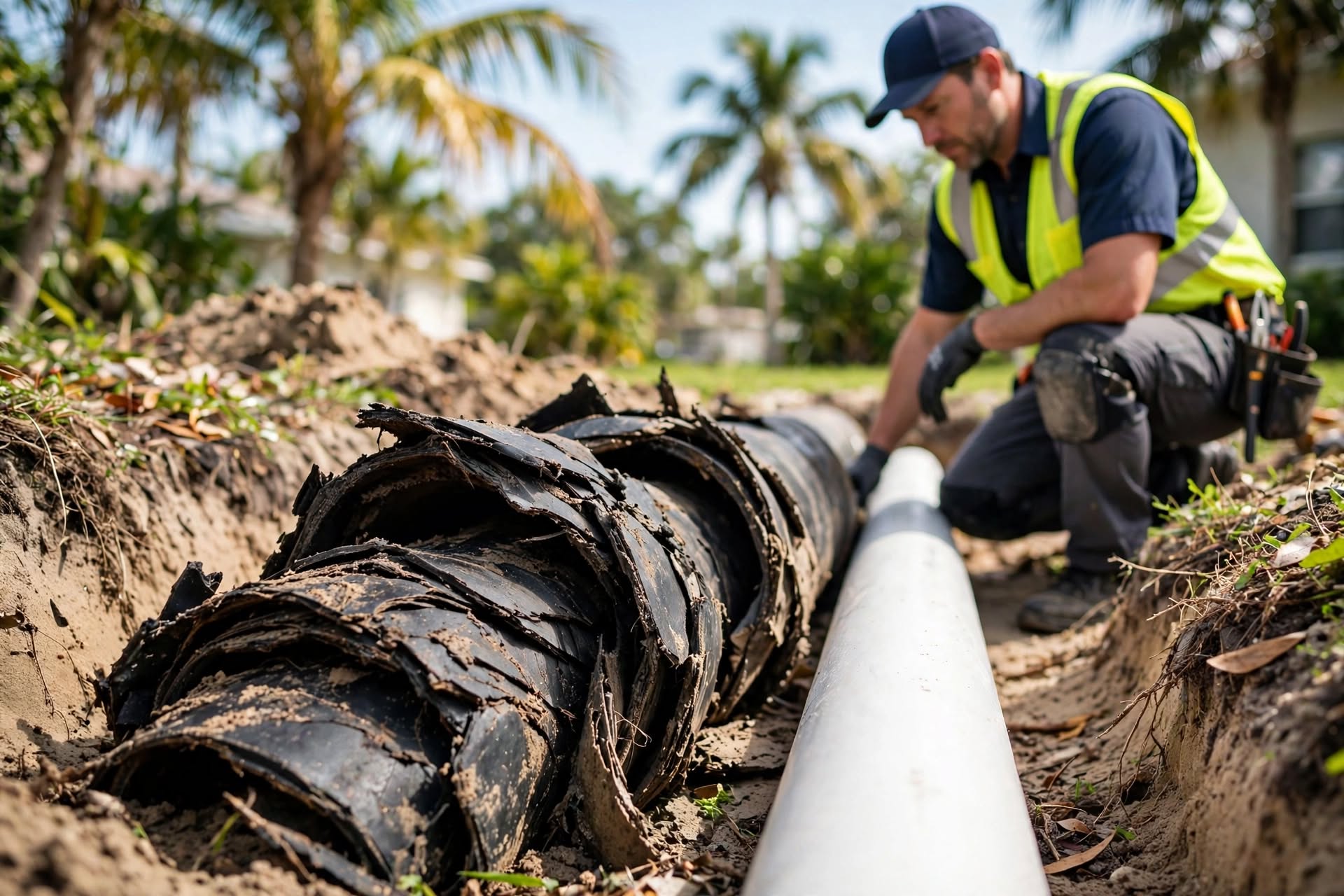
Orangeburg pipe can’t really be repaired long term. The usual answer is replacement with modern PVC. There are two main ways to do it.
| Method | How It Works | Best For | Considerations |
| Traditional excavation | Dig a trench, remove old pipe, lay new PVC | Collapsed lines, shallow lines, open yards | More digging and landscape restoration |
| Trenchless pipe bursting | Pull a new pipe through the old one, breaking it apart as it goes | Lines under driveways, patios, or mature landscaping | Needs access pits at each end; not every line qualifies |
What about pipe lining? Cured-in-place lining coats the inside of an existing pipe. It can be a good option for some cast iron or clay lines, but it often isn’t suitable for Orangeburg that has already deformed, because the liner follows the damaged shape. A camera inspection will show whether lining is even possible.
How Much Does Orangeburg Pipe Replacement Cost?
Cost depends on the length of the line, depth, method, what’s on top of it (lawn vs. driveway), and permit requirements.
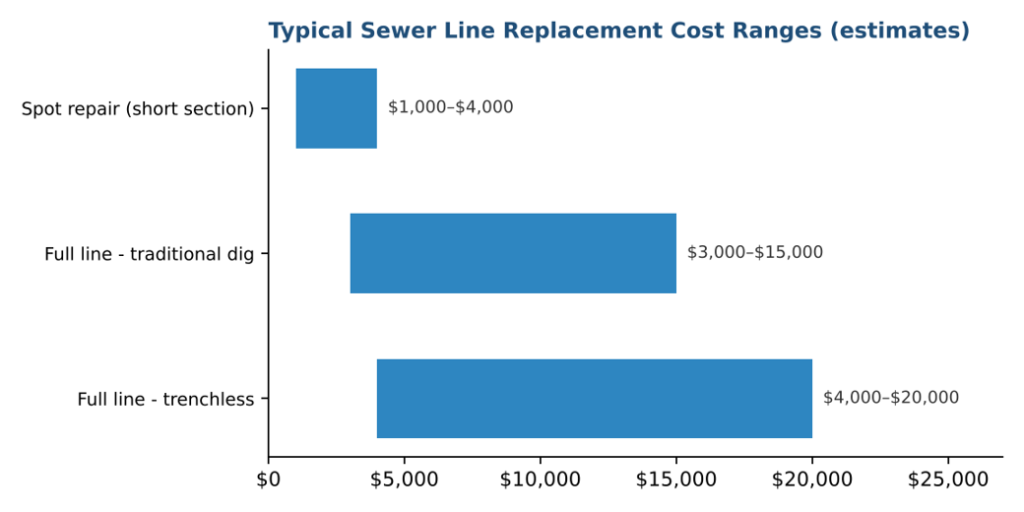
These are broad market estimates for planning purposes only. The right number for your home comes from a camera inspection and on-site quote.
Does Homeowners Insurance Cover Orangeburg Pipe?
Usually not. Most standard policies treat a pipe that wears out from age as a maintenance issue rather than a sudden covered event. Some insurers also ask about sewer pipe material on older homes. Check your policy, or ask your agent about a service line endorsement, which some carriers offer.
Get Your Sewer Line Checked
If your home was built between the 1940s and 1970s, or you’re seeing repeated backups, a camera inspection gives you real answers. A to Z Statewide Plumbing provides sewer camera inspections, sewer line repair, and full sewer line replacement across Broward and Miami-Dade, including Hollywood, Fort Lauderdale, Pembroke Pines, Miramar, and Miami. Call (954) 981-2133 or contact us.
Not sure if your home is on a septic system or city sewer? Read Septic vs. Sewer in South Florida.
| Key Takeaways ✔ Orangeburg is a wood-fiber-and-tar sewer pipe installed from about the 1940s to 1970s. ✔ It was expected to last around 50 years, so most of it is now past its prime. ✔ It fails by deforming, blistering, letting in roots, and collapsing. ✔ A sewer camera inspection is the only reliable way to confirm it. ✔ Replacement with PVC, by excavation or trenchless bursting, is the long-term fix. |
Frequently Asked Questions
How do I know if I have Orangeburg pipe?
The most reliable way is a sewer camera inspection. Homes built from the 1940s to the early 1970s with original sewer lines are the most likely to have it.
How long does Orangeburg pipe last?
It was generally expected to last about 50 years. Many lines have failed sooner, especially where roots, heavy soil, or high groundwater are present.
Can Orangeburg pipe be repaired?
Short sections can sometimes be spot-repaired, but because the whole line is made of the same aging material, full replacement is usually the long-term solution.
Can Orangeburg pipe be lined?
Sometimes, but often not. If the pipe has already flattened or collapsed, a liner can’t restore its shape. A camera inspection will show whether lining is an option.
Should I buy a house with Orangeburg pipe?
Many people do, but you should know the replacement cost before you close. Get a sewer camera inspection and a written quote so you can factor it into your offer or negotiations.