
Water heating accounts for a meaningful portion of a home’s energy use, typically between 14 and 18 percent of total household energy consumption. For Florida homeowners running electric resistance water heaters, which is a large share of the state’s residential housing stock, that number translates to a real line item on the monthly electric bill. Heat pump water heaters offer a way to cut that cost substantially, and the combination of federal tax credits and available rebate programs in 2026 has made the upfront cost more manageable than it’s been in the past.
This is a look at how heat pump water heaters actually work, what the financial picture looks like in Florida, and what a homeowner needs to consider before making the switch.
How Heat Pump Water Heaters Work
A standard electric resistance water heater generates heat directly, using electrical resistance coils to heat the water in the tank. It’s a straightforward process but not an efficient one. Every unit of electricity that goes in produces roughly one unit of heat.
A heat pump water heater works differently. Instead of generating heat, it moves heat from one place to another. The unit pulls heat energy from the surrounding air, concentrates it, and transfers it into the water in the tank. Because it’s moving heat rather than generating it, it uses significantly less electricity to produce the same amount of hot water.
The Efficiency Difference
The efficiency of a heat pump water heater is measured by its Uniform Energy Factor, or UEF. Standard electric resistance water heaters have a UEF around 0.9 to 0.95. Heat pump water heaters typically have a UEF between 3.0 and 4.0, meaning they produce three to four times as much hot water per unit of electricity consumed.
For a Florida household that currently spends $600 per year running a standard electric water heater, switching to a heat pump model could reduce that annual cost to $150 to $200. Over a 10-year period, the cumulative savings are significant.
Florida’s Climate & Heat Pump Performance
Heat pump water heaters pull heat from the surrounding air, which means they perform better in warmer environments. Florida’s climate is particularly well-suited to this technology. The units work most efficiently when the surrounding air temperature is between 40 and 90 degrees Fahrenheit, a range that South Florida stays within for the vast majority of the year.
This is one reason why heat pump water heaters make more economic sense in Florida than in colder northern states where the units sometimes struggle in winter months. In South Florida, the performance advantage of a heat pump water heater is consistent year-round.
Space Requirements
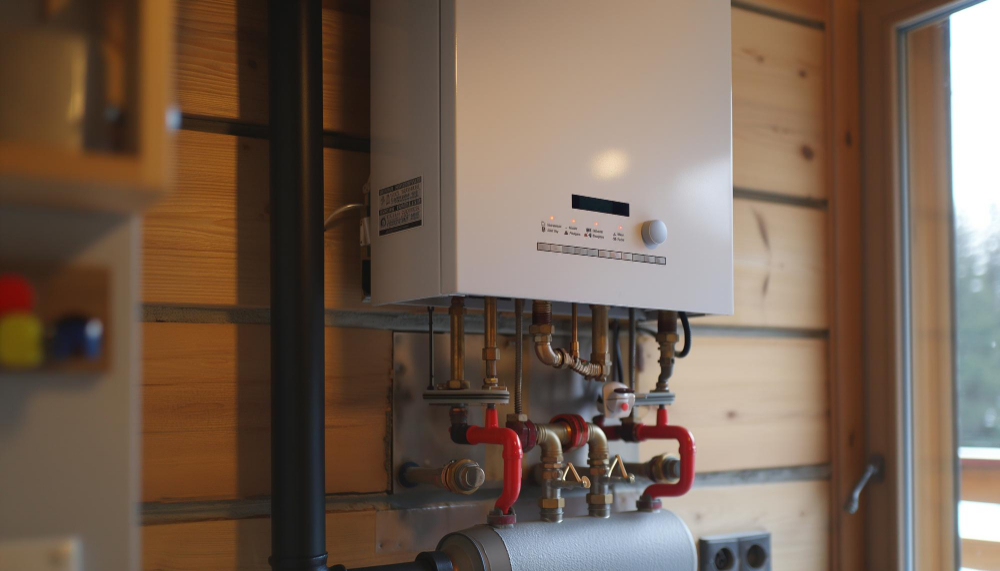
Heat pump water heaters are larger than standard tank water heaters and require adequate airspace around them to draw in the air they need to operate. The general recommendation is at least 1,000 cubic feet of surrounding air space. In a garage or utility room with good ventilation, this is usually not a concern. In a tight interior closet, it may be a limiting factor.
The unit also produces cool, dehumidified air as a byproduct of the heat extraction process. In a garage or utility space, that’s not a problem. In a living space, it’s worth considering in terms of how it affects the room’s temperature and humidity.
The 2026 Rebate & Tax Credit Picture
The Inflation Reduction Act established a federal tax credit of up to $2,000 for the installation of a qualifying heat pump water heater. That credit applies to the cost of the unit and installation and is taken directly off the federal income tax owed, not as a deduction from taxable income.
Florida homeowners may also have access to rebates through their electric utility. Several Florida utilities have been offering rebate programs for heat pump water heater installations as part of their demand-side management programs. The rebate amounts vary by utility and availability, but some programs have offered between $100 and $400 per unit. Availability for 2026 depends on each utility’s program funding, so checking directly with the utility serving a given property is the right step before assuming a rebate is available.
What the Numbers Look Like
A heat pump water heater typically costs between $1,000 and $1,500 for the unit alone, with installation adding another $300 to $600 depending on the complicated nature of the job. Before incentives, the total installed cost might run $1,300 to $2,100.
After the $2,000 federal tax credit and any applicable utility rebate, the net cost can be significantly lower, and in some cases the tax credit alone covers the full installed cost for homeowners in the lower cost range. At that point, the energy savings over the life of the unit are essentially pure financial return.
Installation Considerations
Replacing a standard electric water heater with a heat pump model is not always a direct swap. The units are taller and wider, which may require adjustment to the installation space. They require a 240-volt electrical connection, which most electric water heater installations already have. They also produce condensate from the dehumidification process, which needs to drain somewhere.
A licensed plumber handles the water connection side of the installation, while an electrician may be needed if the electrical panel or wiring requires any adjustment. Getting both assessments before purchasing the unit avoids surprises during installation.
For Florida homeowners with aging electric resistance water heaters, the 2026 incentive window makes this a practical time to evaluate the switch.