
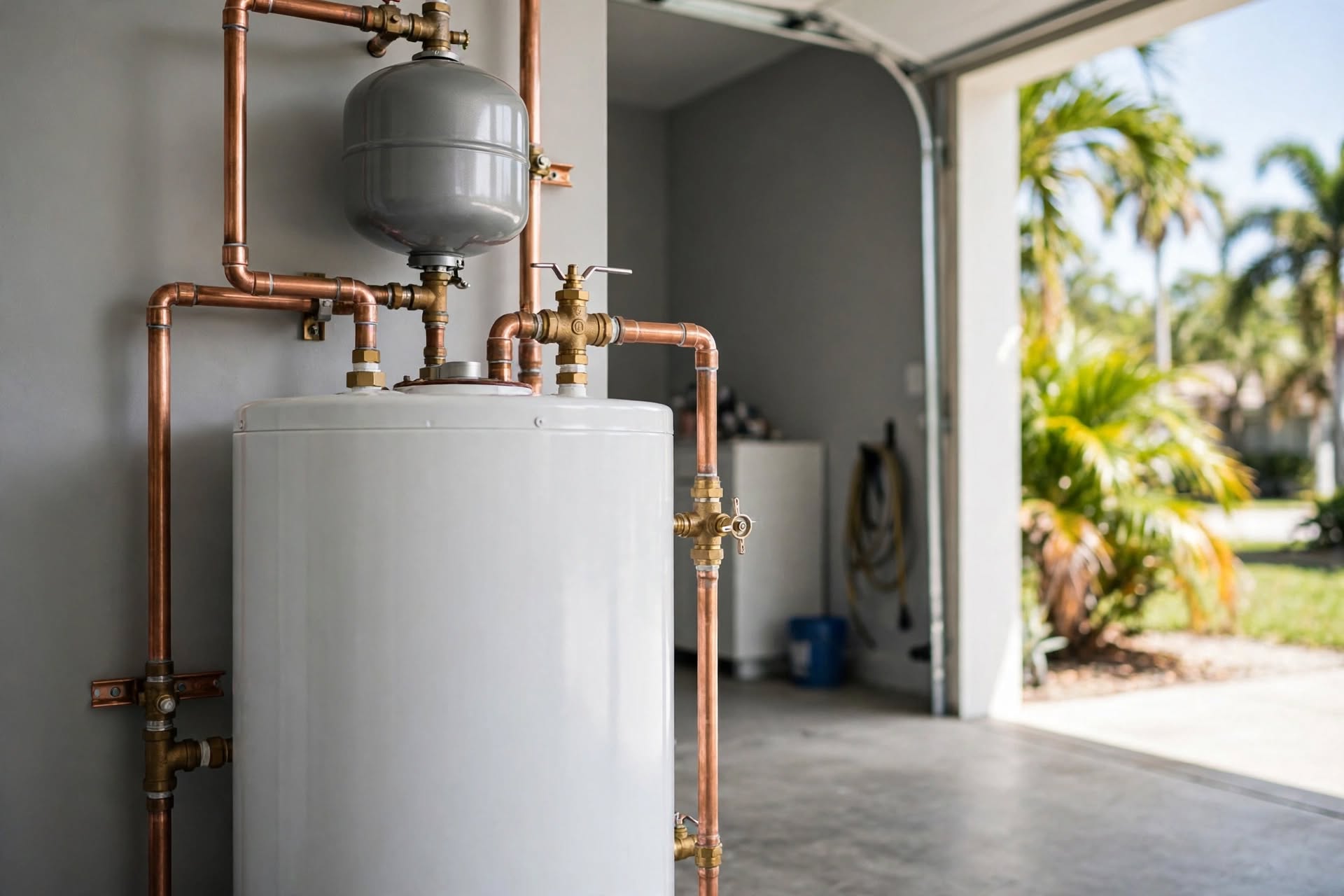
| Quick Answer A water heater expansion tank is a small tank mounted on the cold water line that absorbs the extra water volume created when water heats up. In Florida, the plumbing code calls for thermal expansion control when your home is a “closed system,” meaning the water supply passes through a check valve, backflow preventer, or pressure reducing valve. Most homes with modern water meters or PRVs fall into this category, so most water heater installs in South Florida include one. |
If a plumber has recommended an expansion tank during a water heater replacement, you might wonder whether it’s really needed or just an add-on. The short answer: in most South Florida homes, it protects your water heater, your pipes, and your fixtures from pressure spikes that happen every single time the water heats up.
What Does a Water Heater Expansion Tank Do?
Water expands when it gets hot. When a tank water heater warms cold water to around 120°F, the water’s volume grows by roughly 1.5% to 2%. For a 40- or 50-gallon water heater, that’s close to a gallon of extra water that has to go somewhere.
In an open system, that extra water simply pushes back into the city water main. In a closed system, a check valve or backflow preventer blocks it from flowing back. With nowhere to go, the extra volume raises the pressure inside your plumbing.
An expansion tank solves this. Inside the tank, a rubber diaphragm separates water from a cushion of pressurized air. As water expands, it pushes into the tank and compresses the air instead of building pressure in your pipes.
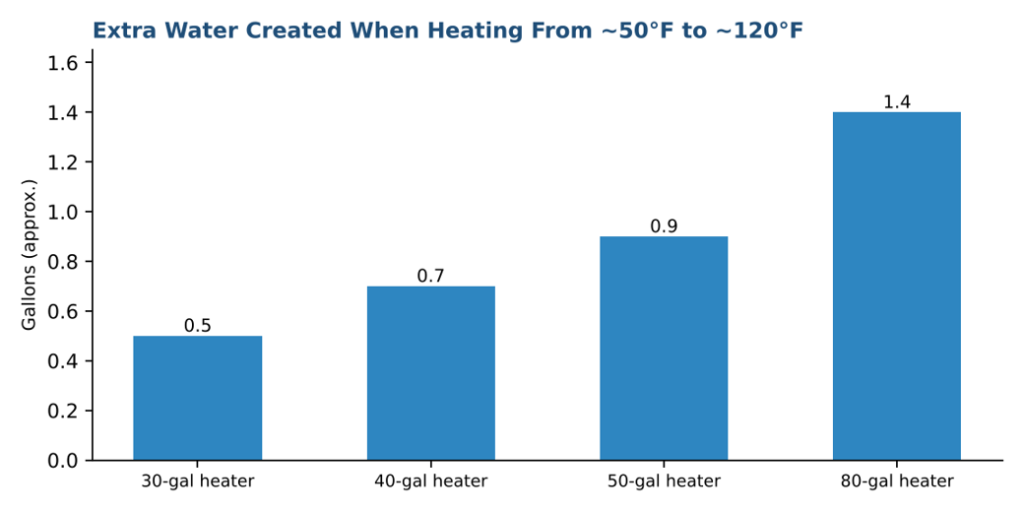
Figures above are approximate, based on the roughly 1.5%–2% volume increase of water across this temperature range.
Open vs. Closed Plumbing Systems
| Open System | Closed System | |
| Backflow device on supply? | No | Yes (check valve, backflow preventer, or PRV) |
| Where expanded water goes | Back into the city main | Stays in your plumbing |
| Pressure spikes when heating? | Minimal | Yes, every heating cycle |
| Expansion tank needed? | Usually not | Yes, in most cases |
Many South Florida homes became closed systems when utilities installed newer meters with built-in check valves, or when a pressure reducing valve (PRV) was added because street pressure was high. If you’re not sure which you have, a plumber can check in a few minutes.
Does Florida Code Require an Expansion Tank?
The Florida Building Code, Plumbing, which is based on the International Plumbing Code, requires a thermal expansion control device when a storage water heater is supplied through a check valve, pressure reducing valve, or backflow preventer. An expansion tank is the most common way to meet that requirement.
In practice, that means:
- Replacing a tank water heater in a closed system? Expect an expansion tank to be part of the permitted installation.
- Tankless water heater? Tankless units store very little hot water, so expansion is usually a minor concern, but some local inspectors and manufacturers still recommend thermal expansion control. Ask your installer.
- Local rules can vary. Your city’s building department and the permit inspector have the final say.
Signs You Need an Expansion Tank (or Yours Has Failed)
- The T&P (temperature and pressure) relief valve on the water heater drips or discharges water
- Faucets “spit” or pressure surges right after hot water has been used
- Toilets run briefly on their own, or fill valves wear out quickly
- Banging pipes (water hammer) that get worse when the heater is running
- Your water heater is wearing out early, with leaks at fittings or the tank
To check an existing tank, tap it. The top half (air side) should sound hollow. If the whole tank sounds solid and full, or water comes out of the air valve when you press it, the diaphragm has failed and the tank needs replacing.
How to Size an Expansion Tank
Size depends on your water heater’s capacity and your home’s water pressure. Here’s a general guide for homes with normal pressure (around 40 to 80 psi):
| Water Heater Size | Typical Expansion Tank Size |
| 30–50 gallons | 2 gallons |
| 50–80 gallons | 4.5 gallons |
| 80–120 gallons | 4.5 gallons or larger |
Higher water pressure needs a larger tank. Always check the manufacturer’s sizing chart.
Pre-charge matters too. Expansion tanks ship with an air pre-charge (often 40 psi). The installer should adjust it with a tire gauge and pump to match your home’s static water pressure before installation. A mismatched pre-charge makes the tank much less effective.
How Much Does an Expansion Tank Cost?
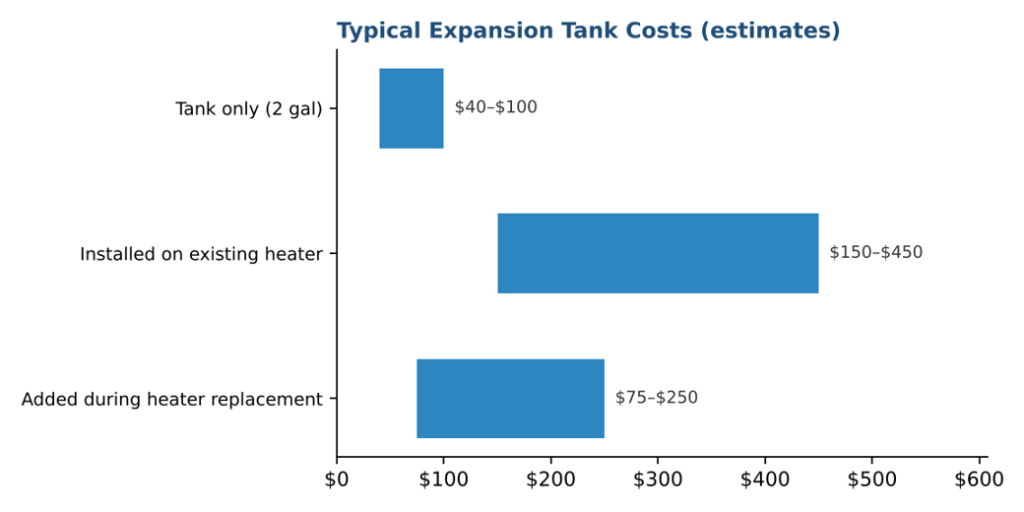
These are general market estimates. Actual pricing depends on access, pipe material, permit requirements, and whether other work is needed. For an exact price, ask for an on-site quote.
How Long Do Expansion Tanks Last?
Most expansion tanks last around 5 to 10 years. Because they’re inexpensive compared to a water heater, many homeowners replace the expansion tank whenever they replace the water heater.
Expansion Tank vs. Pressure Reducing Valve
These two parts work together but do different jobs:
- A PRV lowers high incoming water pressure from the street to a safe level for your home.
- An expansion tank absorbs the pressure created inside your home when water heats up.
Installing a PRV usually creates a closed system, which is why the two often go hand in hand.
Need an Expansion Tank Installed?
A to Z Statewide Plumbing installs and replaces expansion tanks, water heaters, and pressure reducing valves across Broward and Miami-Dade, including Hollywood, Pembroke Pines, Miramar, Fort Lauderdale, and Miami. We’ll check whether your home is a closed system, test your water pressure, and size the tank correctly. Call (954) 981-2133 or schedule service online.
If your water heater is also acting up, our guide to 7 quick water heater checks is a good place to start.
| Key Takeaways ✔ Expansion tanks absorb the extra water created when your water heater heats. ✔ They’re needed in “closed” plumbing systems with a check valve, backflow preventer, or PRV. ✔ Florida’s plumbing code calls for thermal expansion control in those systems. ✔ A failed tank sounds solid when tapped, or leaks water from the air valve. ✔ The tank’s air pre-charge should match your home’s water pressure. |
Frequently Asked Questions
Is an expansion tank required in Florida?
Florida’s plumbing code requires thermal expansion control when a storage water heater is supplied through a check valve, backflow preventer, or pressure reducing valve. That covers many South Florida homes, so an expansion tank is commonly required with a new tank water heater.
Where should an expansion tank be installed?
It’s installed on the cold water supply line feeding the water heater, between the shut-off valve and the heater. It should be properly supported, since a full tank is heavy.
How do I know if my expansion tank is bad?
Tap the tank. The top should sound hollow. If it sounds solid all the way up, or water comes out when you press the air valve, the internal diaphragm has failed.
Do tankless water heaters need an expansion tank?
Usually not, because they store very little water. However, some manufacturers and local inspectors still recommend thermal expansion control, especially in closed systems.
What size expansion tank do I need for a 50-gallon water heater?
At normal household pressure, a 2-gallon tank is typical for a 40- to 50-gallon heater. Higher water pressure may need a larger tank.