
| Quick Answer A water heater leaking from the bottom is usually caused by one of five things: a loose or faulty drain valve, water running down from a leaking T&P relief valve, condensation, a leak from pipes above the heater, or a cracked or corroded tank. Leaks from the drain valve or fittings can often be repaired. If water is coming from the tank itself, the heater needs to be replaced. Shut off the power or gas and the cold water supply right away to limit damage. |
Finding a puddle under your water heater is stressful, especially when the heater is in a garage, closet, or laundry room next to drywall and flooring. The first step is to stop more water from coming out. The second is to figure out where it’s really coming from, because the water at the bottom doesn’t always start at the bottom.
What to Do Right Now
| Do These 4 Things First ✔ Turn off the power. Electric heater: switch off the breaker. Gas heater: turn the gas control knob to “Off” or “Pilot.” ✔ Shut off the cold water supply. Turn the valve on the cold inlet pipe at the top of the heater clockwise. ✔ Protect your floors. Move stored items away, put down towels, and use a wet/dry vac if needed. ✔ Take photos. They help your plumber and, if needed, your insurance claim. |
If water is pouring out and you can’t find the valve, shut off the main water supply to the house.
5 Common Causes of a Water Heater Leaking From the Bottom
| Cause | What You’ll See | Usually Fixable? |
| Drain valve leak | Drips at the spigot near the bottom of the tank | Yes. Tighten, cap, or replace the valve. |
| T&P relief valve or discharge pipe | Water running down the side or out of the discharge pipe | Often. May point to high pressure or temperature. |
| Condensation | Light moisture, especially on gas units in cool weather | Yes. Often normal. |
| Leaking pipes or fittings above | Water trails running down from the top | Yes. Repair the connection. |
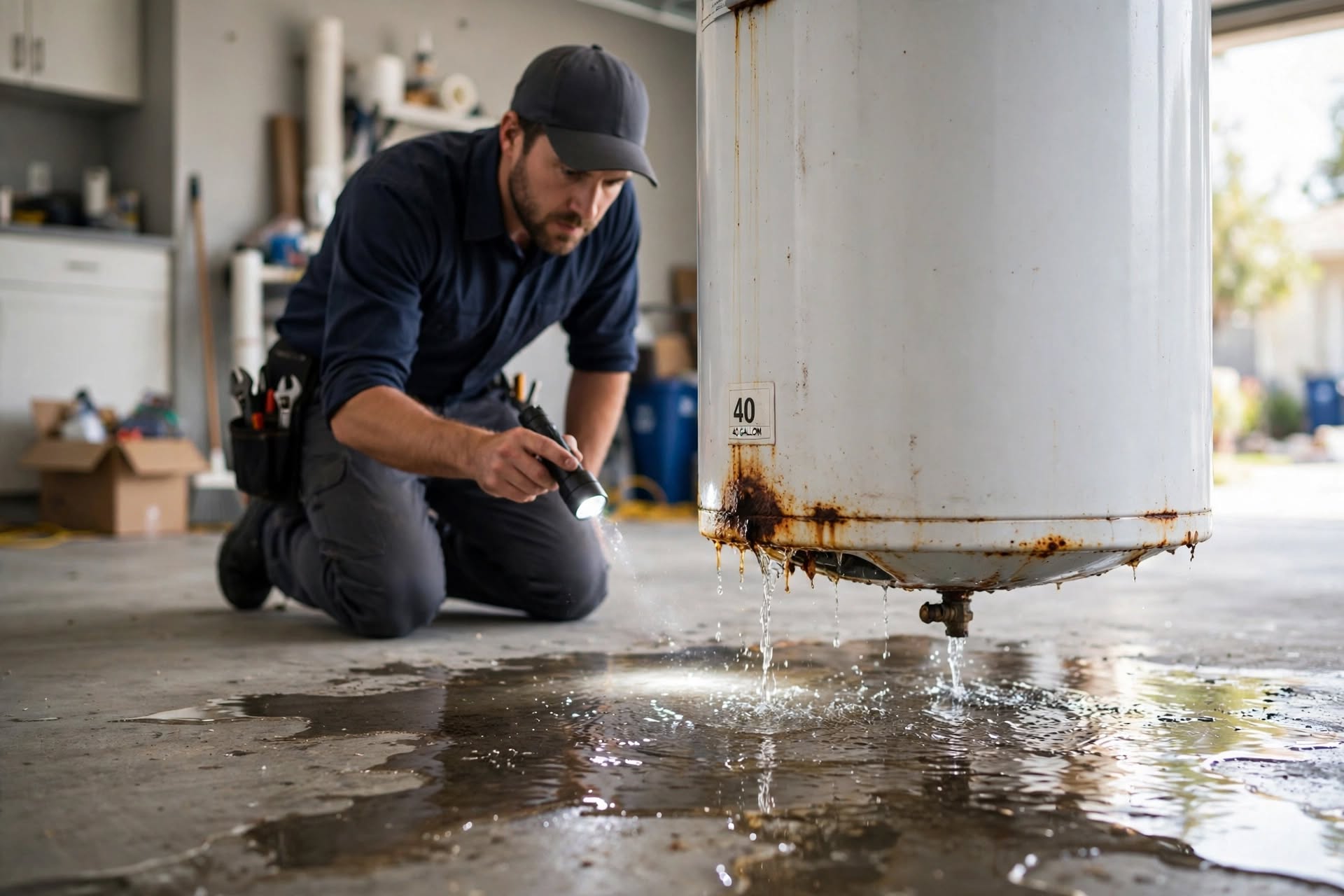
| Tank leak (corrosion or crack) | Water pooling from under the tank with no other source | No. Replace the heater. |
1. Drain Valve Leak
Every tank water heater has a drain valve near the bottom, used for flushing sediment. Plastic drain valves can crack with age, and any drain valve can loosen or fail to seal fully after a flush.
Fix: Make sure it’s fully closed. A hose cap can stop a slow drip temporarily. If it keeps leaking, the valve should be replaced with a brass one.
2. Temperature and Pressure (T&P) Relief Valve
The T&P valve is a safety device near the top of the tank. It opens if pressure or temperature gets too high. When it drips or discharges, water can run down the discharge pipe or the side of the tank and collect at the bottom.
A leaking T&P valve can be a warning sign, not just a bad part. It may point to:
- Water pressure that’s too high (see our guide to pressure reducing valves)
- A missing or failed thermal expansion tank
- A thermostat set too high
Never cap or plug a T&P valve. It’s there to keep the tank from building dangerous pressure.
3. Condensation
Gas water heaters can form condensation when cold incoming water meets warm, humid air from the burner. It’s more common after a large hot water draw. Condensation is usually a light film or a small amount of water and often goes away once the tank is fully heated.
4. Leaks From Above
Inlet and outlet pipes, flex connectors, and fittings at the top of the heater can leak and drip down the tank. Dry the tank completely with a towel, then watch for where fresh water first appears.
5. A Leaking Tank
The inside of a steel water heater tank is lined with glass and protected by a sacrificial anode rod. Once the anode is used up, the water starts corroding the tank itself. Sediment buildup at the bottom speeds this up. When the tank wall rusts through, water seeps out from the bottom, often under the jacket where you can’t see it.
A leaking tank cannot be repaired. The only safe fix is replacement.
How Water Heater Age Affects the Risk of a Tank Leak
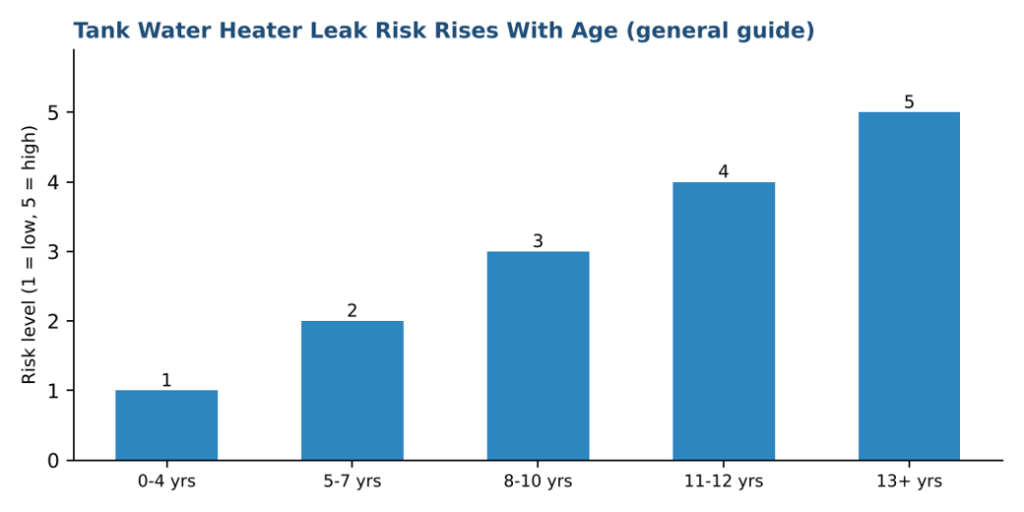
This chart is a simple guide based on typical tank water heater lifespans of about 8 to 12 years, not a measured statistic. South Florida’s hard water and sediment can shorten tank life.
How to find your heater’s age: Check the serial number on the label. Many manufacturers code the year and month into the first few characters.
Repair or Replace?
| Situation | Recommendation |
| Drain valve leak, heater under 8 years | Repair the valve |
| T&P valve leak | Test pressure and temperature, replace the valve if faulty |
| Leaking fitting or connector | Repair |
| Water coming from the tank body | Replace the water heater |
| Heater over 10 to 12 years old with any leak | Replacement is usually the better value |
When replacing, it’s a good time to compare a new tank heater with a tankless model. Our tankless vs. tank water heater guide can help you decide.
How to Prevent Future Leaks
- Flush the tank once a year to remove sediment. See how to flush a water heater.
- Check the anode rod every few years and replace it when it’s worn.
- Test the T&P valve once a year.
- Keep water pressure in a safe range and install an expansion tank if your home needs one.
- Install a drain pan and a leak alarm under the heater, especially if it’s inside the home.
Need Fast Help With a Leaking Water Heater?
A to Z Statewide Plumbing provides 24/7 emergency plumbing and water heater repair and replacement across Broward and Miami-Dade, including Pembroke Pines, Hollywood, Miramar, Fort Lauderdale, and Miami. Call (954) 981-2133 now, or contact us online.
| Key Takeaways ✔ Turn off power or gas and the cold water supply as soon as you see a leak. ✔ Drain valve, T&P valve, condensation, and pipe leaks are usually fixable. ✔ A leak from the tank body means the water heater must be replaced. ✔ A dripping T&P valve can signal high pressure or a missing expansion tank. ✔ Annual flushing and anode checks help prevent leaks. |
Frequently Asked Questions
Is a water heater leaking from the bottom dangerous?
It can be. Leaking water can damage floors and walls and create mold, and an electric heater leaking near wiring is a safety risk. Turn off the power or gas and the water supply right away.
Can a leaking water heater be repaired?
If the leak comes from the drain valve, T&P valve, or a fitting, yes. If the tank itself is leaking, it must be replaced.
Why is my water heater leaking from the bottom but not the top?
The most common causes are a loose drain valve, condensation, or a corroded tank. Water from a T&P valve or pipe above can also run down and pool at the bottom.
Can I still use a leaking water heater?
It’s not recommended. A small leak can suddenly get worse. Shut it off and have it checked as soon as possible.
How much does it cost to fix a water heater leaking from the bottom?
A drain valve or fitting repair is usually a relatively minor service call. A tank leak means replacing the water heater, which costs much more. Your plumber can confirm the source and give you an exact quote.