
| Quick Answer To unclog a toilet without a plunger, squirt about ½ cup of dish soap into the bowl, then pour in a bucket of hot (not boiling) water from waist height. Wait 15 to 20 minutes and flush. If that doesn’t work, try a baking soda and vinegar mix, a wire hanger, or a toilet auger. If more than one drain in the house is backing up, the problem is likely your main sewer line, and you should call a plumber. |
A clogged toilet never happens at a convenient time, and it always seems to happen when there’s no plunger in the house. The good news is that most toilet clogs are made of waste and toilet paper, which break down with the right mix of soap, heat, and gentle pressure.
Below are six methods, ordered from easiest to most hands-on. Start at the top and work down.
| Before You Start ✔ Stop flushing. If the water is high, don’t flush again. You’ll risk an overflow. ✔ If the bowl is about to overflow, take the tank lid off and push the flapper down to stop more water, or turn the shut-off valve behind the toilet clockwise. ✔ Put on rubber gloves and lay old towels on the floor. |
Which Method Should You Try?
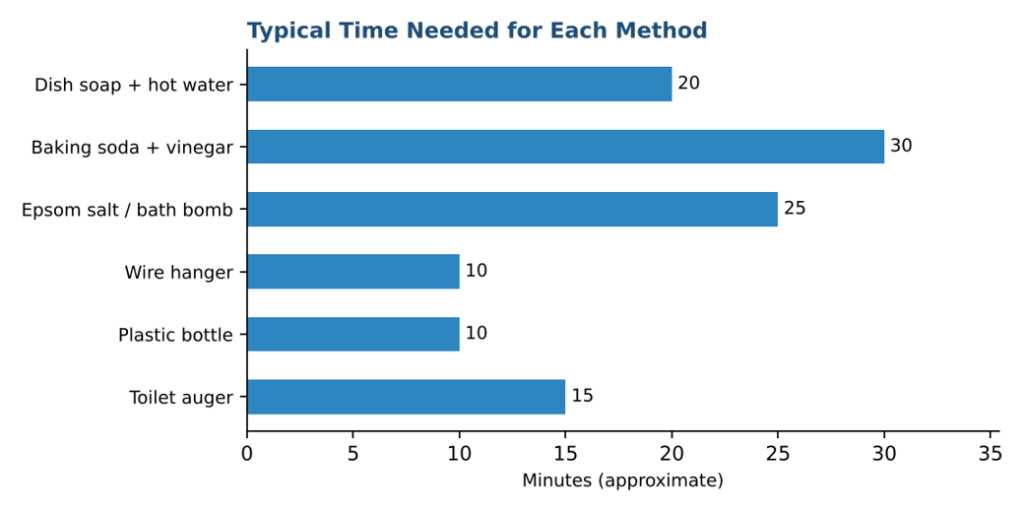
| Method | Best For | Time | Difficulty |
| Dish soap + hot water | Soft clogs (waste, paper) | 15–20 min | Easy |
| Baking soda + vinegar | Mild clogs, slow drains | 30 min | Easy |
| Epsom salt or bath bomb | Soft clogs when nothing else is around | 20–30 min | Easy |
| Wire hanger | Clogs near the drain opening | 10 min | Medium |
| Plastic bottle pressure | Stubborn soft clogs | 10 min | Medium |
| Toilet auger | Deep or hard clogs | 10–15 min | Medium |
Method 1: Dish Soap and Hot Water
This is the method to try first. Dish soap is slippery and helps waste slide through the trapway, and hot water helps break down paper.
- Squirt about ½ cup of liquid dish soap into the bowl.
- Heat about half a gallon of water until it’s hot but not boiling.
- Pour the water into the bowl from about waist height. The force helps push the clog.
- Wait 15 to 20 minutes.
- Flush once. If the water drains, flush again to confirm.
Important: Never use boiling water. Sudden high heat can crack the porcelain bowl or damage the wax seal under the toilet.
Method 2: Baking Soda and Vinegar
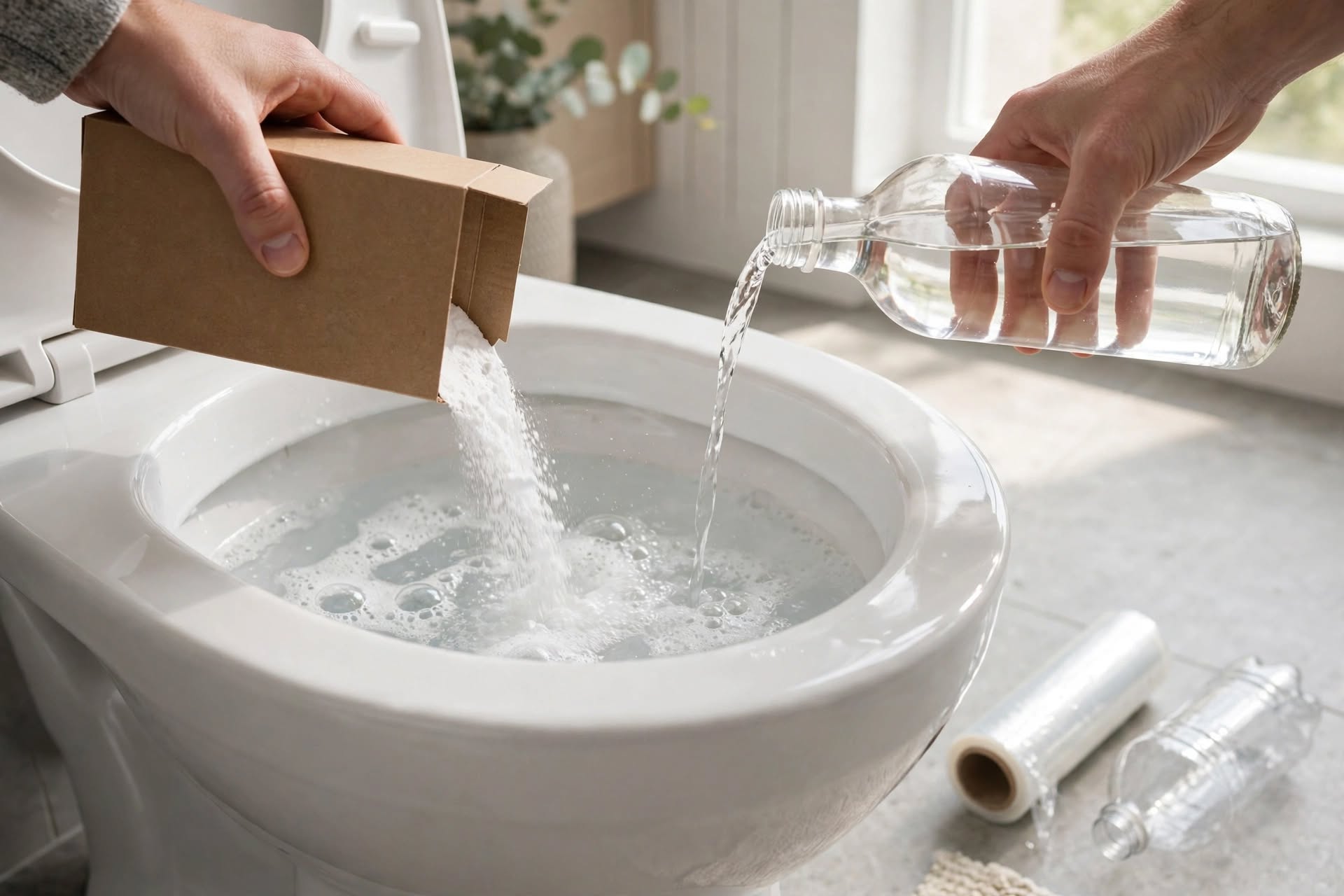
This classic mix creates a fizzing reaction that can loosen a mild clog.
- If the bowl is very full, scoop out some water first.
- Pour in 1 cup of baking soda.
- Slowly add 2 cups of white vinegar. It will fizz.
- Let it sit for 30 minutes, then add hot water and flush.
Method 3: Epsom Salt or a Bath Bomb
Epsom salt and fizzing bath bombs work similarly to baking soda. Drop in ½ cup of Epsom salt or one bath bomb, wait 20 to 30 minutes, and flush.
Method 4: Use a Wire Coat Hanger
If the clog is close to the drain opening, a straightened wire hanger can break it up.
- Unwind a wire hanger and straighten it, keeping a small hook at one end.
- Wrap the hook end with a rag and tape it, so you don’t scratch the porcelain.
- Gently push it into the drain and twist to break up the clog.
- Flush once the water starts moving.
A hanger only reaches a few inches. If the clog is deeper in the trap, you’ll need an auger.
Method 5: Plastic Bottle Pressure
- Fill a plastic bottle with warm water.
- Put your thumb over the opening, push the bottle into the drain hole, then release your thumb.
- Squeeze the bottle hard to push a jet of water into the trap.
Method 6: Use a Toilet Auger
A toilet auger (also called a closet auger) is the tool plumbers reach for first. It’s inexpensive at any hardware store and is designed not to scratch the bowl.
- Pull the auger cable back so only the tip shows.
- Place the curved end into the bowl, pointing into the drain.
- Crank the handle clockwise while pushing gently.
- When you feel resistance, keep cranking to break up or grab the clog.
- Pull the auger back out slowly and flush.
What Causes Most Toilet Clogs?
Most everyday toilet clogs come from a short list of causes:
- Too much toilet paper in a single flush, especially with older low-flow toilets
- Wipes, including ones labeled “flushable”
- Paper towels, tissues, and cotton products, which don’t break down like toilet paper
- Feminine hygiene products and dental floss
- Small objects like kids’ toys or toothbrush caps
- A blockage further down the drain or sewer line
A note on “flushable” wipes: Many wipes labeled “flushable” don’t break down like toilet paper does. They can catch on rough spots in older cast iron drain lines, which are common in Broward and Miami-Dade homes built before the 1980s, and build up into major blockages.
When a Clogged Toilet Is Really a Sewer Problem
Sometimes the toilet isn’t the problem. It’s simply the lowest drain in the house, so it’s where a main line blockage shows up first.
| Warning Sign | What It May Mean |
| Toilet gurgles when the sink or shower drains | Blockage or venting issue further down the line |
| Water comes up in the tub or shower when you flush | Main sewer line clog |
| Several drains are slow at once | Main line clog |
| Clogs keep coming back every few weeks | Roots, a sagging pipe, or a damaged sewer line |
| Sewage smell in the yard or bathroom | Possible sewer line break |
If you see any of these signs, stop using water in the house and call a plumber. Our guide to the 5 early signs your sewer line is failing explains what to watch for. A camera inspection can show exactly where the blockage is, and hydro jetting can clear grease, roots, and debris from the full pipe.
What Not to Do
- Don’t use chemical drain cleaners in a toilet. They rarely reach the clog, can damage pipes and seals, and create a hazard if you or a plumber need to work on the toilet afterward.
- Don’t keep flushing. Each flush adds more water to a bowl that can’t drain.
- Don’t use boiling water. It can crack porcelain.
How to Prevent Toilet Clogs
- Use less toilet paper per flush, or flush twice for large amounts.
- Keep a small trash can in the bathroom for wipes and hygiene products.
- Teach kids what can and can’t be flushed.
- Keep a plunger and an auger in the house.
- If your home is older, consider a sewer camera inspection to check for root intrusion or cracked pipes.
Need Help? Call A to Z Statewide Plumbing
If none of these methods work, or the clog keeps coming back, it’s time for a professional. A to Z Statewide Plumbing clears toilet clogs, main sewer line blockages, and drain backups across Broward and Miami-Dade, with 24/7 emergency service. Call (954) 981-2133 or request service online.
If your water is off and you need to flush, see our guide on how to manually flush a toilet during a water outage.
| Key Takeaways ✔ Start with dish soap and hot (not boiling) water. It clears many soft clogs. ✔ Use a wire hanger for shallow clogs and a toilet auger for deep ones. ✔ Don’t use chemical drain cleaners or keep flushing a clogged toilet. ✔ If several drains back up at once, the problem is likely the main sewer line. |
Frequently Asked Questions
Will a toilet unclog itself?
Sometimes. A clog made only of toilet paper and waste may slowly soften and clear on its own in a few hours. Clogs from wipes, paper towels, or objects usually won’t clear without help.
Does dish soap really unclog a toilet?
Yes, for soft clogs. Dish soap coats and lubricates the clog, and hot water helps break it down. It works best when you wait 15 to 20 minutes before flushing.
What is the fastest way to unclog a toilet without a plunger?
A toilet auger is usually the fastest option for a stubborn clog. For a soft clog, dish soap and hot water work well with no tools.
Can I pour boiling water into a toilet?
No. Boiling water can crack the porcelain bowl or soften the wax seal under the toilet. Use hot tap water or water heated just below boiling.
When should I call a plumber for a clogged toilet?
Call a plumber if the toilet won’t clear after several attempts, if other drains are backing up, if clogs keep returning, or if you smell sewage.