
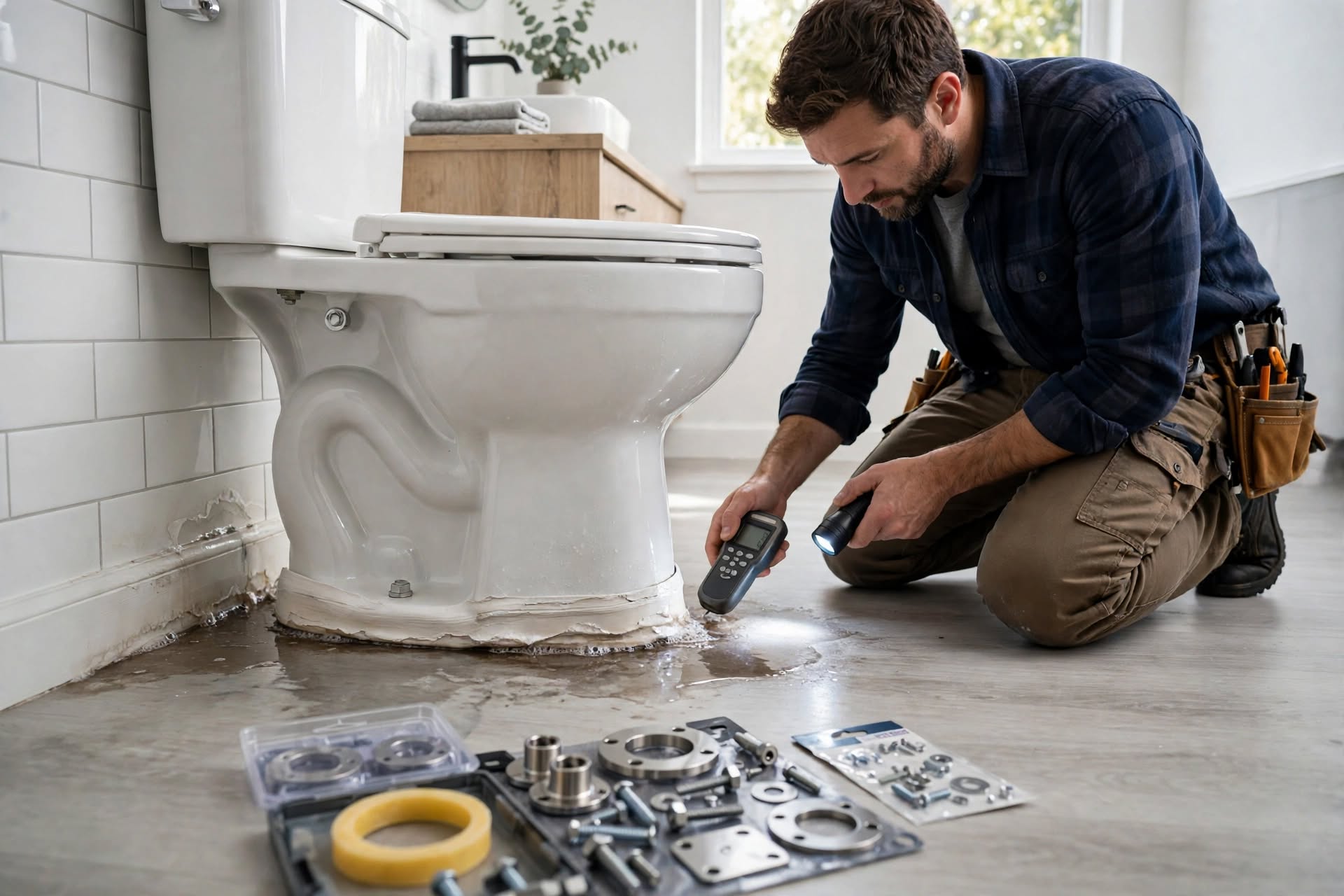
| Quick Answer A toilet leaking at the base is most often caused by a failed wax ring, the seal between the toilet and the drain flange. Other causes include loose closet bolts, a cracked or broken flange, a cracked toilet bowl, condensation (“sweating”), or a leak from the supply line or tank that drips down to the floor. If water appears mainly when you flush, the wax ring is the usual suspect. Fix it quickly, because a base leak can rot the subfloor and leak sewer gas. |
Water around the base of the toilet isn’t something to mop up and forget. Even a slow leak can soak into flooring and subfloor, and if it’s coming from the wax seal, it can also let sewer gas into your bathroom. The good news: most base leaks have a clear cause and a manageable fix.
First, Find Where the Water Is Coming From
Before assuming it’s the wax ring, rule out leaks from above. Dry everything completely with a towel, then check these spots:
| Check This | How | What It Means If Wet |
| Supply line and shut-off valve | Run a dry tissue along the hose and valve | Tighten or replace the supply line |
| Tank-to-bowl bolts | Feel under the tank where it meets the bowl | Replace tank bolts and gasket |
| Outside of the tank | Look for beads of water on the porcelain | Condensation (sweating) |
| Base of the toilet after flushing | Flush and watch the base for fresh water | Likely wax ring or flange |
| Porcelain bowl | Look for hairline cracks | Cracked toilet. Replace. |
Food coloring test: Add a few drops of food coloring to the tank, wait 20 minutes without flushing, and then check for colored water on the floor. Colored water at the base points to a tank-to-bowl leak or crack. Clear water after a flush points to the wax ring.
Common Causes of a Toilet Leaking at the Base
Failed Wax Ring
The wax ring creates a watertight seal between the bottom of the toilet and the drain. Over time, wax can dry out, compress, or shift, especially if the toilet rocks. When that happens, water escapes each time you flush.
Loose Closet Bolts
The two bolts at the base hold the toilet to the flange. If they loosen, the toilet can rock, which breaks the wax seal. Tightening them may stop a minor leak, but don’t overtighten, because porcelain cracks easily.
Cracked or Broken Flange
The flange is the ring the toilet bolts onto. Older metal flanges corrode, and plastic ones can crack. A broken flange won’t hold the toilet tight, and the wax ring won’t seal no matter how many times you replace it. Repair rings and flange kits can often fix this without major work.
Cracked Toilet Bowl
A hairline crack in the bowl or base can leak slowly. Porcelain cracks can’t be reliably repaired, so the toilet will need to be replaced.
Condensation (Sweating)
In humid South Florida bathrooms, cold water in the tank can make the outside of the toilet “sweat.” Water drips down and collects at the base, which looks like a leak. It’s more noticeable when the A/C is cranked up and humidity is high.
Fixes: improve bathroom ventilation, run the exhaust fan, or install an insulated tank liner.
Toilet Leak Repair Options at a Glance
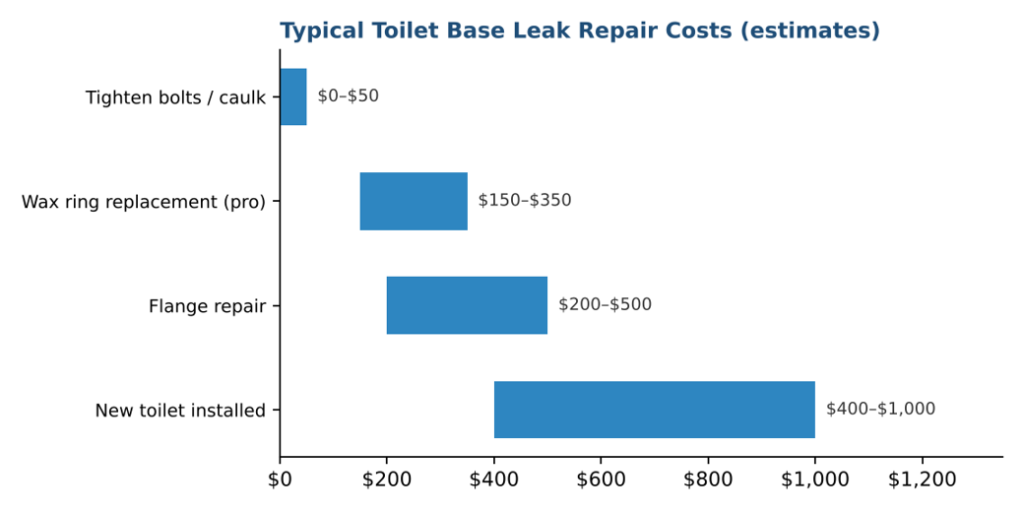
These are general market estimates. Cost depends on the toilet, the flange condition, floor type, and whether there’s subfloor damage.
How to Replace a Toilet Wax Ring (Overview)
If you’re comfortable with DIY, here’s the general process:
- Shut off the water supply and flush to empty the tank. Sponge out remaining water.
- Disconnect the supply line.
- Remove the caps and nuts from the closet bolts.
- Rock the toilet gently to break the seal, then lift it straight up and set it on a towel.
- Scrape off all old wax from the toilet horn and the flange.
- Inspect the flange for cracks or corrosion. Repair or replace if needed.
- Install new closet bolts and a new wax ring (or a wax-free seal).
- Lower the toilet straight down onto the bolts, press firmly, and tighten the nuts evenly.
- Reconnect the supply line, turn on the water, and test.
A toilet is heavy and awkward. If the flange is damaged, the floor is soft, or you’d rather not lift it, call a plumber.
Signs the Leak Has Caused Floor Damage
- Floor feels soft or spongy around the toilet
- Tiles are loose or grout is crumbling near the base
- Stains on the ceiling below (in a two-story home or condo)
- A musty smell or visible mold
In condos and high-rises, a toilet base leak can affect the unit below. That’s a common concern in buildings in Hallandale Beach, Sunny Isles, Aventura, and Miami Beach, so it’s best to act fast.
Should You Caulk Around the Base of a Toilet?
Caulking helps keep the toilet stable and keeps mop water and dirt from getting under it. Many plumbers leave a small gap at the back, so if the wax ring ever fails, the water shows up instead of hiding under the toilet and rotting the floor. Caulk does not fix a leaking wax ring.
When to Call a Plumber
- The leak continues after you tighten the bolts
- The toilet rocks even after tightening
- The flange is cracked, corroded, or below the floor level
- The floor is soft or stained
- You smell sewer gas in the bathroom
A to Z Statewide Plumbing repairs toilet leaks, replaces wax rings and flanges, and installs new toilets for homes and condos across Broward and Miami-Dade. Call (954) 981-2133 or schedule service online.
If your toilet keeps running too, see our guide on how to stop a running toilet.
| Key Takeaways ✔ A failed wax ring is the most common cause of a toilet leaking at the base. ✔ Rule out supply line, tank bolt, and condensation leaks first. ✔ A rocking toilet breaks the wax seal. Fix loose bolts or a damaged flange. ✔ Caulk doesn’t fix a leak. It can hide one. ✔ Act quickly to prevent subfloor damage and sewer gas. |
Frequently Asked Questions
Why is my toilet leaking at the base when I flush?
That’s usually a failed wax ring. Each flush sends water through the seal, and if it’s broken, water escapes onto the floor.
Can I just tighten the bolts to stop a toilet leak?
Sometimes. If the toilet was rocking slightly, tightening the bolts can reseat it. If the wax ring has already failed, you’ll need to replace it.
How long does a toilet wax ring last?
A wax ring can last for many years, often 20 or more, as long as the toilet stays firmly in place. Rocking, loose bolts, or a bad flange shorten its life.
Is a toilet leaking at the base an emergency?
It’s not usually an emergency, but it should be fixed soon. Ongoing leaks can rot the subfloor, cause mold, and let sewer gas into the home.
Why is there water around my toilet but no leak?
It may be condensation. In humid weather, the cold tank sweats and water drips to the floor. Improving ventilation or adding a tank liner usually helps.