
Running a restaurant in Florida comes with a long list of health and safety requirements, and backflow prevention is one that touches your plumbing directly. A backflow preventer keeps contaminated water from flowing backward into the clean water supply, which protects both your customers and the public. For a restaurant, the stakes are high, since the water you serve and cook with has to be safe.
Florida requires these devices, and the two types you will most often hear about are the RPZ and the DCVA. Knowing the difference and how to stay compliant keeps your restaurant out of trouble. Here is what Florida restaurants need to know about backflow preventer types.
Why Backflow Prevention Matters for Restaurants
Backflow happens when the normal flow of water reverses direction. This can occur when there is a drop in water pressure in the main supply, which creates a kind of suction that pulls water backward through the plumbing. If that reversed water has picked up contaminants along the way, it can be drawn back into the clean water supply, which is a serious health hazard.
In a restaurant, there are many places where water comes into contact with substances that must never reach the drinking water. Cleaning chemicals, food waste, grease, and the water in certain equipment all pose a risk if backflow occurs. A backflow preventer is the device that stops this reversal from happening, keeping contaminated water out of the clean supply. Because restaurants handle food and serve the public, they are held to strict backflow requirements.
What a DCVA Is
A DCVA stands for Double Check Valve Assembly. It is a backflow preventer that uses two check valves in a row, each of which allows water to flow in only one direction. If the water tries to reverse, the check valves close and block it from flowing backward. The two valves provide a backup, so that if one fails, the other still protects the supply.
A DCVA is used in situations where the risk from backflow is considered lower. It protects against what is called a non-health hazard, meaning a situation where backflow would be a nuisance or a concern but not a direct threat to health. For certain applications in a restaurant, a DCVA may be the appropriate device, depending on the specific risk and the local requirements.
What an RPZ Is
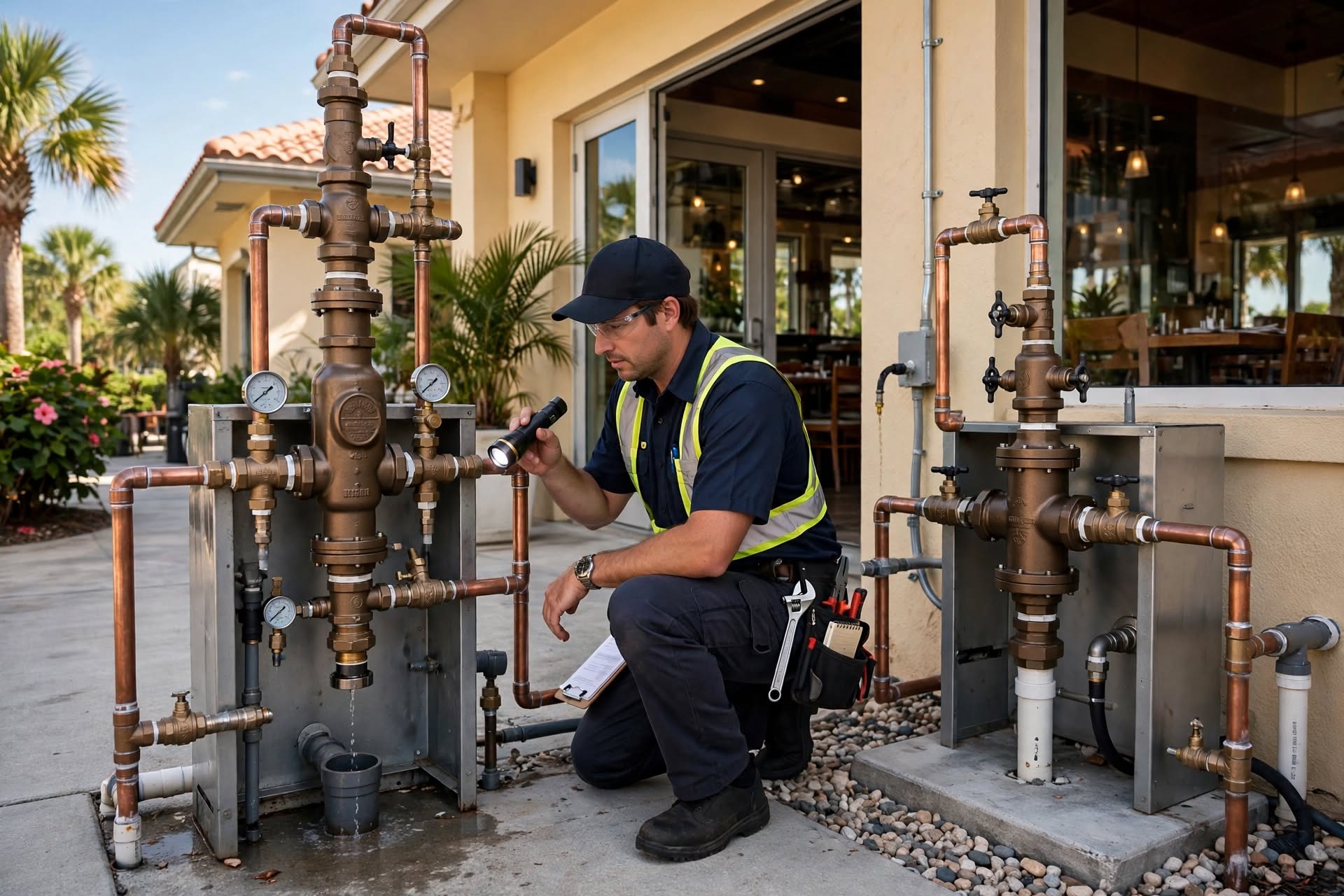
An RPZ stands for Reduced Pressure Zone assembly, and it is the stronger of the two devices. An RPZ also uses two check valves, but it adds a relief valve between them that opens to release water if backflow is detected. This creates a zone of reduced pressure that actively prevents contaminated water from being drawn back, and if the valves fail, the relief valve dumps the water out rather than letting it reach the clean supply.
Because of this extra layer of protection, an RPZ is used in higher-risk situations, where backflow could pose a direct health hazard. For many restaurant applications, especially where the water comes into contact with chemicals or other hazards, an RPZ is the device required. It offers the higher level of protection that a health hazard situation demands.
RPZ vs. DCVA: The Key Difference
The main difference between the two comes down to the level of risk they are designed to handle. A DCVA protects against lower-risk, non-health-hazard backflow, using two check valves. An RPZ protects against higher-risk, health-hazard backflow, using two check valves plus a relief valve that provides an active and more reliable barrier.
For a restaurant, the type you need depends on the specific application and what the local code requires. Many restaurant situations involve a health hazard, which means an RPZ is often the required device. The determination of which device is appropriate for which connection is made based on the risk, and a professional who knows the local requirements can tell you what your restaurant needs.
How to Stay Compliant in Florida
Having the right device installed is only the first part of compliance. Florida requires that backflow preventers be tested regularly, usually once a year, to confirm they are working. These devices have internal parts that can wear out or fail, and a device that is not working provides no protection, so the annual testing is how the system stays reliable.
The testing has to be done by a certified tester who checks that the device is functioning correctly and documents the result. The results are typically reported to the local water authority, which keeps records of compliance. A restaurant that falls behind on its testing can face penalties and, more importantly, leaves the water supply unprotected.
Staying compliant means a few things working together. The correct device has to be installed for each application based on the risk. The device has to be tested annually by a certified tester. The results have to be documented and reported as required. And any device that fails the test has to be repaired or replaced promptly. Keeping on top of this cycle is what keeps a restaurant compliant and the water safe.
Making Compliance Easier
For a busy restaurant owner, keeping track of backflow testing on top of everything else is a challenge. The device on the main line, devices on specific equipment, and any devices on other connections all have their own testing schedules. Falling behind is easy when there is so much else to manage.
Working with a plumbing professional who handles backflow testing takes this off your plate. A professional can install the right devices, perform the annual testing, handle the documentation and reporting, and set up a schedule so the testing happens on time every year. This kind of arrangement means you do not have to remember each deadline, and you have the records you need if the health department or water authority asks for them.
Keeping Your Restaurant Protected & Compliant
Backflow prevention is a requirement that protects your customers, your business, and the public water supply. The two main devices are the DCVA, which handles lower-risk situations with two check valves, and the RPZ, which handles higher-risk health hazards with two check valves plus a relief valve. Many restaurant applications call for an RPZ because of the health hazard involved.
Beyond installing the right device, staying compliant in Florida means annual testing by a certified tester, proper documentation, and prompt repair of any device that fails. Keep up with this cycle, work with a professional who can manage it for you, and your restaurant stays compliant while the water stays safe for everyone you serve.