
A failing sewer line is one of the messiest and most expensive problems a homeowner can face, but it rarely happens without warning. The sewer line gives off early signals long before it backs up into your home or collapses underground. The homeowners who catch these signs early are the ones who deal with a manageable repair instead of a full-blown emergency.
In South Florida, where tree roots, aging pipes, and the high water table all put stress on sewer lines, knowing what to watch for is worth your attention. Here are five early signs your sewer line is failing and what you should do next.
Sign 1: Slow Drains Throughout the House
A single slow drain is usually just a clog in that one fixture. But when drains all over your house slow down at the same time, that is a different story. When multiple drains are sluggish at once, the problem is often in the main sewer line that all of them connect to, rather than in any one fixture.
Think about it this way. If your bathroom sink, your shower, and your kitchen sink are all draining slowly, the issue is probably downstream where they all meet. A partial blockage or a problem in the main line slows everything down. This is one of the earliest and clearest signs that your sewer line needs attention, so it is worth acting on rather than ignoring.
Sign 2: Gurgling Sounds From Drains & Toilets
Strange gurgling noises are another early warning. When you flush a toilet or run water and hear a bubbling, gurgling sound from a drain, that noise is air trapped in the system and struggling to move. A sewer line that is partially blocked or not venting properly causes this, as the water and air cannot flow the way they should.
You might hear the gurgling in a drain when you flush a nearby toilet, or in the toilet itself when you run a sink. The sound means the flow in your sewer system is being disrupted somewhere. Catching this sign early lets you address the cause before it grows into a full blockage.
Sign 3: Sewage Odors Inside or Outside
Your sewer system is sealed to keep sewer gas out of your home and yard. When you start smelling sewage, that seal is being broken somewhere, which points to a problem with the sewer line. A persistent sewage smell inside the house or out in the yard is a sign worth taking seriously.
Inside the home, the odor often comes through drains when the system is not working properly. Outside, a sewage smell in the yard can mean the sewer line is cracked or leaking underground, letting waste escape into the soil. Either way, the smell is a signal that something in the line has failed or is failing, and it should be investigated.
Sign 4: Wet or Soggy Patches in the Yard
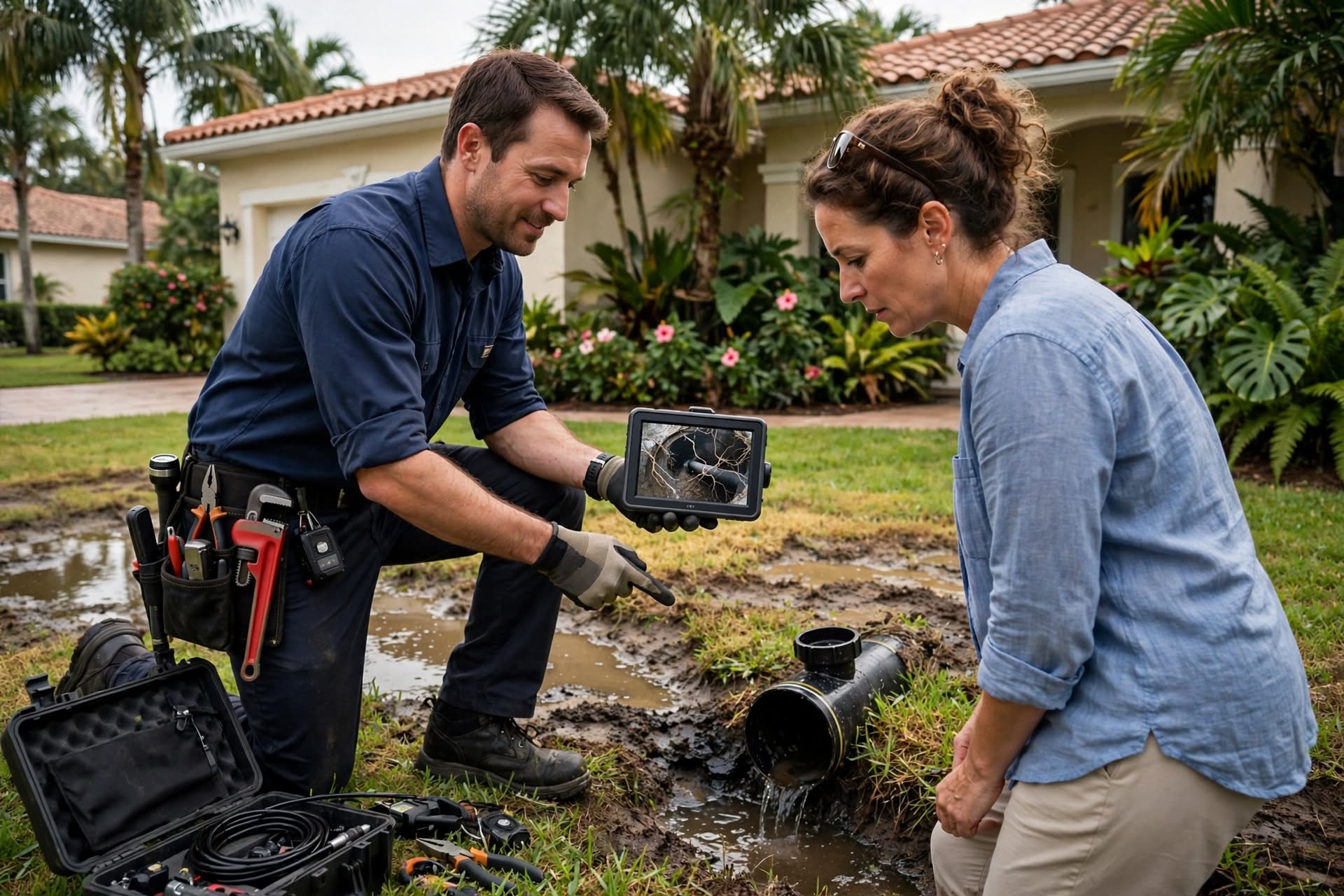
A sewer line runs underground through your yard on its way to the main. When that line cracks or leaks, the wastewater seeps into the surrounding soil, and it often shows up on the surface. Wet, soggy patches in your yard that have no other explanation can be a sign of a leaking sewer line.
You might notice an area that stays damp even when it has not rained, or ground that feels soft and squishy underfoot. Sometimes the grass over a leaking sewer line grows greener and faster than the rest of the lawn, because the wastewater is feeding it. In South Florida, where the water table is already high, a leaking line can make certain spots in the yard persistently wet. Any of these signs points to a sewer line that is breaking down underground.
Sign 5: Frequent Backups
If your drains or toilets back up repeatedly, that is a strong sign of a failing sewer line. An occasional clog is normal, but backups that keep happening mean something in the main line is wrong. The blockage or damage keeps catching waste and causing the system to back up, no matter how many times you clear the immediate problem.
Recurring backups are a signal that you are treating the symptom instead of the cause. The real problem is in the sewer line, and until it is addressed, the backups will keep returning. This is one of the clearest signs that the line needs a professional look rather than another round of plunging.
What Homeowners Should Do Next
When you notice any of these signs, the right next step is to have the sewer line inspected rather than guessing at the cause. Modern sewer inspections use a small camera that is sent down the line, which lets a plumber see exactly what is happening inside the pipe and where the problem is located. This takes the guesswork out of the situation and tells you precisely what you are dealing with.
The camera inspection reveals the cause, whether it is tree roots that have grown into the line, a crack or break in the pipe, grease and buildup narrowing the flow, or a section that has collapsed. Knowing the cause and the location is what allows for the right repair. A root problem might be cleared with hydro jetting, while a cracked section might need a spot repair, and a badly deteriorated line might call for replacement.
Acting early is what keeps the cost and the disruption down. A sewer line problem caught at the slow-drain or gurgling stage is far easier and cheaper to handle than one that has progressed to a full backup or a collapsed pipe. The longer you wait, the worse and more expensive the problem tends to become.
Staying Ahead of a Sewer Failure
A failing sewer line gives you warnings, and paying attention to them is what separates a manageable repair from a messy emergency. Watch for slow drains throughout the house, gurgling sounds, sewage odors, soggy patches in the yard, and frequent backups.
When you spot any of these, have the line inspected with a camera so you know exactly what is going on. South Florida’s roots, aging pipes, and high water table all work against your sewer line, so staying alert to the early signs is one of the best things you can do to protect your home from a costly failure.