
A tankless water heater is a great upgrade for a home, since it heats water on demand and saves energy compared to a traditional tank. What a lot of homeowners do not realize is that a tankless unit needs regular maintenance to keep working well, and in South Florida, that maintenance matters more than almost anywhere else.
The reason is hard water. The minerals in South Florida’s water build up inside a tankless heater and slowly choke its efficiency, and if you ignore it, the unit fails years before it should. Descaling is the maintenance that keeps this from happening.
Here is why hard water is so hard on tankless water heaters and why descaling is worth doing.
How a Tankless Water Heater Works
A tankless water heater does not store hot water the way a traditional tank does. Instead, when you turn on a hot water tap, cold water flows through the unit and passes over a heat exchanger that heats it rapidly. The hot water then flows to your tap. Because the unit only heats water when you need it, there is no standing tank of hot water losing heat all day, which is what makes tankless heaters more efficient.
The heat exchanger is the heart of the system, and it is also the part that hard water attacks. Water flows through narrow passages in the heat exchanger, and the heat transfers to the water as it passes. Anything that interferes with that water flow or that heat transfer reduces the efficiency of the whole unit.
Why South Florida’s Hard Water Is the Problem
Hard water is water that contains high levels of dissolved minerals, mainly calcium and magnesium. South Florida’s water is known for being hard, which means homes across the region deal with high mineral content coming out of their taps. Those minerals are the root of the problem for a tankless water heater.
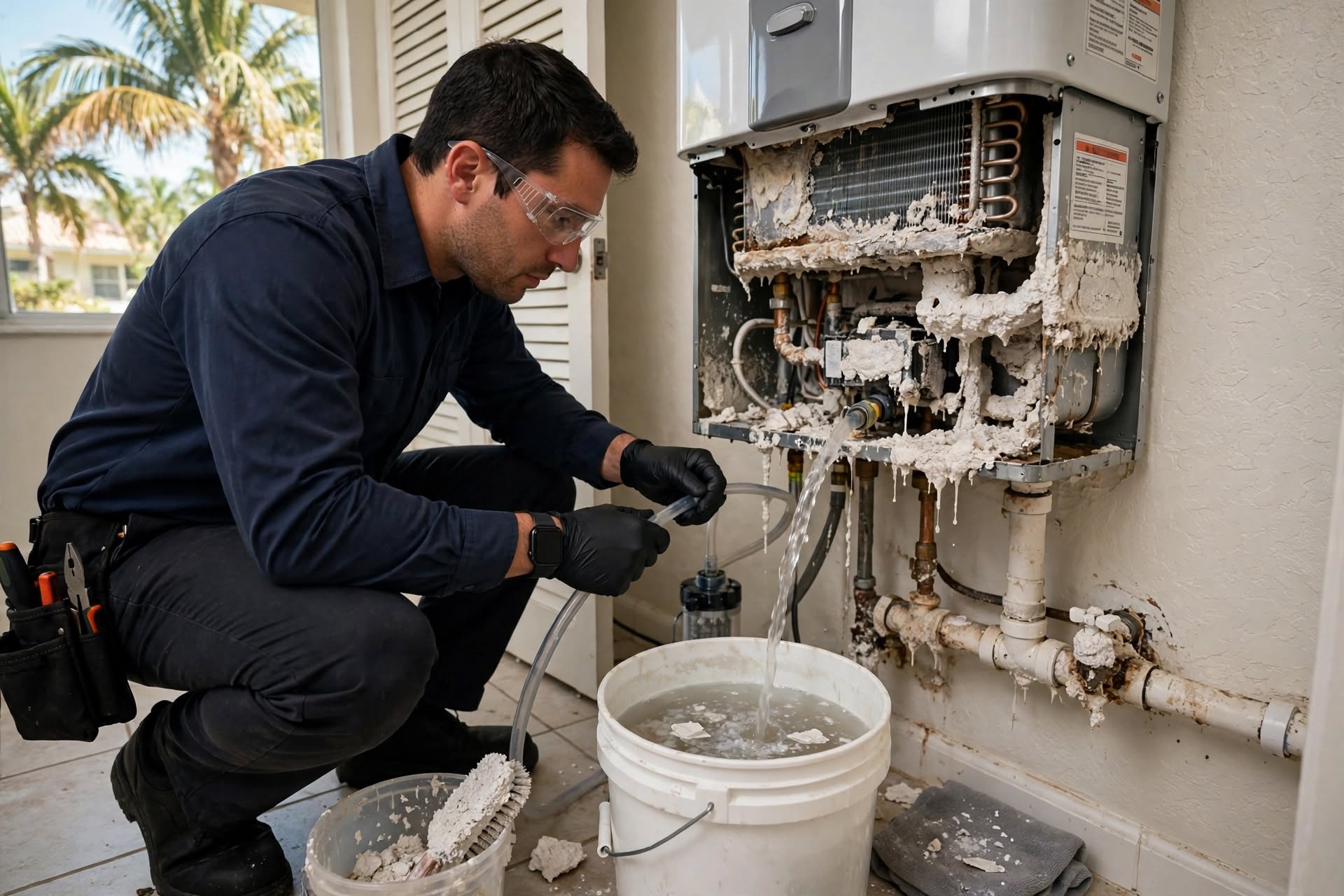
When hard water is heated, the minerals come out of the water and form a solid deposit called scale. This is the same chalky white buildup you see on a showerhead or inside a kettle. Inside a tankless water heater, that scale builds up on the heat exchanger and in the narrow water passages. Because the water in South Florida is so hard, the scale forms faster here than it would in an area with soft water, which means the problem develops more quickly.
How Scale Kills Efficiency
Scale buildup causes a chain of problems inside a tankless water heater, and they all add up to a unit that works harder and lasts less time.
It Blocks Heat Transfer
Scale acts as an insulating layer on the heat exchanger. The heat has to pass through that layer of mineral deposit before it reaches the water, which means the unit has to work harder and burn more energy to heat the water to the same temperature. The efficiency that made the tankless heater worth buying starts to disappear as the scale grows.
It Restricts Water Flow
As scale builds up in the narrow passages, it restricts the flow of water through the unit. This can reduce your hot water output and cause the temperature to fluctuate. You might notice the water is not as hot as it used to be, or that it swings between hot and cold during a shower.
It Makes the Unit Work Harder & Fail Sooner
A tankless heater fighting against scale buildup runs longer and hotter to do its job, which stresses the components. Over time, this extra strain shortens the life of the unit. A tankless water heater that should last well over a decade can fail years early if scale is allowed to build up unchecked.
It Can Trigger Error Codes
Many tankless units have sensors that detect when something is wrong, and heavy scale buildup can trigger error codes that shut the unit down. A heater that keeps throwing errors or shutting off may be telling you that scale has built up to the point where it needs attention.
What Descaling Does
Descaling, also called flushing, is the process of removing the scale buildup from inside the tankless water heater. The process circulates a descaling solution through the unit, which dissolves the mineral deposits on the heat exchanger and in the water passages. Once the scale is dissolved and flushed out, the unit is clean inside and can transfer heat and move water the way it was designed to.
Descaling restores the efficiency that scale had stolen. The heat exchanger works properly again, the water flows freely, and the unit stops working harder than it should. For a tankless heater in South Florida, regular descaling is what keeps the unit running well and reaching its full lifespan.
How Often to Descale in South Florida
Because South Florida’s water is so hard, tankless water heaters here need descaling more often than they would in areas with softer water. Many manufacturers recommend descaling once a year as a baseline, but in a hard water area, every six months to a year is a reasonable range depending on how hard your water is and how much hot water your household uses. A home with very hard water and heavy hot water use may need it more often.
A good way to protect your tankless heater even further is to pair it with a water softener. A water softener reduces the mineral content in your water before it reaches the heater, which slows the scale buildup dramatically. Homeowners who install a softener find that their tankless unit needs descaling far less often and runs better overall.
Protecting Your Investment
A tankless water heater is a smart investment, but in South Florida, that investment only pays off if you keep up with descaling. Hard water builds scale inside the unit, which blocks heat transfer, restricts water flow, and forces the heater to work harder until it fails early. Descaling removes that scale and restores the efficiency you paid for.
Plan on descaling your unit regularly, more often than a homeowner in a soft water area would, and consider a water softener to slow the buildup. A tankless heater that gets regular descaling keeps delivering efficient hot water for many years, while one that is neglected quietly loses its efficiency and its lifespan to the minerals in South Florida’s water.