


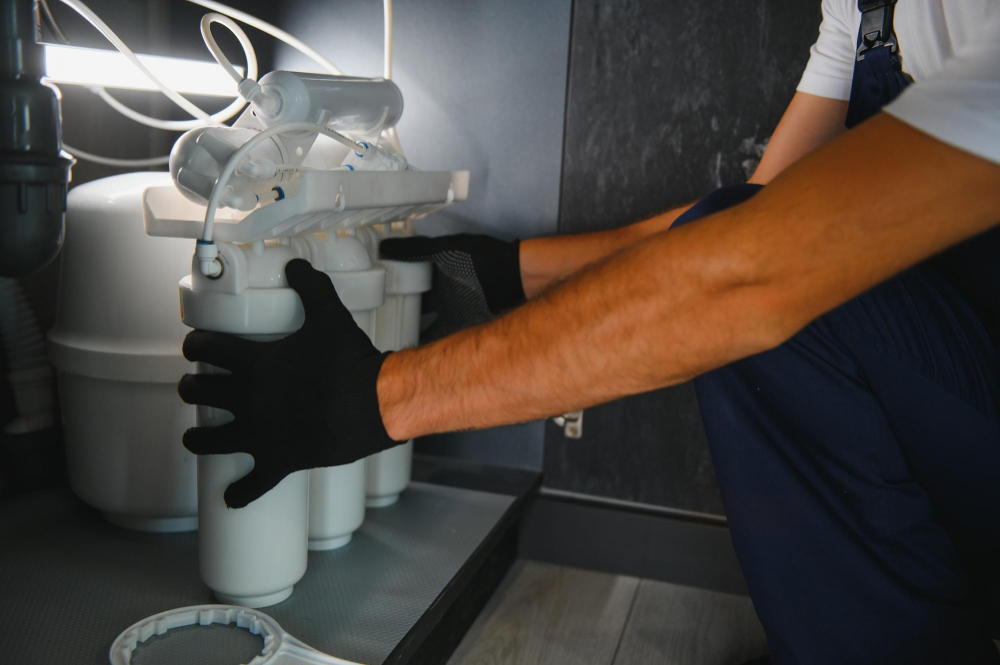
If your dishes come out spotty, your skin feels filmy after a shower, and your soap never seems to lather, hard water is usually the reason. South Florida sits on limestone, so the water that reaches your tap carries a lot of calcium and magnesium. Those minerals build up over time, and they do it quietly until you start noticing the damage. A water softener fixes the root of it. Here’s how the process works, what the options are, and what you can expect to pay.
What Hard Water Actually Does Around Your House
Hard water leaves mineral deposits everywhere it touches. You see it as white crust on faucets and showerheads, cloudy glassware, and stiff laundry. What you don’t see is the buildup inside your pipes and appliances.
Scale collects on the heating element of your water heater, which makes it work harder and run up your power bill. It narrows the inside of pipes a little more each year. It shortens the life of dishwashers, washing machines, and coffee makers. Over a decade, that adds up to real money in early replacements and repairs.
Signs You’re Dealing With It
You can usually spot hard water without a test. Look for soap scum that won’t rinse away, low pressure at fixtures that used to run fine, and dry skin or dull hair after washing. If you go through more detergent and shampoo than you think you should, the minerals are eating into your lather. A simple test kit confirms it, and most plumbers will check the hardness level for you.
How a Water Softener Works
A softener swaps the hardness minerals for something that doesn’t cause buildup. Water flows through a tank packed with resin beads that hold a charge. As the calcium and magnesium pass by, they stick to the beads, and sodium takes their place in the water. The result is water that lathers easily and leaves no scale behind.
Every so often the resin fills up and needs a reset. The system runs a rinse cycle, usually at night, that flushes the minerals out and recharges the beads with salt from a brine tank. You refill the salt every month or two, and the unit handles the rest on its own.
Types of Water Softeners
Not every home needs the same setup. The right pick depends on your water use, your space, and how much maintenance you want to deal with.
Salt-Based Systems
This is the standard, and it’s the only type that truly removes hardness minerals. It gives you that slick, soft-water feel and stops scale at the source. You’ll need room for two tanks and a drain line nearby, plus the habit of topping off salt. For most South Florida homes, this is the option that solves the problem.
Salt-Free Conditioners
These don’t remove minerals. Instead they change the structure so the calcium is less likely to stick to surfaces. You skip the salt and the drain line, and there’s almost no upkeep. The water won’t feel soft, but you get less scale. People on sodium-restricted diets or homes with limited space often go this route.
Dual-Tank Units
A two-tank system keeps soft water flowing even while one tank recharges. Single-tank units pause during the rinse cycle, which usually isn’t a problem at night, but a busy household with people up at all hours benefits from the backup. These cost more up front and take more space.
What Water Softener Installation Costs in South Florida
Pricing moves with the size of the unit, the type, and how your plumbing is set up. As a general range, a salt-based system with installation runs from around $1,500 to $3,500. Salt-free conditioners tend to land in a similar range, sometimes a bit higher for the unit itself. Dual-tank systems sit at the top end.
The install itself depends on where your main water line comes in and how close it is to a drain and a power outlet. A garage with the line right there is a quick job. A line that needs rerouting, or a tight spot with no nearby drain, adds labor and parts. Getting a few quotes is the way to see where your home falls.
What the Install Day Looks Like
A typical water softener installation takes a few hours. The plumber finds the spot where water enters your home, usually the garage or an outside wall, and ties the softener into that main line so every tap gets treated water. They add a bypass valve so you can route around the unit if you ever need to, run a drain line for the rinse cycle, and plug it in.
After that comes the setup. The hardness level gets programmed in so the system knows how often to recharge. The brine tank gets its first load of salt. Then they run a test cycle to confirm everything flows and drains the way it should.
Keeping the System Running
A softener doesn’t ask for much. Check the salt every few weeks and add a bag when it gets low. Once a year, give the brine tank a quick clean to clear out any sludge at the bottom. Every handful of years the resin beads wear down and the tank needs a refill or swap, but that’s a long way off.
Keep an eye on your water. If the soft feel fades or spots come back on the glassware, the salt ran out or the system needs a look. Catching it early keeps the scale from creeping back into your pipes and appliances, and it keeps your monthly bills where they should be.


