
A swimming pool is one of the more expensive systems on a residential property to maintain, and pool plumbing leaks are among the harder problems to identify. The plumbing that circulates water through a pool runs underground between the pool shell, the equipment pad, and any water features connected to the system. When that plumbing develops a leak, the water doesn’t appear on the surface. It goes into the soil, and the pool keeps losing water without any obvious sign of where it’s going.
South Florida pools experience this problem with regularity, and the regional conditions, sandy soil, high water tables, sun exposure on above-ground fittings, and ground movement from seasonal moisture changes, all contribute to plumbing failures that might not occur in other environments.
How to Tell the Difference Between Evaporation & a Leak
The first thing most homeowners notice is that the pool is losing water faster than it should. In South Florida’s climate, evaporation is real. A pool in direct sun can lose an inch or more of water per week through evaporation alone, and a pool with a water feature or spillover spa loses more.
The bucket test is the standard way to separate evaporation from a leak. Fill a bucket with pool water, set it on a pool step so it’s partially submerged, mark the water level inside and outside the bucket, and check both levels 24 hours later. If the pool has lost more water than the bucket, the difference beyond evaporation is likely a leak.
Watching the Equipment
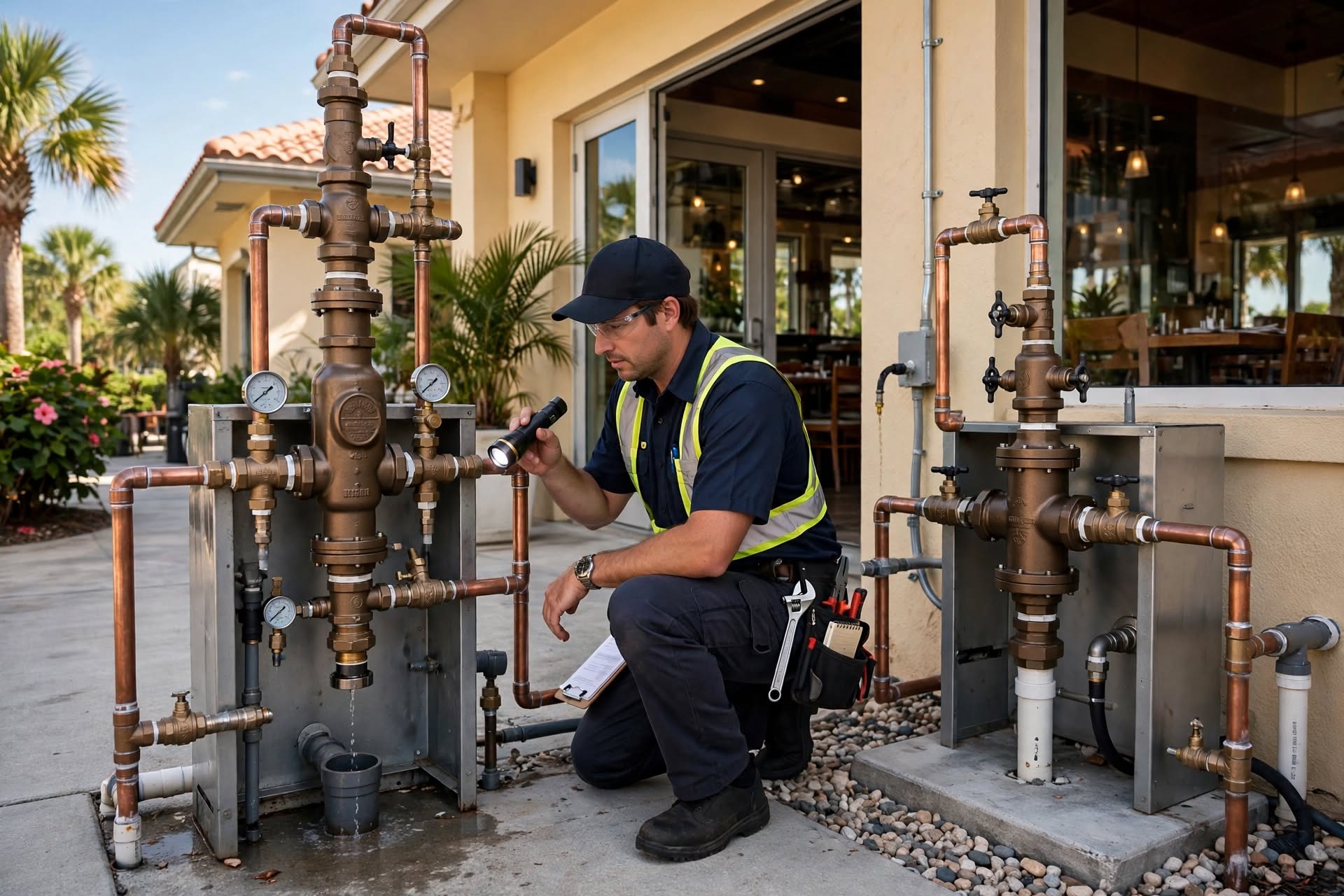
Before assuming an underground plumbing leak, checking the equipment pad is worth doing first. The pump, filter, heater, and the valves and fittings connecting them are all possible leak sources and are accessible for inspection. Wet soil around the equipment pad, visible dripping from fittings, or water staining on the equipment are all signs that the leak is at the surface rather than underground.
If the equipment is dry and the bucket test indicates a leak, the investigation moves underground.
Where Pool Plumbing Leaks Occur
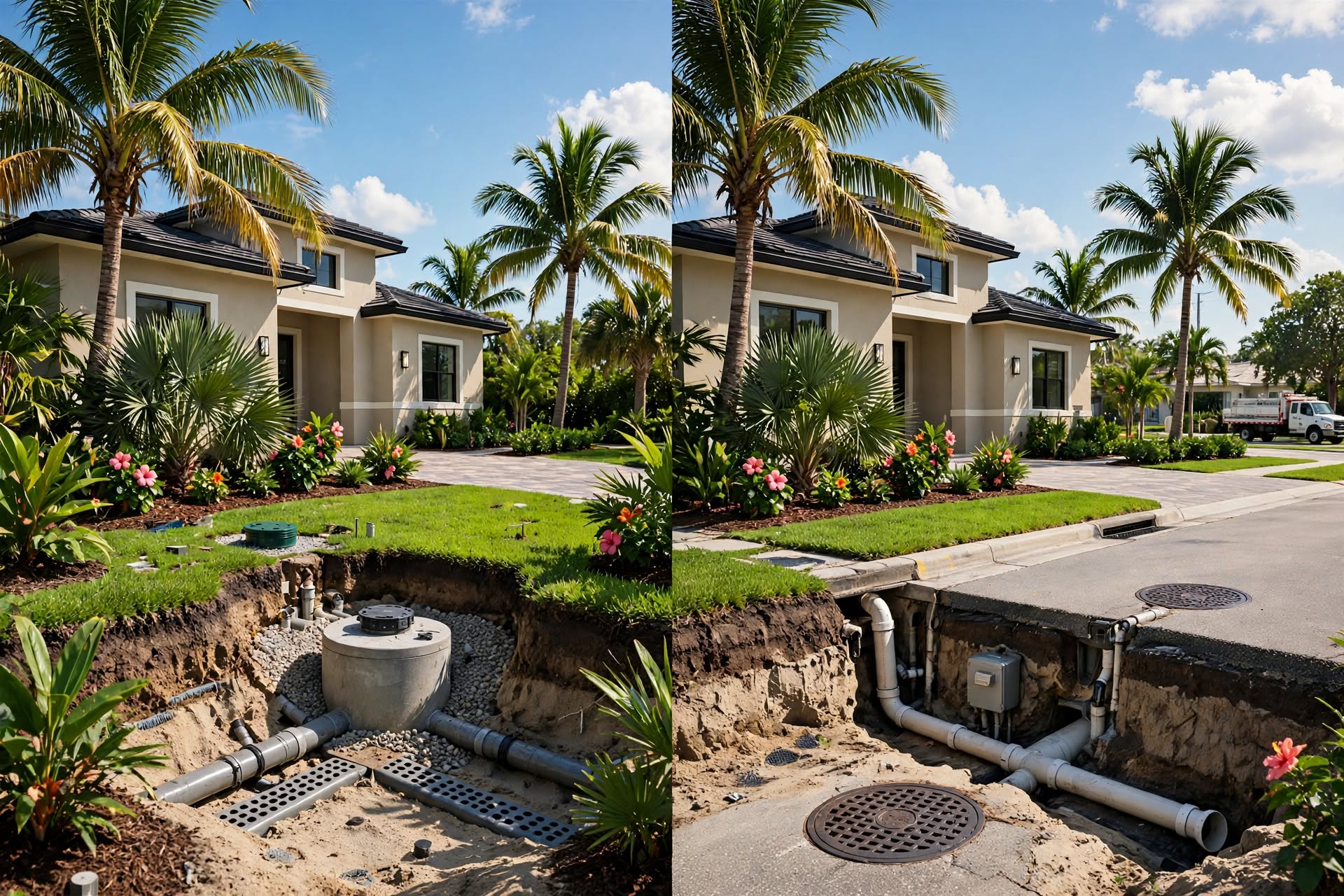
Underground pool plumbing in South Florida is typically scheduled for 40 PVC. The pipe runs from the suction and return ports in the pool shell to the equipment pad. Leaks in these lines tend to occur at a few predictable locations.
At the Pool Shell Fittings
The point where plumbing connects to the pool shell, at the skimmer, the main drain, and the return jets, involves a fitting that penetrates the pool structure. Over time, the sealant or fitting itself can fail, allowing water to escape between the fitting and the shell. These leaks can sometimes be detected by adding dye near the fitting and watching to see if it’s drawn into the gap.
Underground Joint Failures
PVC pipe is joined with solvent-weld fittings. Over time, thermal expansion and contraction from temperature changes, ground movement, and the pressure cycling from the pump running on and off can stress those joints. In South Florida, the soil movement driven by seasonal wet and dry cycles creates additional stress on buried plumbing. When a joint fails underground, it releases water directly into the soil with no surface indication.
Lateral Pressure Cracks
In areas with sandy soil, lateral pressure from shifting soil around the pipe can crack straight sections of PVC. These cracks are small but lose water consistently every time the system is pressurized.
How Underground Pool Leaks Are Found
Finding an underground pool plumbing leak requires pressure testing and, in many cases, electronic detection equipment.
Pressure Testing
A plumber isolates each line in the pool plumbing system and pressurizes it with air or water. A line that holds pressure is intact. A line that loses pressure has a leak somewhere along its run. This test identifies which line is affected, which narrows the search area significantly.
Electronic Leak Detection
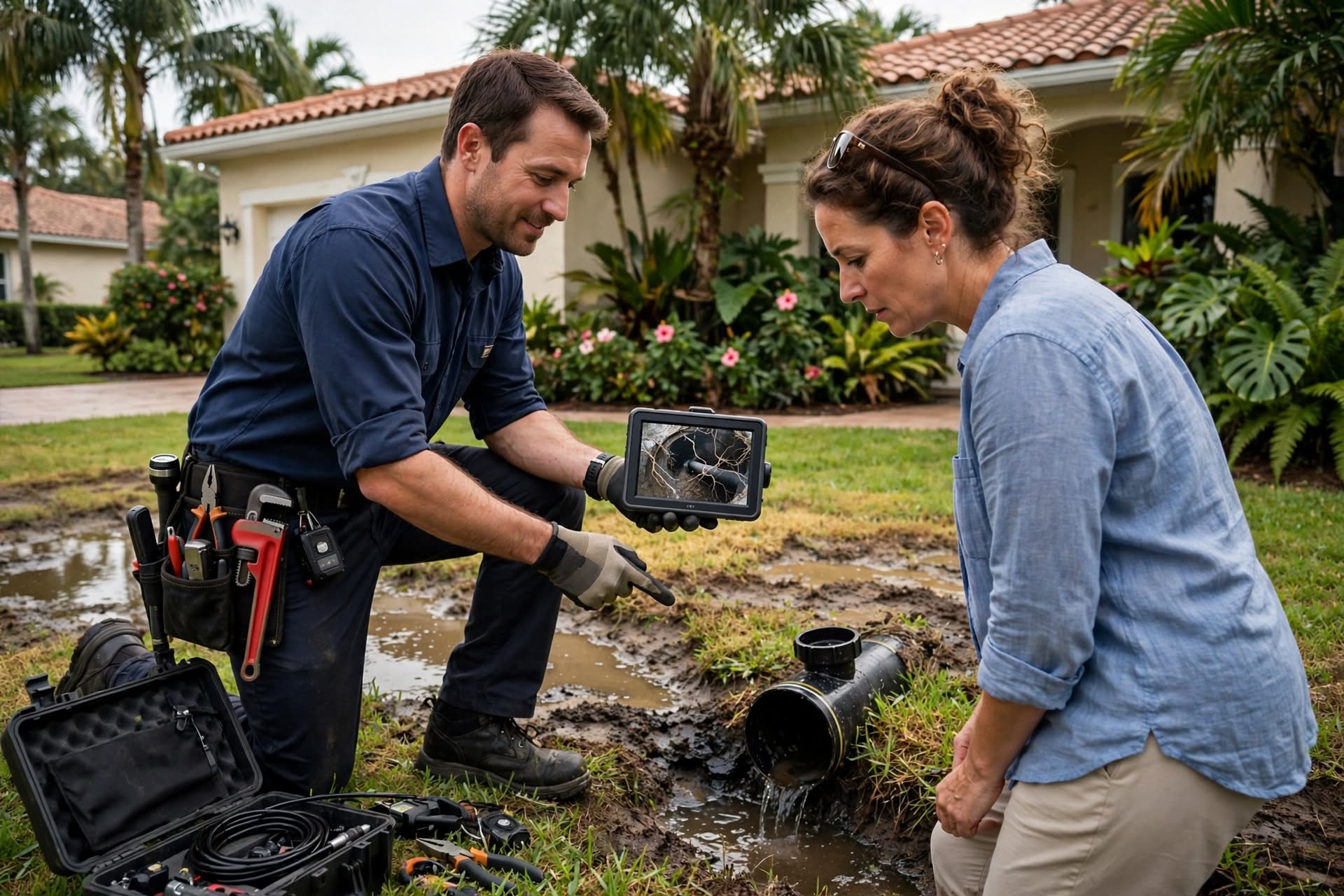
Once the affected line is identified, electronic detection equipment helps pinpoint the location along that line. Acoustic listening devices can detect the sound of water escaping from a pressurized pipe through the soil. Ground microphones placed at the surface above the suspected pipe run pick up the signal, and the technician moves along the line comparing signal strength to narrow down the location.
For pools with complicated plumbing layouts or leaks that aren’t responding clearly to acoustic detection, tracer gas is another option. A non-toxic gas mixture is introduced into the pressurized line, and a surface sensor detects where the gas is escaping through the soil above the leak point.
What Repair Looks Like
Once the leak location is pinpointed, the repair typically involves targeted excavation at that specific point. Because the leak has been localized before any digging starts, the excavation is limited to a small area rather than uncovering the entire pipe run.
For fittings at the pool shell, the repair may involve draining the pool to the necessary level, removing and replacing the fitting, and resealing the penetration. For underground pipe joint or crack failures, the damaged section is cut out and replaced with new PVC.
After repair, the line is pressure tested again to confirm the fix before the excavation is backfilled and the pool is returned to service.
Catching a pool plumbing leak early, before the water loss becomes significant or the escaping water causes soil erosion around the pool shell or equipment pad, keeps the repair scope manageable. Regular water level monitoring and periodic equipment inspection are the practical habits that make early detection possible.