
Florida is one of the few places in the country where trees grow year-round, and that growth doesn’t stop at the soil surface. Below ground, root systems spread outward in search of water and nutrients, and few sources in a residential yard are as attractive to a tree root as the moisture and organic material inside a sewer line. The result is one of the most common and most costly plumbing problems in South Florida: sewer line tree root intrusion.
Knowing which trees cause the most damage and how the damage actually happens helps homeowners make better decisions about both their landscaping and their plumbing maintenance.
Why Tree Roots Target Sewer Lines
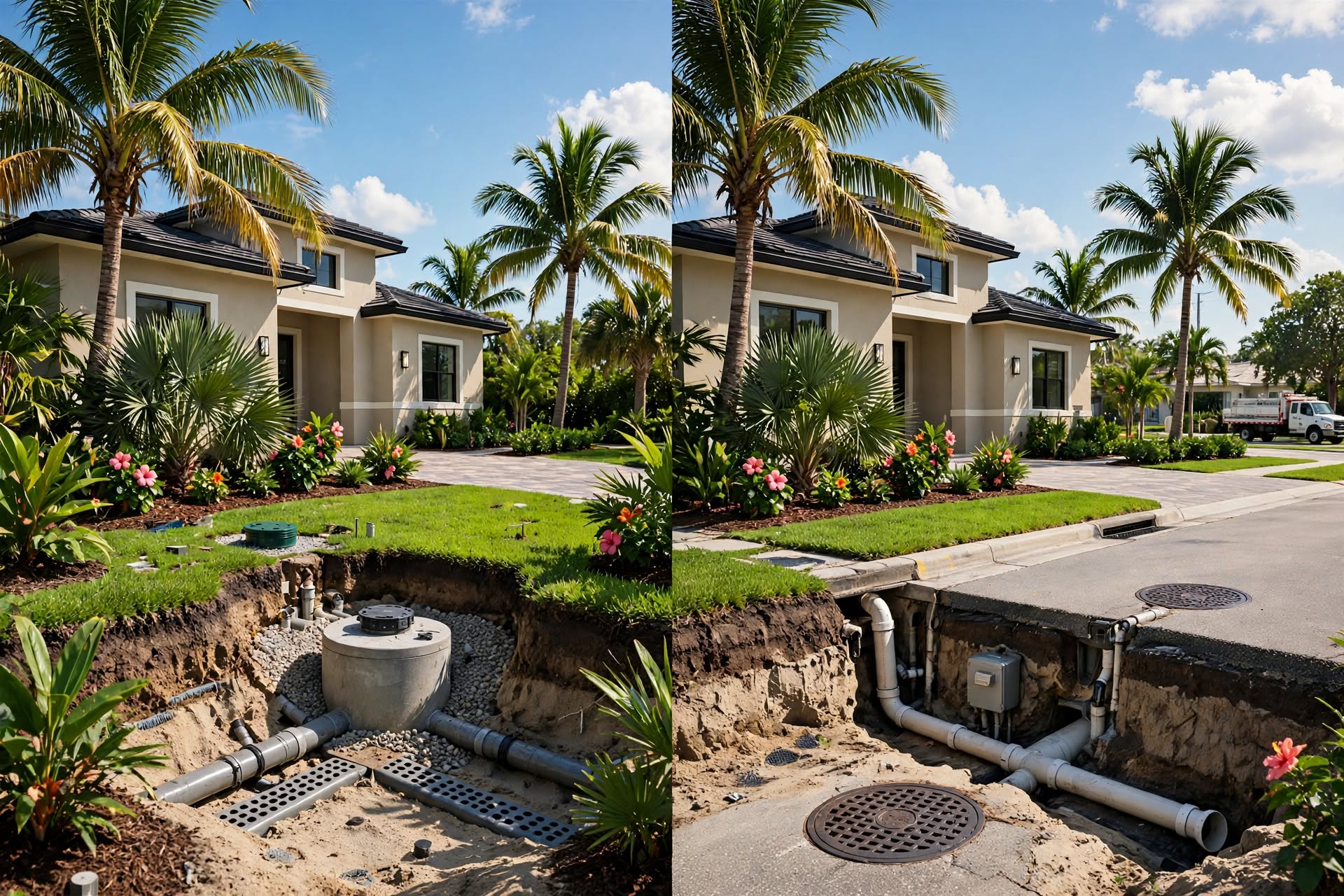
A sewer line carrying wastewater releases small amounts of moisture and vapor through any gap in the pipe, including joints between sections, hairline cracks, and areas where the pipe material has aged and become porous. That vapor creates a moisture trail in the surrounding soil that tree roots follow.
When a root tip reaches the pipe, it enters through the smallest available opening. Once inside, it encounters warm water, oxygen, and nutrients. Growth accelerates. What started as a hair-thin root tip branches into a mass of smaller roots that fills the available space inside the pipe. Over months and years, that mass captures debris, grease, and solid waste passing through the line, eventually building into a blockage that affects the entire drain system.
The Damage Beyond Blockage
Root intrusion doesn’t just clog a pipe. As roots grow inside a sewer line, they also exert pressure on the pipe walls. In older clay or cast iron pipes, that pressure cracks the pipe further, which invites more root growth and allows soil to enter the line. In some cases, the pipe collapses entirely around the root mass. What begins as a slow drain ends up being a failed sewer line requiring excavation or lining.
Florida’s Most Damaging Trees
Not all trees are equally aggressive toward underground infrastructure. South Florida has several species that are known for producing large, fast-growing root systems that spread well beyond the tree’s canopy.
Banyan Trees
The Banyan is one of the most architecturally striking trees in South Florida, but it is also one of the most destructive to underground infrastructure. Banyans produce aerial prop roots that grow downward from the canopy and root into the soil, effectively expanding the tree’s root network continuously. The root system of a mature Banyan extends far in every direction, and the roots are aggressive enough to penetrate concrete, lift pavement, and infiltrate sewer lines at significant distances from the trunk.
Homeowners with a Banyan anywhere on or adjacent to their property should have their sewer lines inspected regularly, particularly if the tree is mature and the sewer line is older than 30 years.
Ficus Trees
Ficus benjamina and related species are among the most common ornamental trees in South Florida, planted widely along streets, in yards, and in commercial landscapes. They grow fast and produce extensive, shallow root systems that spread horizontally at a rate that surprises most homeowners.
Ficus roots are well-documented for cracking sidewalks, lifting foundations, and infiltrating sewer and water lines. A Ficus planted 20 or 30 feet from a sewer line is not necessarily safe. In favorable soil conditions, the roots reach that distance within a few years of planting.
Royal Poinciana
The Royal Poinciana is a beloved South Florida tree, planted throughout residential neighborhoods for its canopy coverage and seasonal flowering. The trade-off is a wide, surface-seeking root system that extends far from the trunk and is particularly drawn to irrigation and sewer moisture.
Royal Poinciana roots tend to follow water sources with consistency, and older specimens near sewer lines are a recurring source of drain problems in neighborhoods throughout Broward and Miami-Dade counties.
How to Tell If Roots Have Reached Your Sewer Line
The symptoms of root intrusion develop gradually, which is part of what makes it easy to dismiss early on.
Slow Drains Across the House
A single slow fixture usually points to a localized clog. When multiple drains in different parts of the house are slow at the same time, the problem is more likely in the main sewer line. Root intrusion that has built up into a partial blockage slows everything upstream of it.
Gurgling Sounds in Drains
When roots partially block a sewer line, air gets trapped behind the blockage and forces its way through standing water in fixture traps. That produces a gurgling sound in toilets, sinks, or tub drains, often when another fixture nearby is being used.
Recurring Backups After Professional Cleaning
If a main line clog keeps coming back within weeks or months of being cleared, the cause is structural rather than a simple debris blockage. Root intrusion that has been hydro-jetted out will regrow unless the root entry point is addressed through pipe repair or lining.
What to Do About It
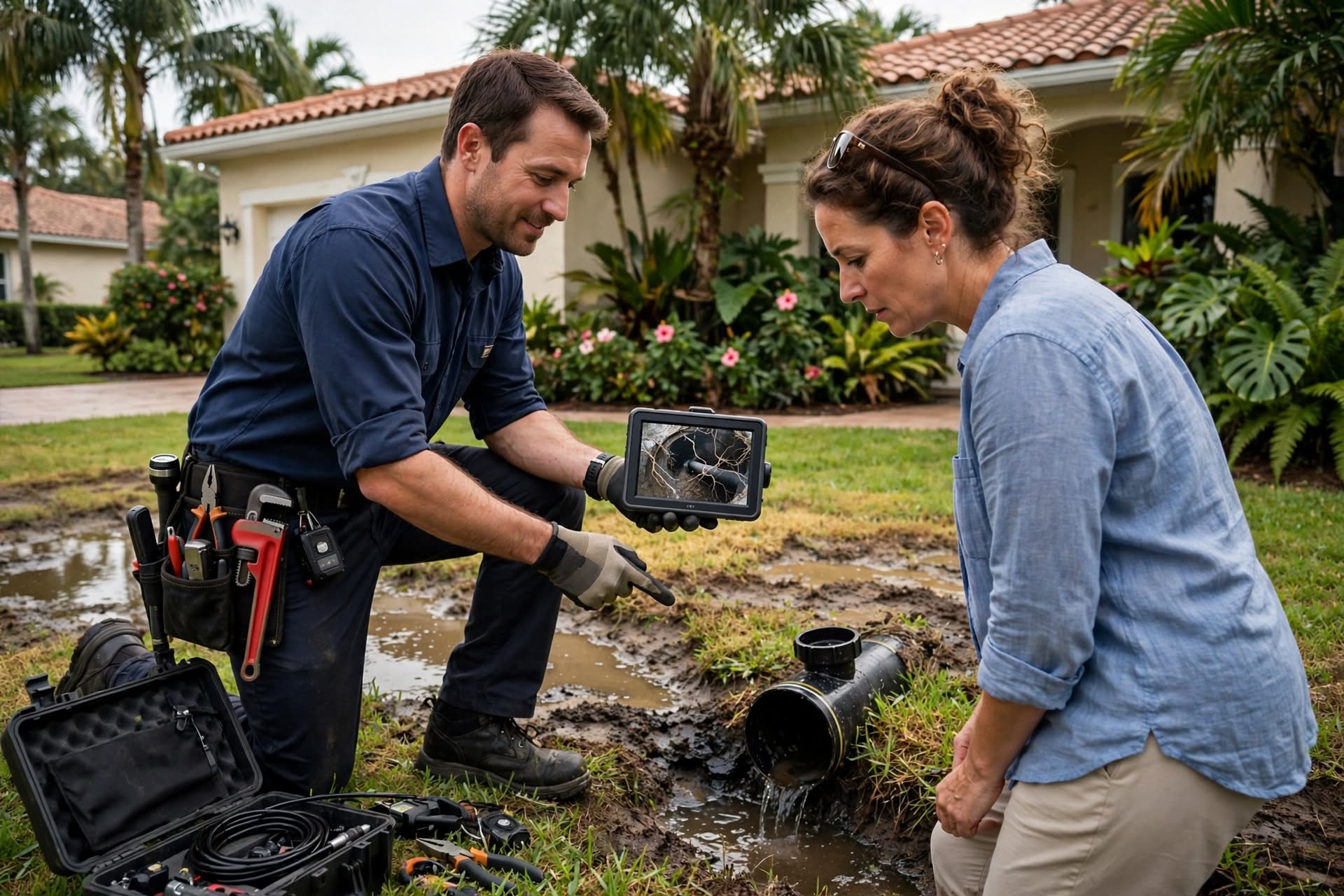
A camera inspection of the main sewer line is the definitive way to assess root intrusion. The footage shows where the roots have entered, how significant the mass is, and what condition the pipe wall is in at those points.
From there, the options range from periodic hydro-jetting to remove root growth before it blocks the line, to pipe lining that seals off the entry points and prevents regrowth inside the pipe, to pipe replacement in cases where the pipe wall is too damaged to support a liner.
The right response depends on what the camera finds. Getting that inspection done before a backup occurs puts the decision in the homeowner’s hands rather than waiting for an emergency.