


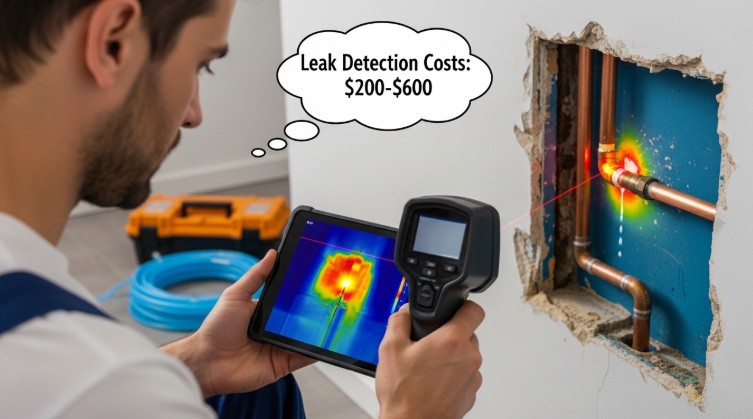
How much does leak detection cost?
Leak detection typically costs between $75 and $500 for standard residential inspections. However, advanced methods such as electronic detection or slab leak identification can range from $200 to $900+, depending on complexity, location, and equipment used.
In many real-world cases, homeowners only discover the true cost of a leak after seeing a sudden spike in water bills or dealing with visible water damage that turns into an emergency plumber situation.
Disclaimer: The leak detection prices mentioned in this article are general industry estimates and are for informational purposes only. They are not official pricing from A to Z StateWide Plumbing. Actual costs may vary depending on location, severity of the leak, property type, and inspection requirements.
What Leak Detection Actually Is
Leak detection is a specialized plumbing process used to locate hidden water leaks inside walls, ceilings, floors, underground pipes, or slabs without unnecessary demolition.
Modern plumbers use advanced tools such as:
- Acoustic listening devices
- Thermal imaging cameras
- Pressure testing equipment
- Moisture detection meters
This is critical because hidden leaks often go unnoticed for weeks or months, leading to mold growth, structural weakening, and increased water bills.
A small undetected leak under a slab, for example, can silently damage a home’s foundation if not identified early.
Why Leak Detection Costs Vary So Much
Leak detection pricing is not fixed because every plumbing system is different.
Key cost factors include:
- Type of leak (slab, wall, underground, fixture)
- Accessibility of plumbing lines
- Technology required for detection
- Property size and layout complexity
- Emergency or after-hours service needs
- Severity and duration of the leak
For example, a dripping faucet is easy to diagnose, but a hidden pipe leak beneath concrete requires specialized equipment and significantly more labor.
Common Plumbing Problems That Require Leak Detection
Leak detection is often needed when homeowners notice early warning signs such as:
- Sudden increase in water bills
- Damp or discolored walls and ceilings
- Mold or mildew growth indoors
- Sound of running water when fixtures are off
- Warm or wet spots on floors (slab leaks)
- Weak or inconsistent water pressure
In many real-life situations, homeowners delay calling a plumber until the problem escalates into structural damage or a full drain clog solution + leak emergency scenario.
Tools and Technology Used in Professional Leak Detection
Professional plumbers rely on advanced equipment to pinpoint leaks accurately without breaking walls:
- Acoustic leak detection sensors
- Infrared thermal imaging cameras
- Moisture meters
- Pressure testing kits
- Endoscopic pipe inspection cameras
- Gas tracer systems for underground leaks
These tools allow technicians to locate leaks with precision, reducing unnecessary demolition and repair costs.
Safety Considerations During Leak Detection
Before or during leak inspection, safety is extremely important:
- Avoid touching electrical systems near water leaks
- Shut off water supply if leakage is severe
- Do not break walls or flooring without confirmation
- Ensure proper ventilation in mold-affected areas
- Call a professional if water is damaging structural materials
Water and electricity combined can quickly escalate into dangerous conditions requiring emergency intervention.
How Leak Detection Works
Understanding the process helps homeowners know what they are paying for:
First, plumbers perform a visual inspection of affected areas to identify obvious signs of leakage.
Next, they conduct pressure testing on the plumbing system to detect drops indicating hidden leaks.
Then, acoustic or thermal imaging tools are used to scan walls, floors, or underground pipes.
After that, the suspected leak zone is isolated, whether it’s a bathroom, slab, kitchen line, or exterior pipe.
Once confirmed, the exact leak source is identified.
Finally, the plumber provides a repair recommendation and cost estimate.
This structured approach ensures accuracy and prevents unnecessary damage or guesswork.
Cost Breakdown Factors (What You Might Pay)
Here’s how pricing typically looks in real scenarios:
- Basic inspection: $75–$150
- Advanced electronic detection: $200–$600
- Slab leak detection: $400–$900+
- Emergency leak detection: +$100–$300 additional
- Combined detection and repair: varies widely
Example:
A hidden kitchen wall leak might cost around $250 to locate, while a slab leak beneath a concrete foundation can exceed $800 due to complexity and equipment use.
DIY Leak Detection vs Professional Service
DIY Approach:
- Low or no cost
- Relies on visual signs only
- Limited accuracy
- Suitable only for obvious leaks
- High risk of missing hidden damage
Professional Leak Detection:
- Higher upfront cost
- Uses advanced diagnostic tools
- Detects hidden and underground leaks
- Prevents unnecessary demolition
- Provides expert repair recommendations
While DIY methods may help identify symptoms, true leak location usually requires professional-grade equipment.
Common Problems Caused by Delayed Leak Detection
Delaying leak detection can lead to serious issues such as:
- Structural damage to walls and flooring
- Mold and mildew growth
- High monthly water bills
- Electrical hazards in wet areas
- Pipe corrosion and system failure
- Foundation weakening in slab leaks
A small delay often turns a minor plumbing issue into a costly renovation project or emergency plumbing repair.
Troubleshooting & Prevention Tips
To avoid expensive leak repairs:
- Monitor water bills for sudden increases
- Check under sinks and behind appliances regularly
- Fix small leaks immediately
- Install water leak sensors in high-risk areas
- Schedule plumbing inspections every 1–2 years
Preventive maintenance is always cheaper than emergency repair work.
When to Call a Professional Plumber
You should contact a plumber immediately if:
- You cannot identify the source of moisture
- Water stains keep reappearing
- You suspect a slab or underground leak
- Mold is spreading rapidly
- Water meter runs even when everything is turned off
In these situations, experienced services like A to Z StateWide Plumbing can accurately locate hidden leaks using professional diagnostic tools and prevent serious structural damage before it worsens.
People Also Ask — Common Questions
How much does leak detection cost for a house?
It typically ranges from $75 to $500 depending on complexity and location.
Is leak detection worth it?
Yes, because it prevents costly structural repairs and long-term water damage.
Can plumbers detect leaks without breaking walls?
Yes, modern tools allow non-invasive detection.
How long does leak detection take?
Usually 1 to 3 hours depending on property size.
Why is slab leak detection more expensive?
It requires specialized equipment and deeper investigation.
Can I detect a leak myself?
You can spot signs, but hidden leaks require professional tools.
What happens after leak detection?
A plumber provides repair options and cost estimates.
FAQs — How much does leak detection cost?
What is the average cost of leak detection?
Most homeowners pay between $150 and $500.
Does insurance cover leak detection?
Sometimes, if linked to covered water damage.
Why do leak detection prices vary so much?
Because leak type, tools, and accessibility all differ.
Can leak detection find hidden pipe leaks?
Yes, using acoustic and thermal imaging technology.
Is emergency leak detection more expensive?
Yes, due to urgent service fees.
How accurate is professional leak detection?
Highly accurate, often pinpointing exact leak locations.
Do plumbers charge separately for leak detection?
Yes, unless bundled with repair services.
Conclusion: Understanding Leak Detection Costs
Understanding how much leak detection costs helps homeowners make smarter decisions before small plumbing issues become expensive repairs. While DIY methods may reveal surface symptoms, hidden leaks require professional tools and expertise for accurate diagnosis.
The key takeaway is simple: early detection saves money, prevents damage, and protects your home’s plumbing system. Investing in professional leak detection is far more affordable than dealing with structural repairs caused by long-term undetected leaks.
Suspect a hidden water leak? Our electronic leak detection pinpoints it without tearing up your walls or floors. Call A to Z Plumbing for a free estimate: (954) 981-2133. Same-day service available


