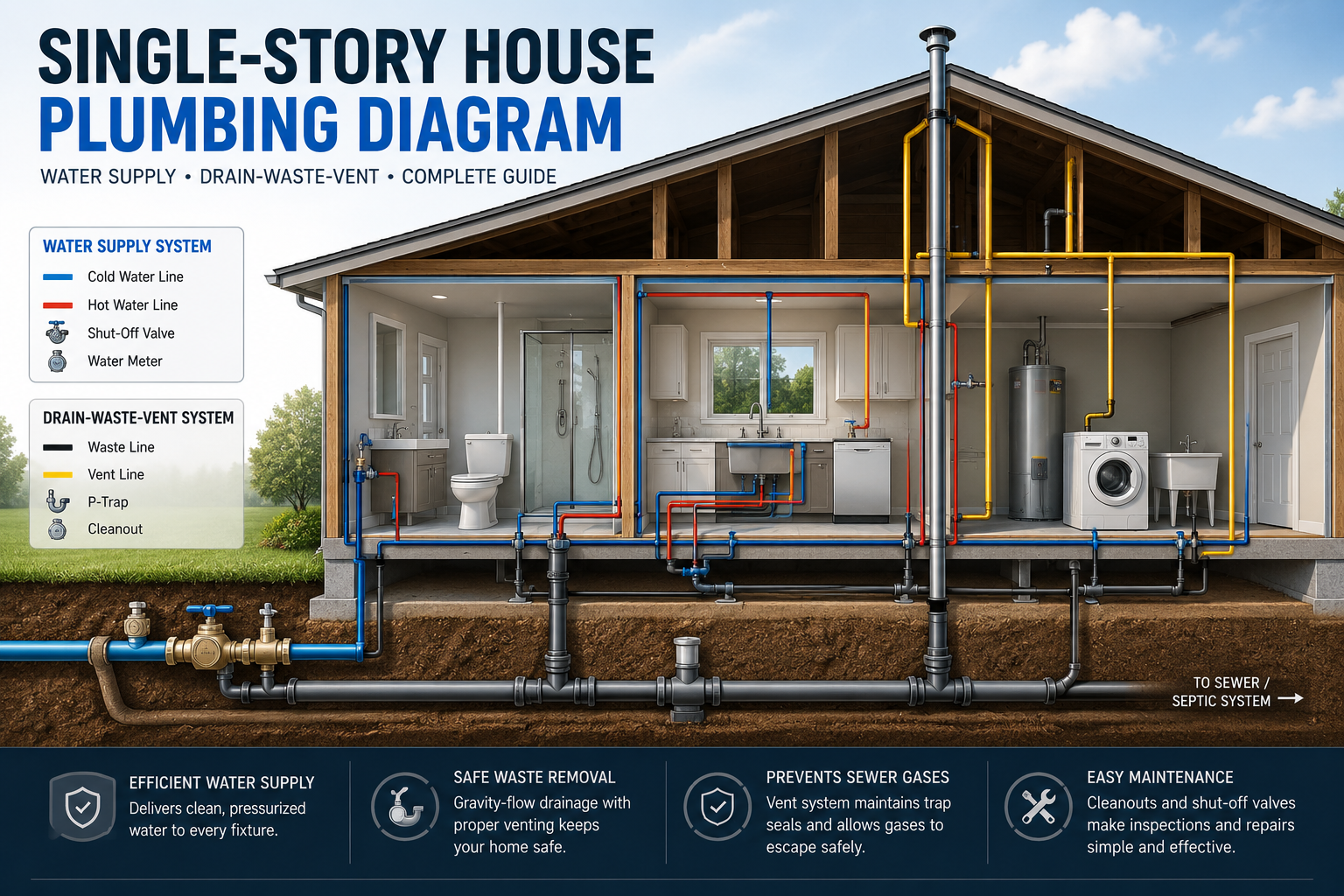

Water damage can happen quickly, but many plumbing leaks begin slowly. A leaking washing machine hose, water heater, toilet, dishwasher, supply line, or pipe can release water for hours before anyone notices. By the time the problem is discovered, water may have already damaged flooring, cabinets, drywall, or other parts of the home.
A water leak alarm can provide an early warning when it detects unwanted moisture. More advanced systems can also connect to automatic shutoff valves that stop the home’s water supply when a significant leak is detected.
For homeowners, this combination of early detection and automatic shutoff can provide an additional layer of protection against unexpected plumbing leaks and water damage.
What Is a Water Leak Alarm?
A water leak alarm is a small electronic device designed to detect unwanted water or moisture and alert you when a potential leak occurs. Basic water alarms typically have a moisture sensor that sits on or near the floor. When water reaches the sensor, the device produces an audible alert.
Modern systems can offer additional features, including:
- Smartphone notifications
- Wi-Fi connectivity
- Multiple sensors throughout the home
- Integration with smart-home systems
- Temperature monitoring
- Automatic water shutoff
- Battery backup
- Alerts when abnormal water conditions are detected
The exact features depend on the system and manufacturer.
How Do Water Leak Alarms Work?
A water leak alarm generally works by monitoring for moisture at a specific location. For example, a sensor can be placed near a water heater. If the tank or a connected pipe begins leaking and water reaches the sensor, the alarm can immediately alert the homeowner. Some systems can send notifications to a smartphone, allowing homeowners to become aware of a potential leak even when they are away from the property.
More advanced systems can be connected to an automatic shutoff valve. When the system detects a significant leak or abnormal water flow, the valve can close the home’s water supply.
Water Leak Alarm vs. Automatic Water Shutoff
These technologies work together but serve different purposes.
A water leak alarm primarily detects moisture and alerts you to a potential problem.
An automatic water shutoff system can go a step further by stopping or restricting the home’s water supply when certain leak conditions are detected.
For example:
Leak occurs → sensor detects water → system sends an alert → automatic valve shuts off water
Not every system performs all of these functions. Some products only provide an audible alarm, while others combine leak detection, remote notifications, and automatic shutoff.
Where Should You Install Water Leak Sensors?
Water sensors are most useful in locations where a plumbing leak could cause significant damage or where water-using appliances are located.
Common locations include:
Water Heater
A leaking water heater can release a substantial amount of water. Placing a sensor near the base of the unit can provide an early warning if water begins accumulating.
Washing Machine
Washing machine supply hoses and connections can develop leaks. A sensor positioned near the appliance can alert you when water reaches the floor.
Dishwasher
Dishwashers have multiple water connections, making the area beneath or around the appliance another useful location for leak detection.
Toilets
A leaking toilet supply connection or tank can allow water to accumulate around the fixture and potentially damage flooring.
Sinks and Cabinets
Water supply lines, drain connections, faucets, and other components beneath sinks can develop leaks that remain hidden inside cabinets.
Sump Pump Areas
A water sensor near a sump pump can provide another layer of protection by alerting homeowners to unexpected water accumulation.
Basement, Utility Room, or Low Areas
If a property has areas where water could accumulate unnoticed, additional sensors may help detect problems earlier.
Can a Water Alarm Prevent Water Damage?
A water alarm does not physically repair a leak or guarantee that water damage will never occur.
Its primary purpose is early detection.
The sooner a homeowner learns about a leak, the sooner the water supply can potentially be shut off and the plumbing problem addressed.
A system that includes automatic water shutoff can provide additional protection because it may stop the water flow without requiring someone to be physically present.
However, automatic shutoff systems have limitations and should be installed and configured appropriately for the property’s plumbing system.
Why Modern Water Leak Detection Is Better Than Basic Water Alarms
Older water alarms were generally simple standalone devices. They detected moisture and produced a sound.
Today’s leak detection systems can provide much more information.
Depending on the system, homeowners may receive:
- Real-time smartphone alerts
- Remote monitoring
- Multiple sensor connections
- Automatic shutoff
- Water-flow monitoring
- Temperature alerts
- Low-battery notifications
- Smart-home integration
This means homeowners can potentially learn about a plumbing problem even when they are away from the property.
Water Leak Sensors Can Help Detect Hidden Leaks
Not every plumbing leak creates an obvious puddle.
A slow leak beneath a sink, behind an appliance, near a water heater, or in another concealed area may go unnoticed until visible damage develops.
A strategically positioned sensor can detect water at the floor level before the leak becomes a much larger problem.
However, sensors only detect water where they are installed. A sensor cannot monitor every pipe or hidden space in a home unless the system is specifically designed to provide broader monitoring.
Water Leak Alarms and Smart Homes
Modern leak detection systems can integrate with smart-home technology.
Depending on the equipment, a water leak alarm may communicate with a smartphone app or other connected devices. This can allow homeowners to receive notifications remotely.
For example, a homeowner who is traveling could receive an alert that a sensor near the water heater has detected moisture.
Remote notification can be particularly useful for:
- Vacation homes
- Rental properties
- Second homes
- Homes that are frequently unoccupied
- Properties with valuable flooring or furnishings
- Homes with older plumbing systems
What Causes the Most Common Household Water Leaks?
Water leaks can originate from many different plumbing components.
Common sources include:
- Aging supply lines
- Washing machine hoses
- Water heater connections
- Toilet supply lines
- Faucet connections
- Dishwasher hoses
- Refrigerator water lines
- Pipe joints
- Drain connections
- Corroded or damaged pipes
Regular plumbing maintenance can help identify worn components before they fail.
Water Leak Alarms Are Not a Replacement for Plumbing Maintenance
A water alarm is a useful additional safety measure, but it should not replace routine plumbing inspections and maintenance.
If a faucet is leaking, a toilet continues running, a water heater shows signs of corrosion, or a pipe develops a recurring problem, the underlying plumbing issue should be addressed.
A sensor can tell you that water is present. It cannot determine why the pipe or fixture is leaking or repair the problem.
How to Choose a Water Leak Detection System
When selecting a water leak alarm or detection system, consider:
Detection Method
Determine whether the system detects water through floor-level sensors, water-flow monitoring, or both.
Notification Options
Some systems provide an audible alarm, while others can send alerts to a smartphone or connected device.
Automatic Shutoff
If you want the system to stop water automatically, make sure the product includes or supports a compatible automatic shutoff valve.
Number of Sensors
Consider how many areas of the home need protection. A single sensor may be sufficient for one appliance, while larger homes may benefit from multiple sensors.
Power and Battery Backup
Check whether the system requires batteries or a continuous power connection and whether it provides backup power during an outage.
Professional Installation
Complex systems involving a whole-home shutoff valve should generally be installed by a qualified plumbing professional to ensure the equipment is correctly integrated with the water supply.
Frequently Asked Questions About Water Leak Alarms
Are water leak alarms worth it?
A water leak alarm can be a relatively simple way to receive an early warning when unwanted water is detected. It can be particularly useful near water heaters, washing machines, sinks, toilets, and other plumbing fixtures.
Where should I put a water leak alarm?
Common locations include near water heaters, washing machines, dishwashers, toilets, sinks, sump pumps, and other areas where a plumbing leak could cause damage.
Can a water leak alarm shut off the water?
Some advanced systems can automatically shut off the home’s water supply when certain leak conditions are detected. Basic water alarms generally only provide an audible or electronic alert.
Can water leak sensors detect hidden pipe leaks?
A sensor can detect water that reaches its sensing area, but a basic sensor cannot detect every leak hidden inside a wall, ceiling, or underground pipe. Sensor placement is therefore important.
Do water leak alarms work when I am away from home?
Some modern systems can send remote smartphone notifications through an internet connection. Systems with automatic shutoff can also respond to certain leak conditions without requiring the homeowner to be present.
Do I still need a plumber if I install a water leak alarm?
Yes. A water leak alarm is a detection and warning tool, not a substitute for professional plumbing repair. If a sensor detects water, the underlying source should be identified and corrected.
Protect Your Home From Plumbing Leaks
A water leak can turn into an expensive problem when it goes unnoticed. Water leak alarms provide an additional layer of protection by detecting unwanted moisture and alerting homeowners before a small plumbing problem potentially becomes a larger water-damage issue.
For greater protection, homeowners can consider modern leak detection systems that combine multiple sensors, remote notifications, water-flow monitoring, and automatic shutoff technology.
If you have an existing leak, recurring plumbing problem, aging water heater, or want professional help installing a leak detection or automatic shutoff system, A to Z Statewide Plumbing can evaluate your plumbing system and recommend an appropriate solution.
Call A to Z Statewide Plumbing at 1-800-930-1123 for professional plumbing assistance in South Florida.