
Plumbing emergencies rarely happen at a convenient time. A burst pipe, overflowing toilet, major drain backup, water heater leak, or suspected slab leak can cause significant water damage if the water is not controlled quickly.
Knowing what to do during the first few minutes can help reduce damage while you wait for a 24 hour emergency plumbing professional.
The most important rule is simple: stop the water source when it is safe to do so, protect people and property, and call a professional when the problem is beyond a basic shutoff or troubleshooting step.
What Counts as a Plumbing Emergency?
Not every plumbing problem requires an emergency plumber.
A situation generally deserves urgent attention when it involves:
- A burst or severely leaking pipe
- Water pouring from a ceiling or wall
- An overflowing toilet that will not stop
- A major sewer backup
- A broken water supply line
- A water heater that is leaking heavily
- A suspected slab leak
- Rapidly increasing water damage
- Loss of water caused by a significant plumbing failure
- Sewage entering the home
- A plumbing leak near electrical equipment
A slow-draining sink or dripping faucet usually isn’t an emergency, although it should still be repaired before the problem becomes worse.
What to Do During a Plumbing Emergency
Before reaching for tools or attempting a repair, focus on controlling the situation.
1. Shut Off the Water
The first priority during many plumbing emergencies is stopping the water supply.
For a fixture-specific problem, such as a toilet or sink, look for the small shutoff valve near the fixture.
For a major leak or burst pipe, you may need to shut off the home’s main water supply.
If you cannot locate the main shutoff valve, ask your plumber to show you where it is before an emergency occurs.
Do not attempt to operate a damaged valve if doing so could make the leak worse.
2. Turn Off Water-Using Appliances
If the emergency involves an appliance, stop using it.
Depending on the situation, this may include:
- Washing machine
- Dishwasher
- Water heater
- Ice maker
- Refrigerator water line
A leaking appliance supply line can release a surprising amount of water in a short period of time.
3. Protect People From Electrical Hazards
Water and electricity can create a dangerous combination.
If water is reaching electrical outlets, appliances, electrical panels, or wiring, do not walk through standing water to reach the electrical equipment.
Move people and pets away from the affected area and contact the appropriate professional for assistance.
4. Contain Visible Water
Once the water source has been controlled and the area is safe, use towels, buckets, wet/dry vacuums, or other appropriate equipment to limit the spread of water.
Move furniture, electronics, documents and other valuables away from the affected area when possible.
The sooner standing water is addressed, the better.
5. Call a 24 Hour Emergency Plumber
If the problem is beyond a simple shutoff or safe DIY fix, contact a professional emergency plumber.
Explain:
- What happened
- Where the water is coming from
- Whether the water has been shut off
- Whether sewage is involved
- Whether electricity may be affected
- How long the problem has been occurring
Providing this information can help the plumber understand the urgency before arriving.
How to Handle a Suspected Slab Leak
Homes constructed on concrete slabs can develop leaks beneath the foundation.
A slab leak may not always be immediately visible.
Possible warning signs include:
- An unexplained increase in water usage
- The sound of running water when fixtures are off
- Warm spots on floors
- Damp flooring
- Cracks or moisture around flooring
- Water pooling around the foundation
- Low water pressure
- Persistent moisture or mold-like odors
Do not start breaking through flooring simply to search for the leak.
Modern professional leak detection methods can help identify the location of a suspected leak while minimizing unnecessary excavation.
If you suspect a slab leak, shut off the home’s water supply if appropriate and contact a qualified plumbing professional.
How to Stop an Overflowing Toilet
An overflowing toilet can cause significant water damage within minutes.
If the toilet continues filling, locate the shutoff valve near the base of the toilet and turn it clockwise.
If the toilet is already overflowing, avoid flushing it again.
Do not rely on repeatedly removing the tank lid or attempting complicated internal repairs while water is spilling onto the floor.
Once the immediate water flow is controlled, determine whether the problem is a simple clog or something more serious.
If the toilet repeatedly overflows or multiple drains are backing up at the same time, there may be a larger drainage or sewer problem.
What to Do About a Burst Pipe
A burst pipe should be treated as an emergency because water can spread rapidly through walls, ceilings, floors and insulation.
If you discover a burst pipe:
- Shut off the main water supply if it is safe.
- Open appropriate faucets briefly to relieve residual pressure.
- Keep people away from unsafe areas.
- Protect furniture and belongings from water.
- Avoid electrical hazards.
- Call a 24 hour emergency plumber.
- Document visible damage for your records and insurance purposes.
Do not attempt to repair a severely damaged pipe with tape or household materials and assume the problem is permanently fixed.
What to Do If Your Water Heater Is Leaking
A leaking water heater can range from a minor connection issue to a serious tank failure.
If you notice water around the water heater:
- Stop using the unit.
- Shut off its water supply if safe.
- If appropriate and safe for your specific system, shut off the energy source according to the manufacturer’s instructions.
- Keep people away from very hot water.
- Contact a professional plumber.
If the tank itself is leaking or corroded, replacement may be necessary.
Modern water heaters include conventional storage models, tankless systems, heat-pump water heaters and other technologies. A professional can determine whether repair or replacement makes the most sense.
What to Do About a Clogged Sink
A clogged sink is usually not a 24-hour plumbing emergency unless it is causing flooding, sewage contamination, or another serious problem.
Start by stopping additional water from entering the sink.
If the sink has a garbage disposal, don’t continue running it if it is humming, jammed or behaving unusually.
Avoid pouring harsh chemical drain cleaners into a completely blocked drain. They may create safety hazards and can make professional drain service more difficult.
For persistent or recurring blockages, professional drain cleaning can identify whether the problem is caused by buildup, a damaged pipe, or a deeper obstruction.
A Spraying Faucet Usually Isn’t an Emergency
A faucet that sprays water unevenly may have a clogged or damaged aerator.
In many cases, the aerator can be removed and cleaned according to the faucet manufacturer’s instructions.
However, if water is leaking from underneath the faucet, around the supply connections, or from inside the cabinet, the problem may require professional repair.
A faucet problem becomes urgent when a supply line fails and water cannot be stopped.
Don’t Use Vinegar and Baking Soda as a Universal Drain Fix
Older plumbing articles frequently recommend pouring baking soda and vinegar into clogged drains.
This combination can create a reaction, but it should not be considered a reliable solution for serious drain blockages.
It cannot replace professional drain cleaning when a pipe is blocked by substantial grease, roots, scale, foreign objects or other debris.
For a serious or recurring clog, the correct solution is to identify where the blockage is and what caused it.
Professional plumbers may use methods such as mechanical drain cleaning, inspection cameras or hydro jetting depending on the condition of the plumbing.
Modern Technology Used in Emergency Plumbing
Emergency plumbing has changed significantly compared with when this article was originally published.
Professional plumbers now have access to technology that can make diagnosis faster and less invasive.
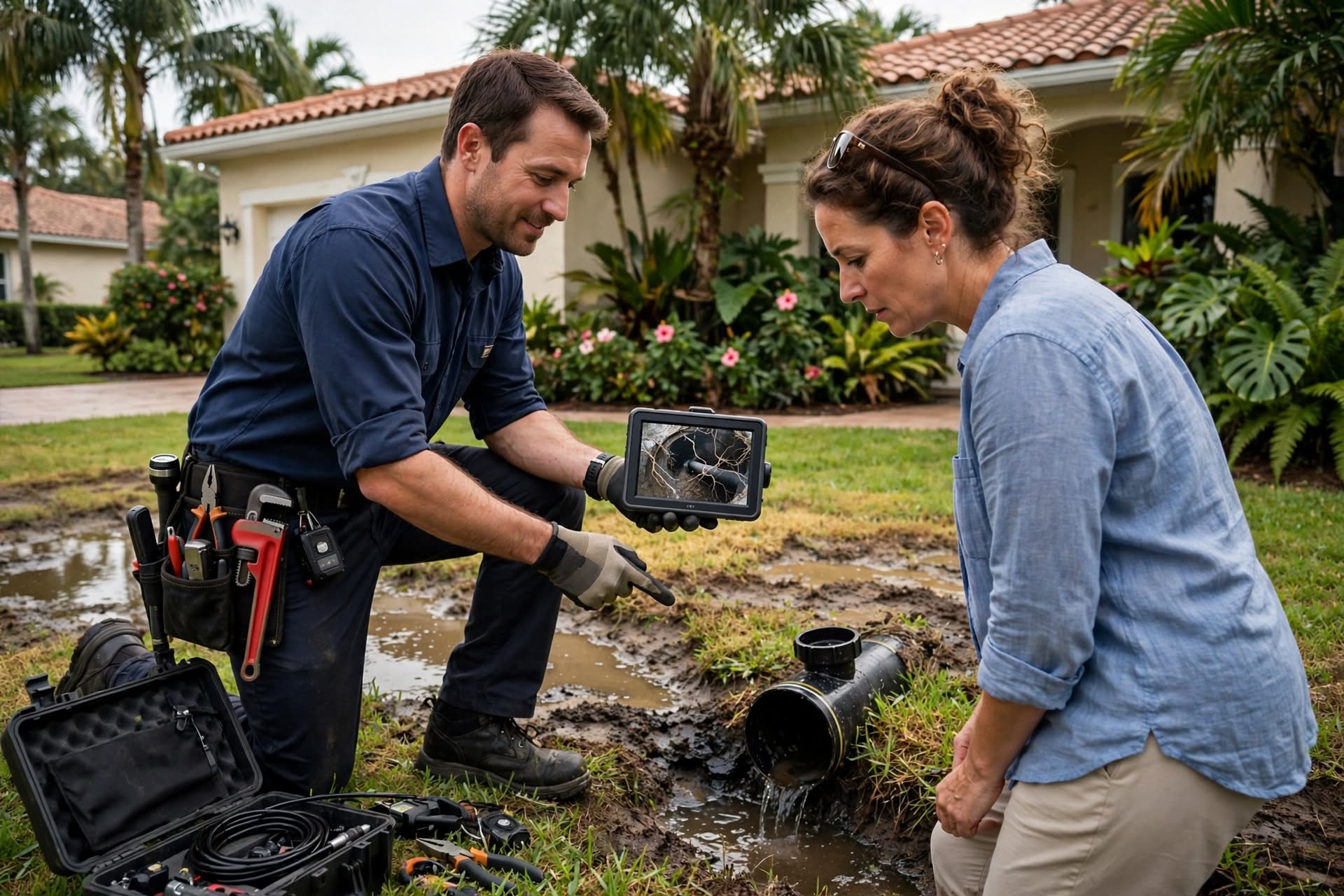
Video Camera Pipe Inspection
A waterproof inspection camera can travel through accessible drain and sewer lines to identify:
- Blockages
- Tree root intrusion
- Cracks
- Corrosion
- Scale
- Pipe separations
- Structural damage
This can reduce unnecessary digging when investigating a drainage problem.
Electronic Leak Detection
Professional leak detection equipment can help locate hidden leaks that are difficult to see.
Depending on the plumbing system and suspected leak, technicians may use acoustic equipment, electronic detection methods, thermal imaging or other diagnostic techniques.
Hydro Jetting
Hydro jetting uses high-pressure water to clean certain drain and sewer lines.
It can be useful for removing accumulated grease, sludge, scale and other buildup when the pipe condition is appropriate for the procedure.
Smart Water Leak Detection
Modern homeowners can also install smart leak detection devices.
Depending on the system, sensors can alert homeowners to moisture or unusual water use. Some whole-home systems can automatically shut off the water supply when a significant leak is detected.
These systems don’t replace professional plumbing, but they can provide an additional layer of protection against water damage.
24 Hour Emergency Plumbing vs. Routine Plumbing
Knowing the difference can help you decide how quickly you need service.
| Problem | Emergency? | Recommended Action |
|---|---|---|
| Burst pipe | Yes | Shut off water and call immediately |
| Major water leak | Yes | Control water and call a plumber |
| Sewer backup | Yes | Avoid contact and seek urgent service |
| Overflowing toilet | Usually | Shut off toilet supply and assess |
| Water heater major leak | Yes | Shut off supply and seek service |
| Suspected slab leak | Often | Arrange prompt leak detection |
| Completely blocked main drain | Often | Professional drain service |
| Slow sink drain | Usually no | Schedule routine service |
| Dripping faucet | Usually no | Schedule repair |
| Minor toilet running | Usually no | Repair promptly |
How to Prepare for a Plumbing Emergency Before It Happens
The best time to prepare for a plumbing emergency is before you have one.
Know Where Your Main Water Shutoff Is
Every homeowner should know where the home’s main water shutoff valve is located.
Know Where Fixture Shutoffs Are
Learn how to shut off the water supply to toilets, sinks, washing machines and other major fixtures.
Keep a Plumber’s Number Available
Save your preferred 24 hour emergency plumber in your phone before you need one.
Consider a Smart Water Shutoff
A whole-home leak detection and automatic shutoff system can provide additional protection, especially for homeowners who travel frequently or own properties that are vacant for periods of time.
Inspect Vulnerable Plumbing
Regularly check visible supply lines, water heater connections, exposed pipes and under-sink plumbing for corrosion, moisture or deterioration.
When Should You Call a 24 Hour Emergency Plumber?
Call for emergency plumbing service when you cannot safely control the situation yourself or when continued water flow could cause significant damage.
You should seek urgent professional help for:
- Burst pipes
- Major leaks
- Uncontrolled water flow
- Sewer backups
- Significant water heater leaks
- Suspected major slab leaks
- Broken supply lines
- Plumbing emergencies involving electrical hazards
- Water entering walls, ceilings or electrical areas
When in doubt, it is better to get professional advice before a small plumbing problem develops into extensive water damage.
Final Thoughts
A plumbing emergency can be stressful, but knowing what to do immediately can significantly reduce the potential damage.
Shut off the water when safe, protect people and property, avoid electrical hazards, and contact a professional when the problem requires more than basic troubleshooting.
Modern leak detection, video pipe inspection, hydro jetting and smart water shutoff technology also give today’s homeowners more options for preventing and diagnosing plumbing emergencies than were available when this article was originally published.
If you need 24 hour emergency plumbing service in South Florida, A to Z Statewide Plumbing provides emergency plumbing assistance throughout Miami, Fort Lauderdale, Hollywood, Pembroke Pines and surrounding areas.
Call 1-800-930-1123 for professional plumbing assistance.