Imagine you are in the middle of a power outage or a sudden water shut off and your toilet will not flush. Whether it is a broken handle or an emergency repair in your neighborhood knowing how to manually flush is a critical skill for every South Florida homeowner. During hurricane season or unexpected pipe maintenance this knowledge can save you from a messy and unsanitary situation.
Toilets work using a siphon system and triggering it correctly is the key to avoiding a dangerous overflow. Understanding this principle ensures you flush effectively without causing water to spill onto your bathroom floor.
When You Might Need to Manually Flush
There are several situations where a standard flush might fail:
- Power outages during hurricane season that affect well pumps
- Water supply temporarily shut off for municipal repairs
- A broken flush handle or disconnected lift chain
- The toilet tank is not refilling properly
- Emergency septic or sewer issues
Before trying any of the following methods always make sure the toilet is not clogged. If the water level is already high adding more water will only cause an overflow.
Method 1 The Bucket Flush Gravity Method
How It Works This method uses the weight and speed of water to create a siphon effect. It mimics the natural action of a flush by pushing waste through the trap without needing the tank.
Step by Step Guide
- Fill a bucket with at least 2 gallons of water.
- Raise the bucket to about waist level.
- Pour the water quickly and directly into the center of the bowl.
Common Mistakes to Avoid
- Pouring slowly: If you pour slowly the water level will rise without triggering a flush.
- Not enough water: Using less than 1.5 gallons usually fails to activate the siphon.
- Pouring near the rim: You must aim for the center to generate enough downward force.
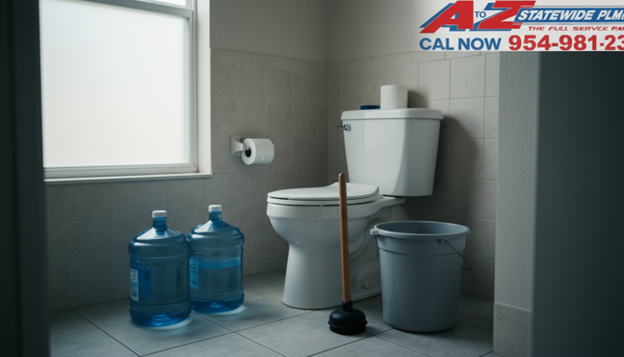
South Florida Tip In an emergency you can use swimming pool water to flush your toilets. It is also wise to store at least 5 gallons of non potable water specifically for flushing during hurricane season.
Method 2 Manually Lifting the Flapper
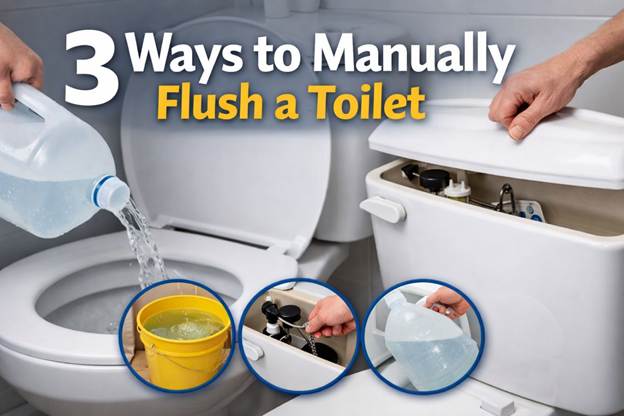
When to Use It Use this method if the tank is already full of water but the handle or chain is broken.
Step by Step Guide
- Carefully remove the heavy porcelain tank lid.
- Set the lid on a towel to prevent cracking.
- Reach into the tank and manually lift the rubber flapper located at the bottom.
Why It Works Lifting the flapper releases the stored tank water into the bowl just like a normal flush.
Safety Tip The water inside the tank is clean and safe to touch. However avoid shifting internal metal components unnecessarily to prevent affecting fill valve settings.
Method 3 Pour Over Technique for Low Water Scenarios
When to Use It This method works when you have a limited supply of water.
The Strategy Start by pouring a small amount of water to wet the bowl surfaces. Immediately follow with a faster pour to activate the siphon.
Important Warning Never use boiling water. The thermal shock of boiling water hitting cold porcelain can cause the bowl to crack or shatter instantly. Always use room temperature or cold water.
When Not to Manually Flush
One major mistake homeowners make is forcing a flush when the system is blocked. Do not attempt a manual flush if:
- The water level in the bowl is already high.
- You know the toilet is clogged.
- There is a strong sewer smell present.
- Water starts rising in the shower or other drains when you pour.
Forcing water into a clogged or backed up system can cause serious water damage to your bathroom flooring and surrounding areas.
Plumbing Risks You Should Know
Repeatedly needing to manually flush is a sign of a deeper problem. It often indicates:
- A failing fill valve that cannot refill the tank.
- A worn out flapper that leaks water constantly.
- A clogged supply line restricting water flow.
- A potential sewer line obstruction.
Repeated manual flushing can also increase stress on older internal components and accelerate wear.
Emergency Preparedness for South Florida Homes
To stay prepared for the next storm or water outage:
- Keep emergency water stored in large containers.
- Know the exact location of your main water shutoff valve.
- Keep a sturdy bucket and plunger easily accessible.
- Inspect your toilet tank components before the peak of storm season.
When to Call a Professional
A manual flush is only a temporary fix. Contact A to Z Statewide Plumbing for a professional inspection if:
- The flush handle is completely broken or corroded.
- The toilet constantly requires manual flushing to clear.
- You see water leaking from the base of the toilet.
- The tank takes too long to refill or does not refill at all.
- You are dealing with recurring clogs that a plunger cannot fix.
Conclusion
Manual flushing is a helpful temporary solution that keeps your home sanitary during an outage. However using the safe techniques mentioned above is critical to prevent accidental damage to your porcelain or plumbing lines. Persistent issues are usually a sign of mechanical failure that requires professional repair.
Contact A to Z Statewide Plumbing for a professional inspection before minor toilet problems become major plumbing repairs.