1. Introduction: Why Your Pipe Material Matters in South Florida
Most homeowners never think about the pipes behind their walls until a leak turns into water damage, mold, or a slab leak emergency. In South Florida, pipe material matters more than most states because of hard, mineral-heavy water, high humidity, and salt air exposure in coastal areas like Miami Beach. Additionally, sandy soil and hurricane-related pressure fluctuations put constant stress on your infrastructure.
Many South Florida plumbing failures are not sudden emergencies — they are slow, hidden deteriorations that develop for years before causing visible damage. The goal of this guide is to help you identify your pipe type, understand its lifespan in Florida conditions, and know when replacement is urgent to avoid a major disaster.
2. Plastic Piping: The Modern Standards in Florida Homes
Plastic piping is now the dominant choice in South Florida, especially for modern repiping projects.
PEX (Cross-linked Polyethylene)
PEX is the preferred material for whole-home repiping in Miami-Dade and Broward. It handles water pressure fluctuations well and is flexible, which is ideal for slab homes as it reduces stress from minor soil movement.
- Pro-Tip: PEX is significantly quieter than copper, reducing “water hammer” noise in your walls.
- Slab Benefits: Because most South Florida homes are built on slab foundations, PEX flexibility helps reduce stress on underground lines — lowering the risk of slab leaks.
- Insurance Advantage: Many Florida insurance carriers prefer PEX upgrades over aging galvanized or copper systems because it significantly reduces the risk of internal corrosion and future claims.
- Average Lifespan in South Florida: 40 to 50 years.
- Best for: Whole-home repiping and slab homes.
CPVC (Chlorinated Polyvinyl Chloride)
CPVC is commonly used for hot water supply lines in Broward County condos. It is affordable and corrosion-resistant. However, older CPVC systems can become brittle over time due to constant heat exposure, which may lead to unexpected cracks or failures.
PVC (Polyvinyl Chloride)
PVC is ideal for drain lines, vent stacks, and sewer lines. It is not suitable for pressurized hot water systems. PVC is extremely durable underground and resists root intrusion better than older materials.
- Average Lifespan in Florida soil: 70 plus years.
3. Metal Piping: Traditional but Risky in Coastal Florida
Copper Pipes
Copper has long been considered a premium plumbing material. It is durable and handles high temperatures well. However, copper faces a major threat in South Florida: Pitting Leaks. Salt air in coastal areas can accelerate corrosion inside copper pipes, leading to tiny pinhole leaks that are difficult to detect until significant damage occurs.
- Signs of Deterioration: Blue or green stains on fixtures, small unexplained ceiling stains, or sudden slab leaks.
- Risk Level in Coastal Areas: Medium to High.
Galvanized Steel Pipes
If your home was built before the 1960s, you likely have galvanized steel pipes. These pipes rust from the inside out. Over time, internal corrosion restricts water flow and weakens the pipe walls.
- Symptoms: Brown or discolored water, low water pressure, and frequent leaks.
- Replacement Urgency: High (Many Florida insurance companies now require replacement to maintain coverage).
4. The South Florida Crisis: Cast Iron Sewer Pipes
Most South Florida homes built before 1975 have cast iron sewer lines. In Florida’s sandy and salty soil, many are failing right now due to interior scaling, corrosion, and cracks. Many homeowners only discover cast iron failure after sewage backs up into showers or toilets.
- Average Lifespan in Florida: 30 to 50 years.
- Warning Signs: Persistent rotten egg smells, slow drains, recurring backups, or foundation moisture.
The Solution: Hydro-Jetting and Trenchless Lining
Before repair, hydro-jetting is used to remove decades of scale and rust buildup inside the pipe. If the structure is still intact, trenchless pipe lining can restore the sewer line from the inside — without tearing up floors, driveways, or landscaping.
5. Why Slab Leaks Are Common in South Florida Homes
Most homes in this region are built on slab foundations, meaning pipes run beneath concrete. Corrosion, soil shifting, and pressure fluctuations can lead to slab leaks. Left untreated, slab leaks can compromise your foundation and lead to thousands of dollars in structural repairs.
- Watch for: Warm spots on flooring, cracks in tiles, unexplained water bill spikes, or moisture smells.
6. Pipe Material Comparison (South Florida Conditions)
| Material | Avg. Lifespan in FL | Best For | Risk Level | Common Issue |
| PEX | 40-50 Years | Whole-home repipe | Low | UV sensitivity |
| Copper | 50+ Years | Main supply lines | Medium to High | Pitting leaks |
| PVC | 70+ Years | Drainage/Sewer | Low | Not for hot water |
| Cast Iron | 30-50 Years | Main sewer lines | High | Interior corrosion |
| Galvanized | 40-50 Years | Old homes | Very High | Internal rust |
7. Signs Your Pipes Need Replacement
Do not wait for a flood. Watch for these warning signals:
- Discolored water or low water pressure.
- Frequent slab leaks or sewer odors.
- Recurring drain backups.
- Home built before 1975.
8. How Much Does Pipe Replacement Cost in South Florida?
Costs vary based on home size, pipe material, and accessibility. While trenchless lining may have a higher upfront cost, it often reduces demolition, restoration, and landscaping expenses — making it more cost-effective long term. The only accurate way to determine cost is through a professional inspection and camera evaluation.
9. How to Identify What Pipes You Have
Inspect exposed pipes under sinks or near your water heater:
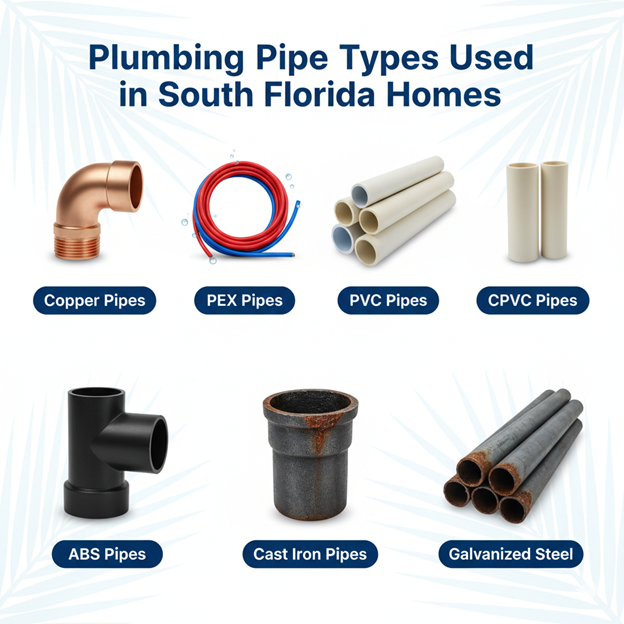
- Reddish metal: Copper
- Dull gray metal: Galvanized
- White rigid plastic: PVC or CPVC
- Flexible red or blue tubing: PEX
- Thick black sewer pipe: Cast Iron
10. Local Codes and Compliance
South Florida plumbing codes are strict. Miami-Dade and Broward require proper permits and code-compliant materials. Recent 40-year recertification rules and updated condo safety regulations have increased scrutiny on aging plumbing systems. Non-compliant repairs can void insurance coverage and create complications during property sales.
11. Frequently Asked Questions About Plumbing Pipes in South Florida
- How long do cast iron pipes last in Florida? Typically 30–50 years, but local soil conditions often shorten that lifespan.
- Is PEX better than copper in South Florida? PEX resists corrosion and handles pressure fluctuations better in many Florida environments.
- Should galvanized pipes be replaced even if they aren’t leaking? Yes. They corrode internally and often fail without visible warning signs.
- How do I know if my sewer line is failing? Recurring backups, sewer odors, and slow drains are the most common indicators.
12. Conclusion: Protect Your Home Today
Pipe problems do not fix themselves. In South Florida’s unique climate, aging pipes can deteriorate silently until serious damage occurs. Instead of guessing what is behind your walls, get clarity.
Book a professional pipe inspection with A to Z State Wide Plumbing. We use advanced DrainVision camera technology to identify your pipe type and condition without unnecessary digging giving you accurate answers before minor issues become major disasters.