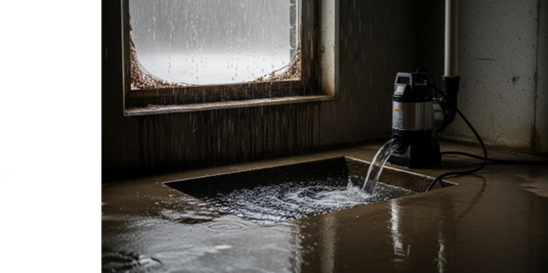
If you’ve ever stood in your basement during a storm listening to that pump kick on again and again, you’ve probably wondered: Is this normal or is something wrong?
As someone who’s been installing and repairing sump pumps for over 45 years, I can tell you that hearing your sump pump run during heavy rain is usually a good sign. It means it’s doing its job. The real question is how often it should run.
Let’s break it down properly.
Quick Answer — How Often Should Sump Pump Run During Heavy Rain?
During heavy rain, a sump pump typically runs every 2 to 10 minutes, depending on:
- Rainfall intensity
- Sump basin size
- Soil saturation
- Pump horsepower
- Foundation drainage system
Each cycle usually lasts 10 to 30 seconds.
What’s Normal vs. Warning Signs?
Normal:
- Pump runs every few minutes during strong rainfall
- Water level rises and drops predictably
- Pump shuts off completely between cycles
Warning Signs:
- Running every 30–60 seconds (short cycling)
- Running nonstop for long periods
- Not running at all despite rising water
Quick Summary
- Heavy rain = frequent cycling (normal)
- Every 2–10 minutes = typical
- Every 30 seconds = possible problem
- Nonstop running for hours = inspect system
Now let’s understand why this happens.
Understanding How a Sump Pump Works
Basic Components of a Sump Pump System
Every system has five main parts:
- Sump Pit (Basin): Collects groundwater.
- Float Switch: Detects water level.
- Pump Motor: Pushes water out.
- Discharge Pipe: Carries water away from foundation.
- Check Valve & Backup Power: Prevents backflow and protects during outages.
If one part fails, the entire cycle pattern changes.
What Triggers a Sump Pump to Turn On?
A sump pump activates when:
- Groundwater fills the pit
- The float switch rises
- It hits the preset water level threshold
The more saturated the soil, the faster the pit fills meaning more frequent cycles.
How Often Should Sump Pump Run During Heavy Rain? (Technical Breakdown)
Let me explain this the way I do to homeowners.
1. Rainfall Intensity
Light rain? Every 10–30 minutes.
Heavy downpour? Every 2–5 minutes.
2. Basin Size
- Small basin = fills fast = frequent cycling
- Large basin = slower fill time
3. Pump Horsepower
- 1/3 HP = standard homes
- 1/2 HP = heavy groundwater areas
- 3/4 HP+ = extreme water table conditions
Higher horsepower removes water faster, but doesn’t stop frequent cycling if groundwater inflow is high.
4. Drainage System Design
Clogged French drains or poor grading increase inflow.
5. Soil Type
- Clay soil holds water → more pressure → more cycles
- Sandy soil drains faster → fewer cycles
Real-Life Example
I worked on two homes on the same street:
- House A: High water table, clay soil → pump ran every 3 minutes during storms.
- House B: Sloped lot, sandy soil → pump ran every 12–15 minutes.
Both were normal for their conditions.
What Is Considered Normal vs. Abnormal Sump Pump Cycling?
Normal Running Patterns During Heavy Rain
- Cycling every few minutes
- Moderate 10–30 second runtime
- Shutting off fully between cycles
Signs Your Sump Pump Is Running Too Often
- Every 30–60 seconds (short cycling)
- Constant on/off clicking
- Running when there’s no rainfall
This often means:
- Float switch too sensitive
- Basin too small
- Check valve failure
Signs Your Sump Pump Is Not Running Enough
- Standing water
- Motor hum but no discharge
- Burn smell
- Tripped breaker
That’s emergency territory.
Factors That Affect How Often a Sump Pump Runs
Rainfall Intensity & Storm Duration
Long storms saturate soil deeply and pumps may run for hours intermittently.
Size of the Sump Basin
Bigger basin = fewer cycles.
Pump Capacity (HP Ratings Compared)
Higher HP handles volume better but won’t stop inflow.
Soil Type
Clay-heavy areas see more pressure buildup.
Foundation Drain Condition
Clogged perimeter drains increase pump workload.
Water Table Levels
Homes near lakes, rivers, or coastal zones cycle more often.
How to Check if Your Sump Pump Is Running Properly During Heavy Rain
Inspect the Sump Pit Water Level
Shine a flashlight inside. Water should rise, trigger a pump, then drop quickly.
Monitor Cycling Frequency
Time intervals. Less than 1 minute? Investigate.
Check Discharge Line Flow
Go outside. Ensure strong water flows away from the foundation.
Test the Float Switch Manually
Lift it gently. The pump should activate immediately.
Inspect Check Valve
Listen for backflow after shutdown.
Test Backup Battery
Unplug main power briefly (if safe) to confirm backup activation.
Listen for Unusual Noises
Grinding = motor issue. Gurgling = discharge obstruction.
Safety Tip: Never reach into a live pit with power connected.
Normal vs Problematic Sump Pump Behavior During Heavy Rain
| Condition | Cycle Frequency | Duration | Risk Level | Recommended Action |
| Light Rain | Every 10–30 mins | Short | Low | Monitor |
| Heavy Rain (Normal) | Every 2–10 mins | Moderate | Normal | No action |
| Short Cycling | Every 30–60 sec | Very short | High | Adjust float |
| Continuous Running | Non-stop | Long | Medium–High | Inspect drainage |
| Not Running | No activation | N/A | Severe | Immediate repair |
How Long Should a Sump Pump Run Each Cycle?
- Normal: 10–30 seconds
- Heavy surge: Up to 60 seconds
- Over 2 minutes continuously = inspect system
Motors overheat if they never rest.
What Happens If a Sump Pump Runs Too Frequently?
Overheating & Motor Burnout
Frequent cycles reduce lifespan dramatically.
Increased Electricity Costs
(Prices not official, approximate only)
A 1/3 HP pump uses around 800–1300 watts per hour when running.
If running heavily during storm season:
- Estimated $10–$30 monthly extra electricity
(Prices mentioned are not official; for general understanding only)
Premature Wear & Replacement Costs
(Not official prices)
- Pump replacement: $150–$400
- Installation: $300–$800
Frequent cycling cuts lifespan from 10 years to 3–5 years.
How to Reduce Excessive Sump Pump Cycling During Heavy Rain
- Install larger basin
- Upgrade horsepower
- Add secondary backup pump
- Improve exterior grading
- Extend downspouts 6–10 feet
- Install French drains
- Adjust float switch sensitivity
These upgrades reduce strain significantly.
Should a Sump Pump Run Continuously During Heavy Rain?
Continuous running is acceptable only if:
- Water inflow is extremely high
- Pump is keeping up
- Motor isn’t overheating
It becomes dangerous when:
- Motor feels hot
- Water level isn’t dropping
- System never shuts off
Call a professional in those cases.
How Often Should Sump Pump Run During Heavy Rain in Different Home Types?
Small Basement in High Water Table Area
Every 2–3 minutes is normal.
Large Basement with Deep Basin
Every 8–12 minutes is typical.
New Construction vs Older Home
Older homes often cycle more due to drainage deterioration.
Finished Basement Risk Scenario
Backup system is highly recommended to prevent damage.
Maintenance Checklist to Ensure Proper Sump Pump Performance
Monthly
- Check pit debris
- Test float switch
Seasonal
- Inspect discharge line
- Clean basin
Annual
- Professional inspection
- Replace worn check valve
FAQs — How Often Should Sump Pump Run During Heavy Rain?
Is it normal for a sump pump to run every minute during heavy rain?
No. That suggests short cycling or small basin size.
How long should my sump pump run after rain stops?
Usually 10–60 minutes until groundwater stabilizes.
Should my sump pump run nonstop during a storm?
Not typically. Intermittent cycles are expected.
What size sump pump do I need for heavy rain?
Most homes use 1/3 or 1/2 HP. High water table areas may need more.
How do I know if my sump pump is failing?
Strange noises, irregular cycling, burning smell.
Can heavy rain burn out a sump pump?
Yes, especially if it runs continuously.
How much electricity does a sump pump use during storms?
Costs vary. Estimated $10–$30 monthly during heavy usage (not official prices).
What happens if the sump pump fails during heavy rain?
Basement flooding within minutes in high groundwater areas.
When to Call a Professional Plumber or Basement Waterproofing Expert
Call immediately if you notice:
- Rising water despite pump running
- Electrical burning smell
- Repeated short cycling
- Backup system failure
Waiting can cost thousands in damage.
Conclusion — How Often Should Sump Pump Run During Heavy Rain?
So, how often should the sump pump run during heavy rain?
For most homes, every 2 to 10 minutes is perfectly normal during strong storms. What matters most, according to A to Z State Wide Plumbing, is:
- The pump fully empties the pit
- It shuts off between cycles
- It doesn’t overheat
Frequent cycling isn’t always a problem but abnormal patterns are.
Monitor your sump pump cycle frequency, maintain it properly, and upgrade proactively if you live in a high groundwater area. That’s how you prevent basement flooding, motor burnout, and costly repairs. After 50 years in plumbing, I can tell you this: A sump pump you pay attention to rarely fails when you need it most.